
Why Vaccination Is Both More Important — and More Complex
People with weakened immune systems are generally at higher risk of serious complications from vaccine-preventable infections. That makes vaccination especially valuable for this population. At the same time, certain vaccines can pose risks they don't carry for people with typical immune function. Navigating that tension is not a reason to avoid vaccines altogether — it's a reason to approach them more carefully.
For a foundational understanding of how vaccines work and which ones adults typically need, see our complete starter guide to adult vaccines. The considerations for immunocompromised individuals layer on top of that baseline knowledge.
Immune Suppression Exists on a Spectrum
The term 'immunocompromised' covers an enormous range of conditions and severity levels. Someone taking a short course of prednisone faces very different risks than someone who has received a stem cell transplant. Guidelines from the CDC and ACIP (Advisory Committee on Immunization Practices) provide stratified recommendations by condition and degree of suppression. Your provider uses this framework — along with your specific labs and history — to tailor vaccine guidance to you.
The degree of immune suppression varies enormously. Someone on a low-dose corticosteroid for a skin condition is in a very different situation than someone receiving high-dose chemotherapy. General guidance applies broadly, but individual decisions must account for the specific cause and severity of immune compromise.
The Live Vaccine Distinction: A Critical Safety Line
The most important category distinction in this context is between live attenuated vaccines and inactivated (or non-live) vaccines.
- Live vaccines — such as MMR (measles, mumps, rubella), varicella (chickenpox), LAIV (nasal-spray flu), yellow fever, and the shingles vaccine Zostavax — contain weakened but live pathogens. For immunocompromised individuals with significant suppression, these are generally contraindicated because the live component can potentially replicate and cause illness.
- Inactivated, subunit, and mRNA vaccines — such as the flu shot, Shingrix (recombinant shingles vaccine), pneumococcal vaccines, and COVID-19 vaccines — do not contain live pathogens and are generally considered safe for immunocompromised individuals. However, the immune response they generate may be diminished.
Shingrix is worth highlighting because people who are immunocompromised face a particularly elevated risk of shingles. Unlike the older live Zostavax, Shingrix is a non-live recombinant vaccine and is specifically recommended by the CDC for many immunocompromised adults.
~3%
U.S. adults estimated to be immunocompromised
A CDC-referenced estimate suggests roughly 2.7–3% of U.S. adults have some form of immunocompromising condition, encompassing millions of people.
Up to 5x
Higher pneumonia hospitalization risk in immunocompromised patients
CDC data and clinical literature consistently show that immunosuppressed individuals face substantially elevated risk of serious complications from vaccine-preventable respiratory illnesses.
2 weeks
Minimum lead time before immunosuppressive therapy
CDC advisory guidelines recommend completing non-live vaccines at least two weeks before starting immunosuppressive treatment to maximize immune response.
Timing, Dosing, and the Role of Household Contacts
When immunosuppressive treatment is planned — such as chemotherapy, organ transplantation, or starting a biologic medication — the ideal window for vaccination is at least two weeks before treatment begins. This allows the immune system enough time to mount a meaningful response while it still has adequate capacity. Once treatment is underway, some vaccines may need to be deferred until immune function recovers, while others remain appropriate throughout.
For some immunocompromised patients, providers may order antibody titer tests after vaccination to determine whether a protective immune response was achieved. If titers are insufficient, additional doses may be recommended.
An often-overlooked element of protection is the vaccination status of people in the same household. When family members and close contacts are current on vaccines — particularly flu, COVID-19, and Tdap — they reduce the likelihood of transmitting preventable illness to someone who cannot fully defend themselves. This approach is sometimes called cocooning. Our article on vaccines commonly missed in adulthood can help close those gaps for household members.
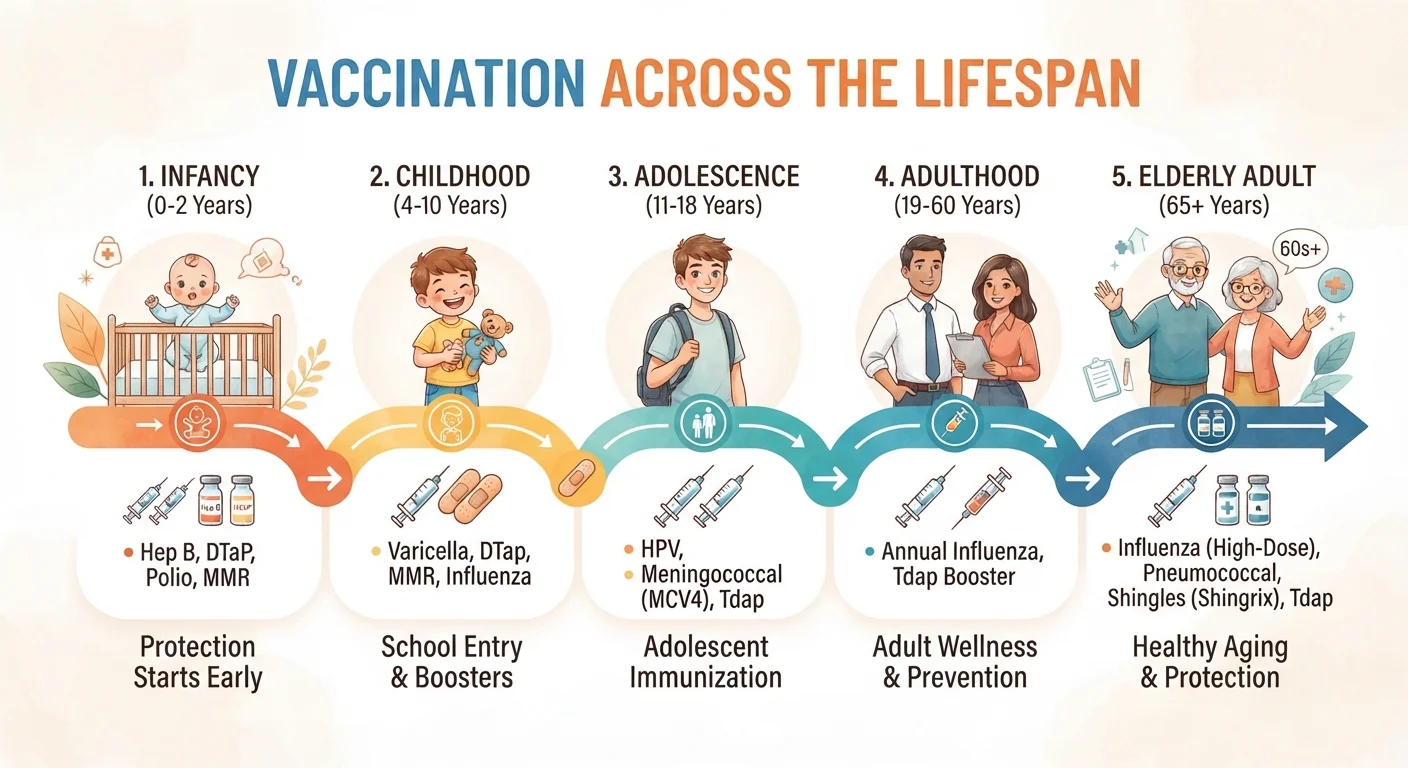
Vaccination needs also change across different life stages and diagnoses. The immunization timeline across a lifetime offers useful context for understanding how recommendations shift over time.
Having the Conversation With Your Care Team
No general article can substitute for personalized guidance from a provider who knows your diagnosis, current treatments, and overall health history. If you or a family member is immunocompromised, bring a direct question to your next appointment: "Which vaccines are recommended for me right now, and are there any I should avoid?"
If you're unsure how to approach that conversation — or have concerns about vaccines in general — our piece on talking to your doctor about vaccine hesitancy offers practical communication strategies.
Specialists involved in managing the underlying condition — oncologists, rheumatologists, transplant teams, or infectious disease specialists — often coordinate with a primary care provider on vaccine planning. Bringing all members of your care team into the conversation ensures that decisions are aligned with your full clinical picture.
This article is for general informational and educational purposes only. It is not medical advice. Always consult a qualified healthcare professional before making any decisions about vaccination or changes to your medical care.