Why Immunization Needs Change Over a Lifetime
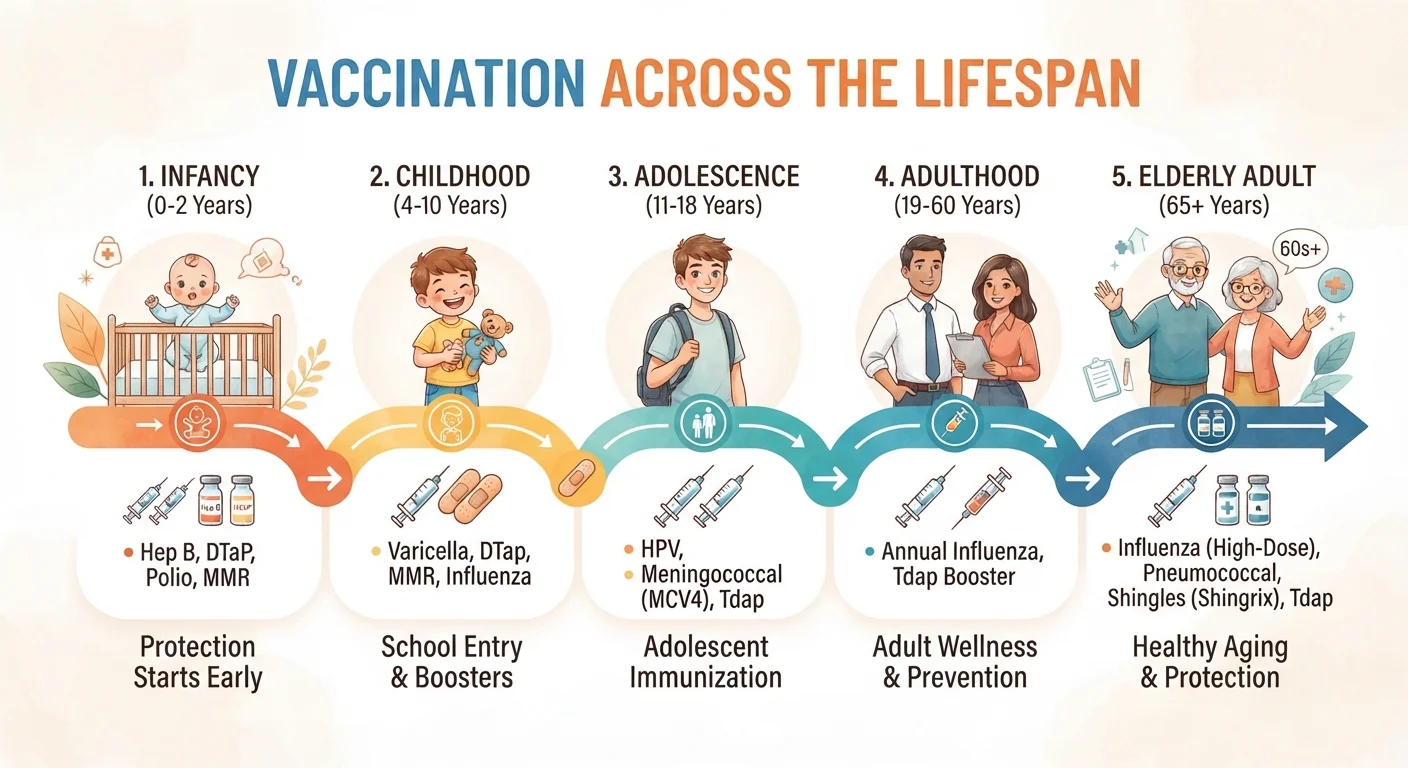
Vaccines are not a one-time event in childhood. The immune system develops, matures, and gradually shifts across decades — and so do the threats it faces. Infants lack a fully developed immune response and rely on a rapid series of early shots to prime protection. Teenagers face new exposures at school and in social settings. Adults accumulate occupational risks, travel to different regions, and may develop conditions that change how well vaccines work. Older adults contend with immunosenescence — the natural age-related decline in immune function that can blunt both vaccine response and disease defense.
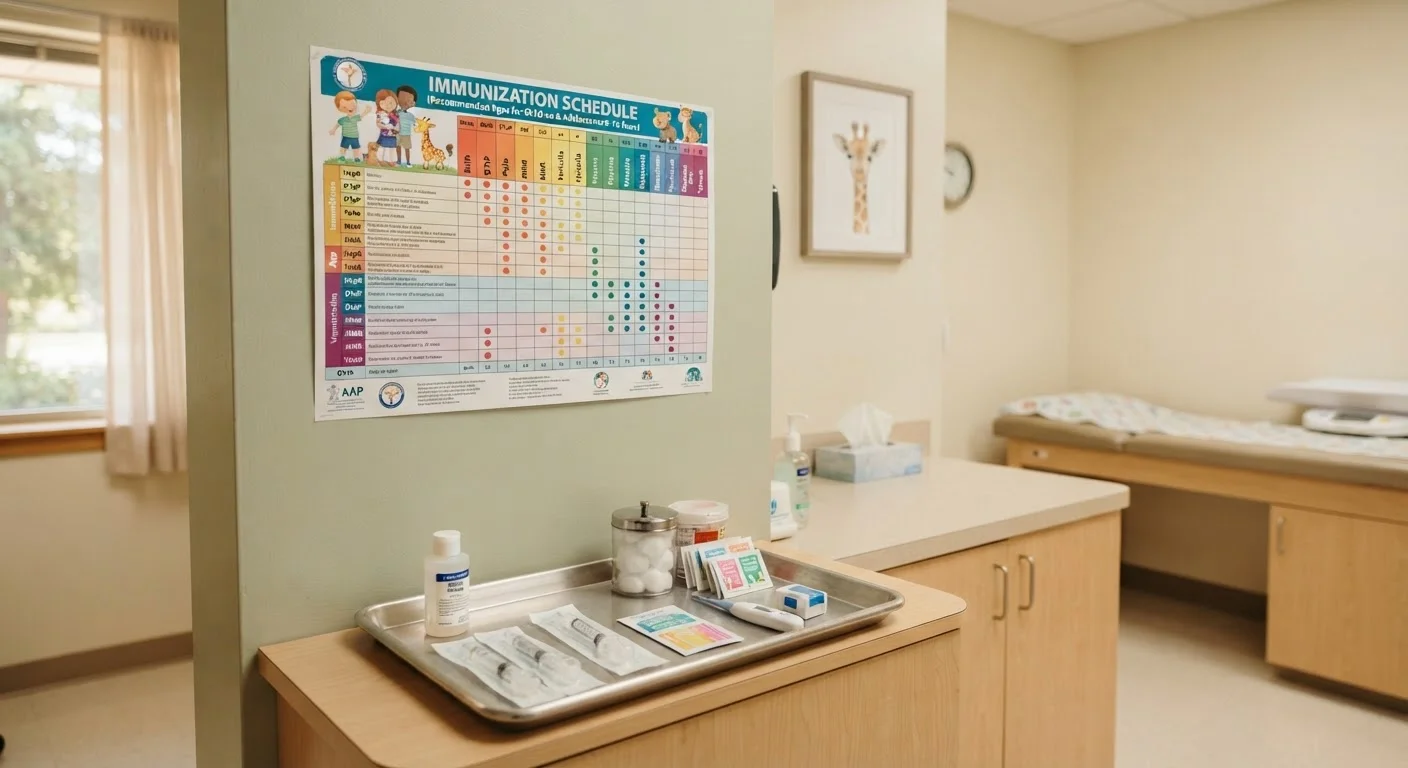
The CDC, in partnership with the Advisory Committee on Immunization Practices (ACIP), publishes recommended immunization schedules for children, adolescents, and adults. These are reviewed and updated annually. Understanding the logic behind the schedule — not just the list — helps Americans stay proactive rather than reactive about their immunization status. This overview maps the major vaccine milestones across every life stage.
Birth Through Age 6: Building the Foundation
The earliest years involve the most intensive vaccination schedule, and for good reason: infants are highly vulnerable to infections that can cause severe complications. The routine childhood schedule covers protection against more than a dozen diseases before a child reaches kindergarten.
- At birth: Hepatitis B (first dose)
- 2 months: DTaP (diphtheria, tetanus, pertussis), Hib, IPV (polio), PCV15 or PCV20 (pneumococcal), rotavirus, and hepatitis B (second dose)
- 4 and 6 months: Continuation of the above series
- 6 months+: Annual influenza vaccination begins
- 12–15 months: MMR (measles, mumps, rubella), varicella, hepatitis A, and booster doses of earlier vaccines
- 4–6 years: Booster doses of DTaP, IPV, MMR, and varicella before school entry
For a detailed breakdown of what each of these vaccines protects against, see Childhood Vaccines: What Each One Protects Against.
Use your annual wellness visit as a built-in checkpoint: ask your provider to pull up your vaccine history every year, not just when you're sick. Most adults have at least one gap they're unaware of.
Studies consistently show that provider recommendation is one of the strongest drivers of adult vaccine uptake — making the routine visit the most efficient moment to address the full schedule.
If you're unsure whether you had a particular childhood vaccine, blood tests called titer tests can detect antibody levels for some diseases — helping you avoid unnecessary doses while confirming gaps.
Titer testing is a recognized clinical tool for assessing immunity, particularly useful when records are unavailable and the clinical stakes of re-vaccination (e.g., live vaccines in pregnancy) are significant.
Ages 7–18: Adolescent Boosters and New Additions
The preteen and teen years introduce vaccines targeting conditions more relevant to adolescent life, as well as important boosters that renew protection from childhood series.
- Tdap (ages 11–12): A single booster shot that refreshes protection against tetanus, diphtheria, and pertussis (whooping cough), which can wane over time.
- HPV vaccine (ages 11–12, ideally): The human papillomavirus vaccine is most effective when given before potential exposure. A two-dose series is standard when started before age 15; three doses are recommended if started later.
- Meningococcal vaccine (MenACWY): Recommended at ages 11–12 with a booster at 16, given the heightened risk in communal living environments like college dormitories.
- MenB vaccine: Recommended for teens ages 16–18 or those at increased risk from serogroup B meningococcal disease.
Annual flu vaccination continues throughout adolescence. Teens who missed any earlier childhood vaccines should receive catch-up doses on a schedule determined by a healthcare provider.
Adults Ages 19–49: Catch-Up and Situational Vaccines
Many adults assume their childhood vaccines covered everything — but protection from some vaccines fades, and adult life introduces new risk factors. The CDC's adult schedule addresses both ongoing needs and situation-specific additions.
- Influenza: Annual vaccination is recommended for virtually all adults.
- Tdap/Td: If Tdap was never received as an adult, one dose is recommended; a Td (tetanus/diphtheria) booster follows every 10 years.
- COVID-19: Updated vaccines are recommended per current CDC guidance for all adults.
- HPV: Catch-up vaccination is recommended for adults through age 26 who were not vaccinated; shared decision-making applies for ages 27–45.
- Hepatitis A and B: Adults not previously vaccinated or who lack documented immunity should complete these series.
- MMR and varicella: Adults without evidence of immunity may need one or two doses.
Pregnancy is a critical trigger for additional recommendations — particularly Tdap (each pregnancy) and influenza. For a broader look at the adult schedule, see The U.S. Adult Immunization Schedule Explained. Many adults are also behind without knowing it — Vaccines Commonly Missed in Adulthood explores why that happens.
Ages 50 and Older: Shoring Up Aging Immunity
After age 50, the priority shifts toward protecting an immune system that responds less robustly to both infection and vaccination. Certain vaccines are specifically formulated or dosed to account for this.
- Shingles (Shingrix): The CDC recommends two doses of Shingrix for all immunocompetent adults 50 and older. Shingles risk rises significantly with age, and Shingrix provides strong protection.
- Influenza: Adults 65 and older are advised to receive a high-dose or adjuvanted flu vaccine, which is designed to generate a stronger immune response in older adults.
- Pneumococcal vaccines: Adults 65+ should discuss PCV20 or the combination approach with their provider to protect against pneumococcal pneumonia and bloodstream infections.
- RSV vaccine: Adults 60 and older may receive an RSV vaccine; shared clinical decision-making with a provider is recommended.
- COVID-19: Updated vaccines remain important for older adults who face greater risk from severe disease.
Vaccine recommendations for this age group are intertwined with routine preventive checkups. The Screenings & Checkups provides a complementary roadmap for age-appropriate health monitoring.
Special Circumstances That Shift the Schedule
Beyond age, several life circumstances change what vaccines a person needs or when they should get them:
- Pregnancy
- Tdap is recommended during each pregnancy (ideally 27–36 weeks) to transfer antibodies to the newborn. Flu and COVID-19 vaccination are also recommended during pregnancy. Consult an OB-GYN or midwife for personalized guidance.
- Chronic health conditions
- Diabetes, heart disease, kidney disease, asthma, and other conditions can increase the severity of vaccine-preventable illnesses. Additional vaccines — such as pneumococcal or hepatitis B — may be indicated earlier or at higher priority.
- Immunocompromised individuals
- People on immunosuppressive therapy or living with conditions affecting immune function require individualized vaccination planning. Live vaccines may be contraindicated. See Immunocompromised and Vaccines for an overview of the key considerations.
- Travel
- International travel may require vaccines for typhoid, yellow fever, Japanese encephalitis, or others depending on destination. Consult a travel medicine clinic at least 4–6 weeks before departure.
- Occupation
- Healthcare workers, lab personnel, and those working with animals may need hepatitis B, rabies pre-exposure prophylaxis, or other occupationally relevant vaccines.
Keeping Your Records and Staying Current
One practical challenge is that vaccination history can be incomplete, especially for adults who received childhood doses decades ago or who have moved between states or providers. Incomplete records can lead to unnecessary repeat doses — or missed catch-up opportunities.
Steps to stay on top of your immunization status include:
- Request your immunization records from past providers, your state's immunization information system (IIS), or school or military records if applicable.
- At your next annual checkup, ask your provider to review your vaccine history and flag any gaps.
- Keep a personal copy of your records, as they are commonly required for travel, employment, school enrollment, and hospital admission.
For a practical checklist on locating and organizing your records, see Keeping Your Vaccination Records in Order. You can also pair this timeline with the Preventive Health Screening Timeline to maintain a comprehensive picture of age-appropriate preventive care. If you're new to navigating vaccines as an adult, Vaccines and Immunity: A Complete Starter Guide for Adults is a useful companion resource.
This article is for general informational and educational purposes only and does not constitute medical advice. Vaccine recommendations vary by individual health history, risk factors, and other considerations. Always consult a qualified healthcare professional to determine which vaccines are appropriate for you.