
Why These Three Screenings Are the Starting Point
Heart disease remains the leading cause of death in the United States, and type 2 diabetes affects tens of millions of American adults. What makes these conditions especially dangerous is that they often develop silently — elevated blood pressure, abnormal cholesterol, and high blood sugar can each damage blood vessels, the heart, and other organs for years without causing noticeable symptoms.
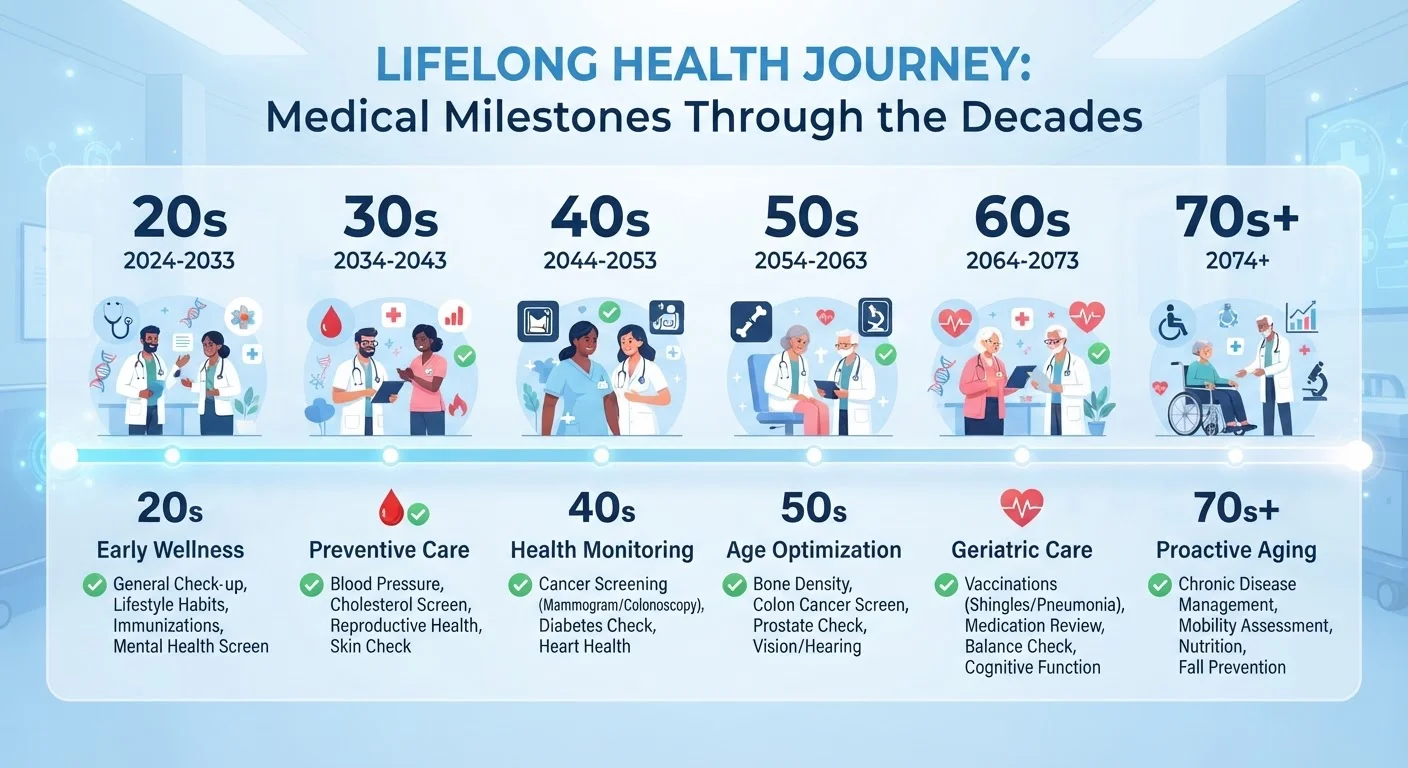
That's precisely why clinical organizations including the USPSTF, the American Heart Association, and the CDC identify blood pressure, cholesterol, and blood sugar as the foundation of adult preventive screening. No single test predicts everything, but together these three measurements give clinicians — and patients — a meaningful picture of cardiovascular and metabolic risk. See how these fit into a broader preventive plan with the Preventive Health Screening Timeline, Decade by Decade.
116 million
U.S. adults with high blood pressure
According to the American Heart Association, nearly half of all U.S. adults have hypertension, and many are unaware of it.
38%
U.S. adults with prediabetes
The CDC estimates that more than 1 in 3 American adults have prediabetes, with approximately 80% undiagnosed.
93 million
U.S. adults with high total cholesterol
The CDC reports that about 1 in 3 American adults has high LDL cholesterol, a major risk factor for heart disease and stroke.
Blood Pressure: The Silent Pressure on Your Arteries
Blood pressure measures the force blood exerts against artery walls as the heart pumps. It's recorded as two numbers: systolic pressure (during a heartbeat) over diastolic pressure (between beats), expressed in millimeters of mercury (mmHg). A reading below 120/80 mmHg is considered normal by current guidelines.
Hypertension — generally defined as a consistent reading at or above 130/80 mmHg — puts ongoing stress on artery walls, the heart, kidneys, and brain. The USPSTF recommends screening all adults aged 18 and older, with frequency tailored to baseline results and individual risk. Because a single reading can fluctuate with stress or caffeine, clinicians typically confirm hypertension over multiple visits or with home monitoring.
Lifestyle factors including sodium intake, physical activity level, body weight, and alcohol consumption all influence blood pressure, making it a metric that responds meaningfully to everyday choices. Explore foundational habits at Healthy Daily Habits.
Cholesterol: Understanding Your Lipid Panel
A standard lipid panel measures four values: total cholesterol, low-density lipoprotein (LDL, often called "bad" cholesterol), high-density lipoprotein (HDL, often called "good" cholesterol), and triglycerides. Elevated LDL and low HDL are independently associated with atherosclerosis — the buildup of plaque inside artery walls that can lead to heart attack and stroke.
Cholesterol targets are not one-size-fits-all. Clinicians interpret lipid numbers alongside age, blood pressure, smoking status, diabetes, and family history using validated risk calculators. A person with multiple risk factors may need tighter LDL control than someone with a similarly elevated number but no other risk factors.
For adults in midlife, cholesterol screening becomes especially important. The Checkup Checklist for Adults in Their 40s and 50s outlines when and how to discuss lipid results with your clinician during this decade.
Blood Sugar: Catching Glucose Problems Early
Blood sugar screening assesses how well the body regulates glucose. Two common tests are used: a fasting plasma glucose test, which requires no food or drink (except water) for at least eight hours before the draw, and the hemoglobin A1C test, which reflects average blood sugar over the past two to three months and requires no fasting.
The USPSTF recommends screening for prediabetes and type 2 diabetes in adults aged 35 to 70 who have overweight or obesity. Clinicians may screen earlier or more frequently for individuals with a family history of diabetes, gestational diabetes, polycystic ovary syndrome, or other risk factors. Identifying prediabetes — a state of elevated but not yet diabetic glucose levels — creates a window for intervention, because research consistently shows that structured lifestyle changes can delay or prevent progression to type 2 diabetes.
Blood sugar data also complements body composition metrics. If you're evaluating fitness baselines, see What Body Composition Metrics to Gather Before Setting a Fitness Goal for a broader picture.
Putting Your Numbers in Context
One of the most important things to understand about these screenings is that no single number stands alone. A clinician assessing cardiovascular risk considers blood pressure, cholesterol, and blood sugar together — along with age, sex, smoking history, family history, and existing conditions — to estimate overall risk and guide recommendations.
Abnormal results don't automatically mean medication. For many people, particularly those with mildly elevated numbers and low overall risk, clinicians first recommend structured lifestyle changes — dietary adjustments, increased physical activity, weight management, and reduced alcohol and sodium intake — and recheck after a defined period. This is an area where informed, proactive engagement with your healthcare provider makes a real difference.
Men and women may face different screening timelines and risk profiles for some of these markers. See Screenings Recommended for Women at Every Stage of Adulthood and Screenings Recommended for Men at Every Stage of Adulthood for sex-specific guidance.
This article is for general informational and educational purposes only and does not constitute medical advice. Always consult a qualified healthcare professional for guidance specific to your health situation.