
Why Midlife Screenings Matter More Than Ever
The decades between 40 and 59 represent a turning point in preventive health. Many chronic conditions — cardiovascular disease, type 2 diabetes, colorectal cancer, and others — begin developing silently during this window. Routine screenings are the primary tool for catching them before symptoms appear, when treatment is most effective.
Guidelines from organizations such as the U.S. Preventive Services Task Force (USPSTF), the Centers for Disease Control and Prevention (CDC), and major clinical societies have identified specific screenings that become newly recommended or newly urgent during midlife. This checklist consolidates those recommendations into a practical reference you can bring to your next appointment.
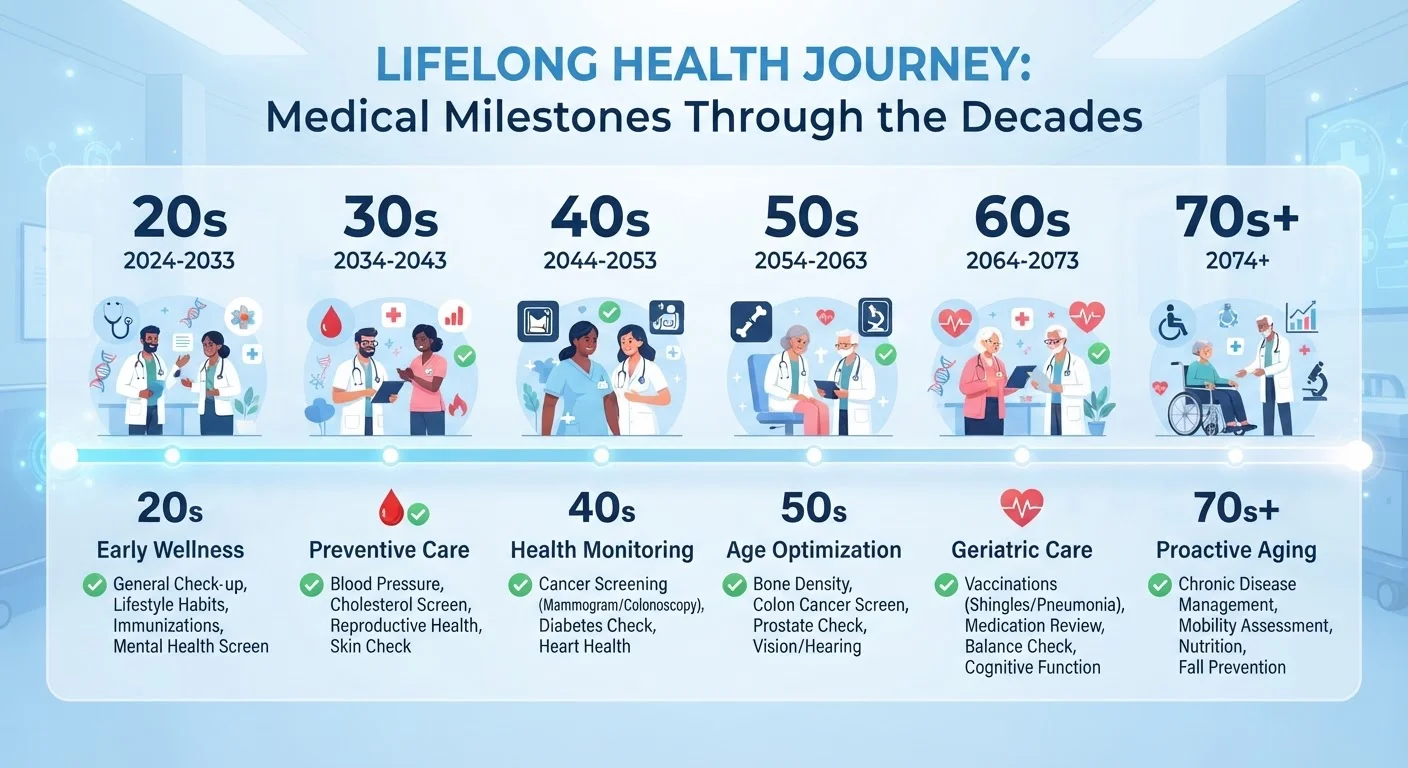
For a broader view of how preventive care shifts across your lifetime, see Your Preventive Health Screening Timeline, Decade by Decade. And for deep dives into sex-specific needs, explore our guides on screenings recommended for women and screenings recommended for men.
This Checklist Is a Starting Point, Not a Prescription
Screening recommendations are population-level guidelines — your personal schedule may differ based on family history, prior test results, existing conditions, and your provider's clinical judgment. Use this checklist to start a conversation, not to self-diagnose or self-prescribe. Always work with a qualified healthcare professional to determine what is appropriate for you.
What You'll Need Before Your Appointment
Getting the most from your annual wellness visit requires a little preparation. Gather the following before you go — your provider will be better equipped to assess your risk profile and confirm which screenings are due.
Personal health history summary
A written or digital record of past diagnoses, surgeries, and hospitalizations helps your provider assess your individual screening needs.
Family medical history
A list of first-degree relatives' major health conditions (heart disease, cancer, diabetes) helps identify elevated risk that may shift your screening schedule.
Current medications and supplements list
A complete, up-to-date list prevents interactions and helps your provider spot gaps or duplications in your care.
Vaccination records
Knowing which vaccines you have already received prevents unnecessary repeat doses and identifies gaps.
Insurance coverage summary
Understanding what your plan covers for preventive services helps you prioritize and avoid unexpected costs.
The Midlife Checkup Checklist
Work through each category below. Items marked must reflect widely recommended screenings for most adults in this age group. Items marked should apply based on common risk factors. Nice-to-have items are optional discussions worth raising with your provider.
For context on three of the most universal measurements — blood pressure, cholesterol, and blood sugar — see our explainer on the core screenings that apply to nearly everyone.
Cardiovascular & Metabolic Health
Cancer Screenings
Mental & Behavioral Health
Vision, Hearing & Dental
Immunizations
Bone & Musculoskeletal Health
Don't Skip Screenings Due to Cost Concerns
Under the Affordable Care Act, many USPSTF-recommended preventive screenings are covered at no cost-sharing when performed by an in-network provider. However, coverage rules vary by plan and can change. Contact your insurer before your appointment to confirm what is covered and avoid surprises. If you are uninsured or underinsured, community health centers and federally qualified health centers often provide low-cost or sliding-scale preventive services.
Making This Checklist Work for You
A checklist is only as useful as the action it prompts. After reviewing every item, note which screenings you have not completed and bring the list to your next appointment. Your provider can confirm whether each is appropriate given your individual history, risk factors, and insurance coverage.
Preventive care doesn't stop at screenings. Daily habits form the foundation on which screenings build. The Daily Health Habits Self-Audit is a practical companion tool for evaluating your sleep, movement, nutrition, and stress between visits.
This article is for general informational and educational purposes only and does not constitute medical advice. Screening recommendations vary by individual health history, risk factors, and clinical judgment. Always consult a qualified healthcare provider to determine which screenings are appropriate for you.