How Federal Law Shapes Your Preventive Care Benefits
The Affordable Care Act, enacted in 2010, fundamentally changed what U.S. health insurers must cover. For the first time, most individual and employer-sponsored plans were required to include a core set of preventive services without passing costs on to the patient — no copay, no coinsurance, no deductible. The intent was straightforward: remove financial barriers so Americans would actually get screened.
The covered services list isn't arbitrary. It's based on recommendations from three authoritative bodies:
- U.S. Preventive Services Task Force (USPSTF) — an independent panel of experts that grades preventive services A through D. Only A- and B-rated services must be covered at no cost.
- Advisory Committee on Immunization Practices (ACIP) — sets vaccination schedules that plans must cover.
- Health Resources and Services Administration (HRSA) — specifies additional preventive services for women and children.
To learn more about what preventive screenings actually are and how they differ from diagnostic tests, see our overview of preventive screenings.
Coverage Rules Can Change
The specific list of no-cost preventive services can shift when USPSTF ratings are updated or when federal regulations change. Check your insurer's current preventive care coverage list at least once a year — particularly before scheduling screenings — since what was covered under last year's plan may be coded differently this year.
The Rules That Determine Whether You Pay
Coverage existing on paper doesn't guarantee a $0 bill — several conditions must be met.
In-Network Providers Only
The no-cost guarantee applies only when you see an in-network provider. Visiting an out-of-network clinician for the same screening may trigger your standard cost-sharing. Always verify network status before scheduling.
Preventive Billing, Not Diagnostic
How a visit is coded makes a significant financial difference. A routine blood pressure check billed as preventive is covered. If you mention chest tightness at the same appointment and the visit is reclassified as diagnostic, you may owe a portion of the cost. Ask your provider upfront about how they plan to bill the visit, especially if you have existing conditions to discuss.
Plan Type Matters
ACA-compliant plans — most employer plans and marketplace plans — must follow these rules. Grandfathered plans, short-term health plans, and some association health plans are not required to comply. Check your plan documents or call member services to confirm your plan's status.
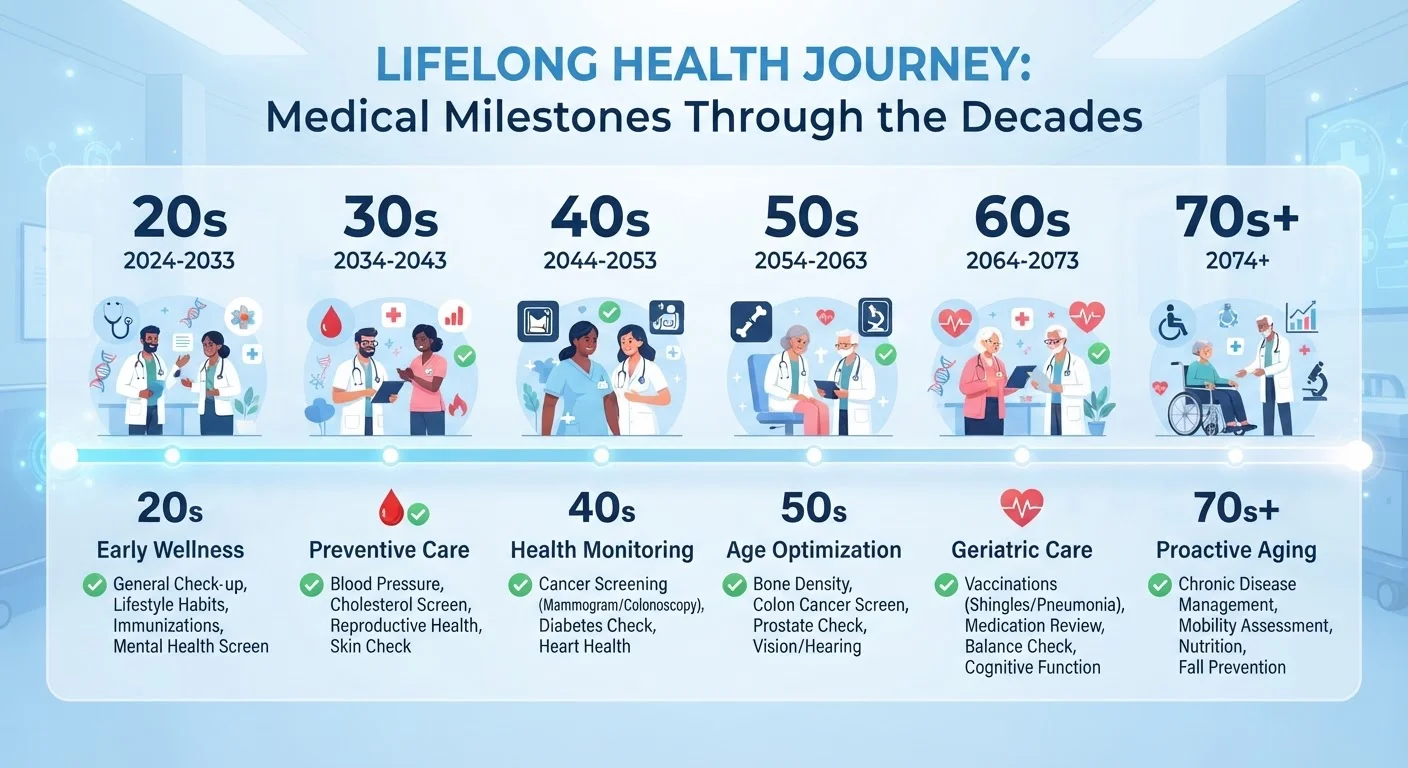
For a structured look at which screenings are recommended at each stage of life, the decade-by-decade screening timeline is a useful reference.
What to Do Before and After Your Screening Appointment
A little preparation goes a long way in avoiding surprise bills and making the visit count.
Before Your Appointment
- Call your insurer and confirm the specific screening is covered at no cost under your plan.
- Verify that your provider is in-network for your current plan year — networks can change annually.
- Ask your provider's billing office how they will code the visit, particularly if you have both preventive and non-preventive concerns to address.
At the Appointment
If you have an unrelated symptom or condition you want to discuss, consider scheduling a separate visit for that issue. Combining preventive and diagnostic concerns in one appointment is the most common reason a preventive visit gets reclassified.
After Your Appointment
Review your Explanation of Benefits (EOB) when it arrives. If a covered preventive service appears with unexpected charges, contact your insurer to dispute the coding. Errors in billing are not uncommon and can often be resolved.
For practical guidance on getting the most value from your checkup, see making the most of a preventive care appointment.
~71%
Adults who skipped care due to cost concerns
A KFF Health Tracking Poll found that roughly 7 in 10 adults who went without needed care cited cost as a primary reason, underscoring the importance of no-cost preventive benefits.
A or B
USPSTF grades required for no-cost ACA coverage
Only preventive services receiving an A or B rating from the U.S. Preventive Services Task Force must be covered without cost-sharing under ACA-compliant health plans.
1,400+
Federally Qualified Health Center sites nationwide
According to HRSA, there are more than 1,400 FQHC organizations operating across the U.S., providing sliding-scale preventive care to underserved populations.
Options If You're Uninsured or Underinsured
Lack of insurance is one of the most cited reasons Americans skip preventive screenings — but it doesn't have to be a barrier. Several pathways exist for accessing care at low or no cost.
- Federally Qualified Health Centers (FQHCs): These community health centers receive federal funding and must serve patients regardless of ability to pay, using a sliding-fee scale based on income. Use the HRSA's Find a Health Center tool at findahealthcenter.hrsa.gov to locate one near you.
- State and CDC-funded programs: The CDC's National Breast and Cervical Cancer Early Detection Program (NBCCEDP) provides free mammograms and Pap tests to eligible low-income women. Similar programs exist for colorectal cancer screening in many states.
- Retail and urgent care clinics: Some offer affordable self-pay rates for basic screenings such as blood pressure and cholesterol checks.
- Marketplace enrollment: If you're uninsured, you may be eligible for subsidized coverage through healthcare.gov, which would grant access to the full ACA preventive benefit package.
More options are detailed in getting preventive screenings without a regular doctor.
This article is for general informational purposes only and does not constitute medical or financial advice. Coverage rules vary by plan; consult your insurer for details specific to your policy, and speak with a qualified healthcare professional about which screenings are appropriate for your individual health situation.