Why a Screening Timeline Matters
Preventive screenings are most effective when they match your age, sex, and risk profile. Many conditions — from high blood pressure to colorectal cancer — develop silently, producing no noticeable symptoms until well advanced. Catching them early, or identifying risk factors before disease takes hold, is precisely what screening is designed to do.
Before diving into the decade-by-decade breakdown, it helps to understand the basics. Learn what preventive screenings are and why healthy people need them — they're not reserved for people who are already sick. Recommendations here are drawn from U.S. Preventive Services Task Force (USPSTF) guidelines and CDC guidance. Always discuss your personal history with a qualified healthcare provider to determine the right schedule for you.
| Colorectal cancer screening start age | 45 (updated USPSTF guidance) (U.S. Preventive Services Task Force, 2021) |
| Cervical cancer screening start age | 21 (Pap smear every 3 years) (USPSTF recommendation) |
| Diabetes screening ages | 35–70 if overweight or obese (USPSTF recommendation) |
| Lung cancer screening eligibility | Ages 50–80, 20 pack-year smoking history (USPSTF, 2021) |
| AAA screening recommendation | One-time ultrasound, men 65–75 who have ever smoked (USPSTF recommendation) |
| Osteoporosis screening (women) | Bone density scan beginning at age 65 (USPSTF recommendation) |
Screenings by Decade: 20s Through 60s and Beyond
Your 20s
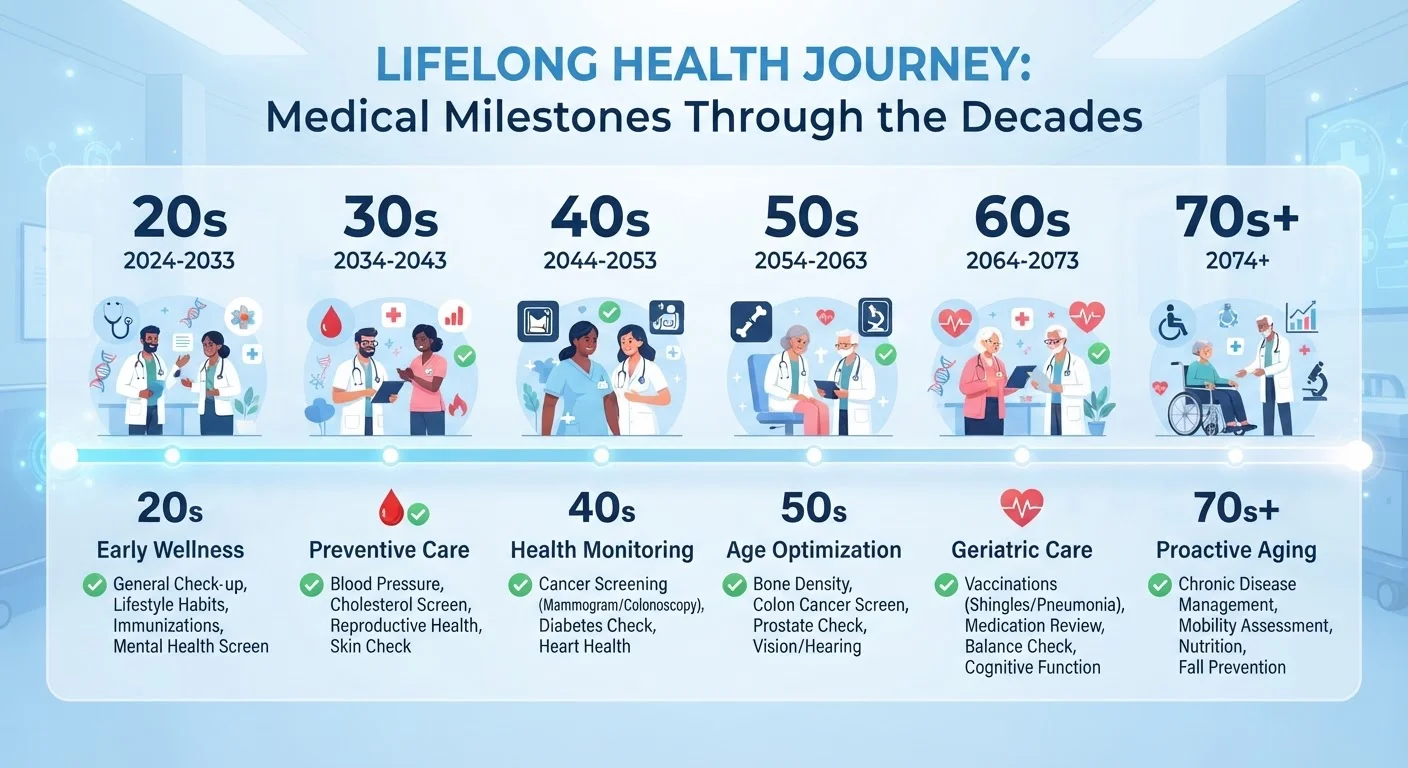
Your 20s are a foundation-building decade. Blood pressure checks should happen at least every two years if readings are normal. All sexually active adults under 25 (and older adults at elevated risk) should be screened annually for STIs, including chlamydia and gonorrhea. Cervical cancer screening (Pap smear) begins at age 21 and is recommended every three years for those with a cervix. Mental health discussions and body mass index (BMI) assessments are also appropriate at routine visits.
Your 30s
Continue cervical cancer screening every three years, or every five years if combining a Pap smear with HPV co-testing. Blood pressure monitoring remains essential. Lipid (cholesterol) screening becomes more relevant, especially with a family history of heart disease. Diabetes risk assessment through fasting blood glucose or HbA1c testing may be recommended if overweight or with additional risk factors.
Your 40s
The 40s mark a significant shift. Breast cancer screening with mammography is recommended beginning at age 40 by many clinical bodies, though the USPSTF advises shared decision-making starting at 40 and routine screening by 50. Discuss timing with your provider. Prediabetes and Type 2 diabetes screening is recommended for adults aged 35–70 who are overweight. Use this midlife checkup checklist to keep track of what's newly due.
Your 50s
Colorectal cancer screening begins at age 45 per updated USPSTF guidance, using options such as colonoscopy, stool-based tests, or CT colonography. Lung cancer screening with low-dose CT is recommended annually for adults aged 50–80 with a significant smoking history (20 pack-years) who currently smoke or quit within the past 15 years. Osteoporosis risk assessment begins for women approaching or at menopause. Blood pressure, cholesterol, and diabetes screenings continue.
Your 60s and Beyond
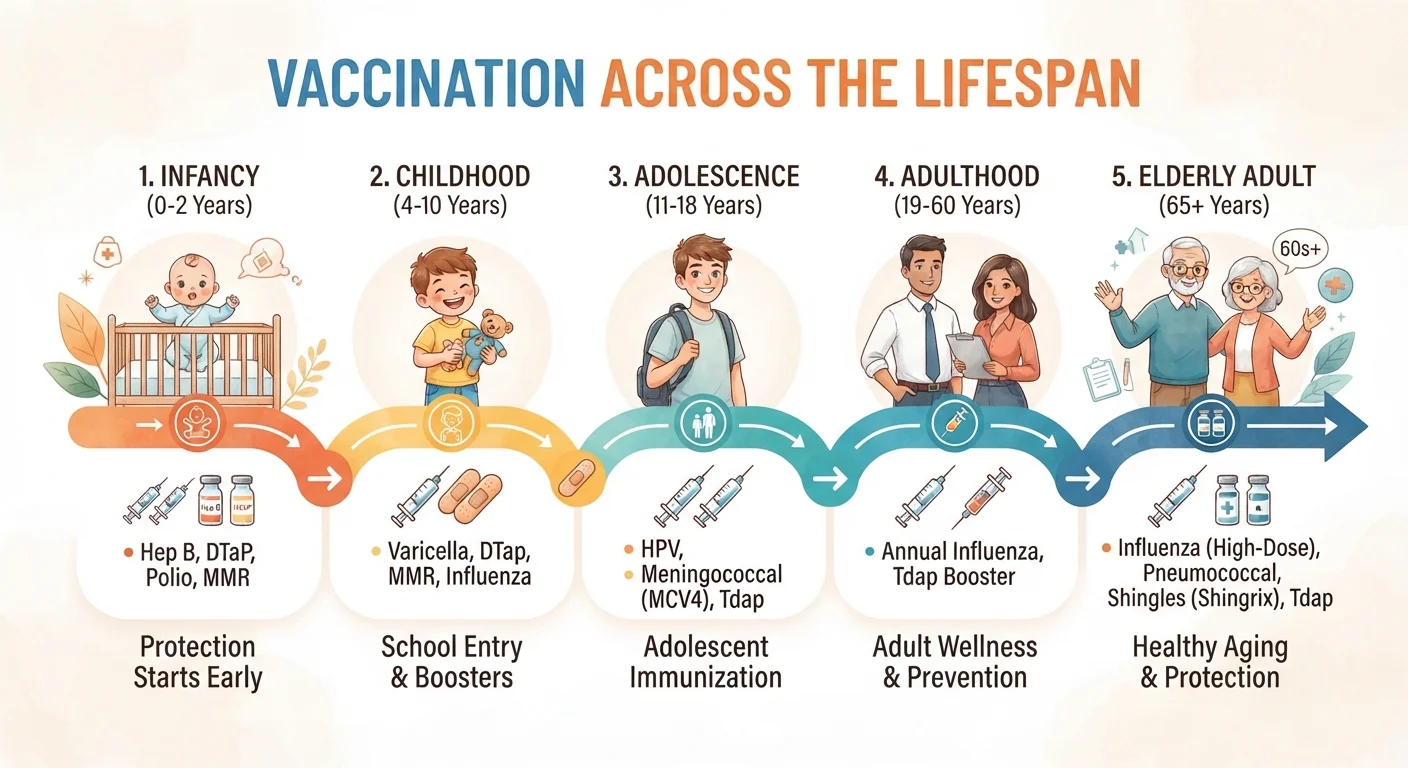
Abdominal aortic aneurysm (AAA) screening — a one-time abdominal ultrasound — is recommended for men aged 65–75 who have ever smoked. Osteoporosis screening via bone density scan (DEXA) is recommended for women at 65 and earlier if risk factors are present. Vision, hearing, and fall-risk assessments become increasingly important. Colorectal cancer screening typically continues through age 75; decisions after that are individualized. Check your vaccine schedule too — vaccine needs evolve with age, and shingles and pneumonia vaccines are particularly relevant in this decade.
This article is for informational purposes only and does not constitute medical advice. Consult a qualified healthcare provider to determine the screening schedule most appropriate for your individual health needs.