What Food Tracking Actually Involves
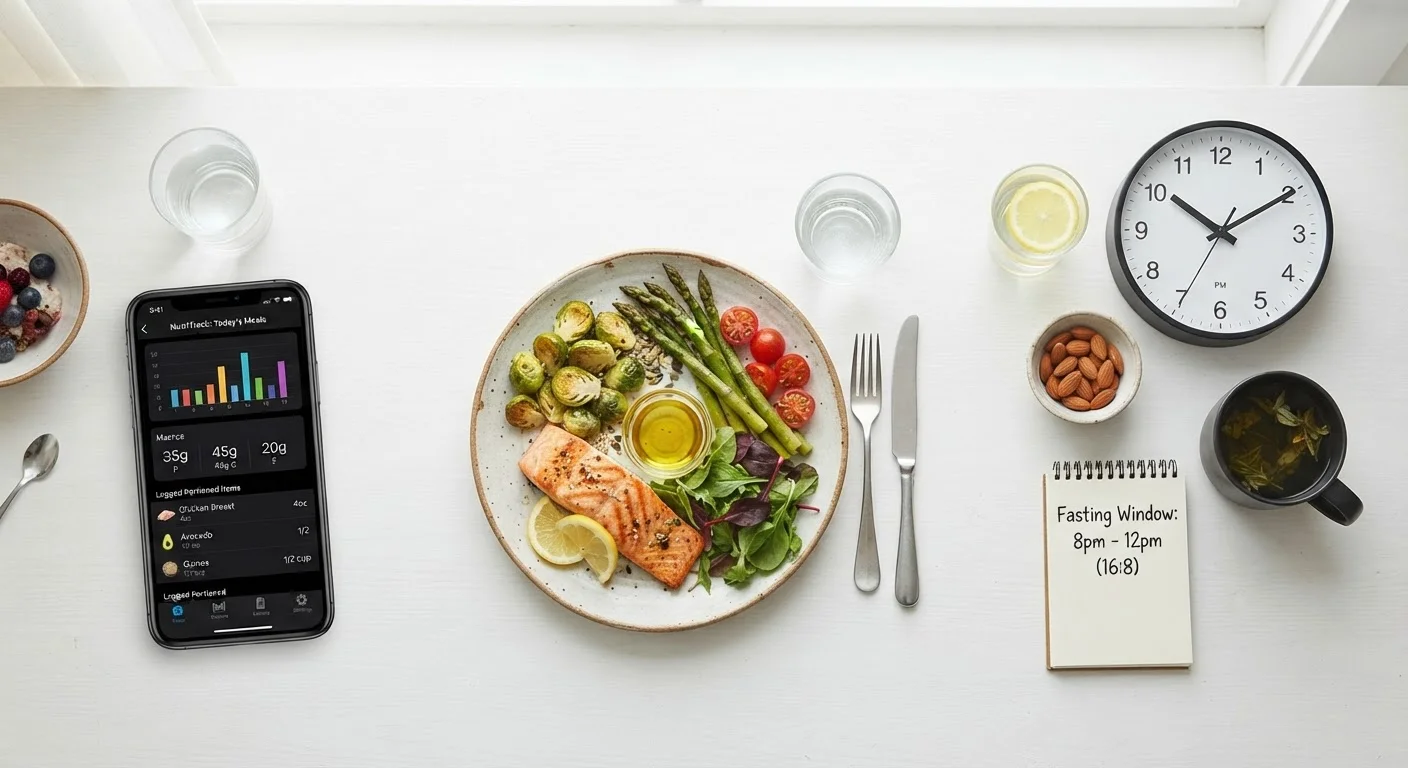
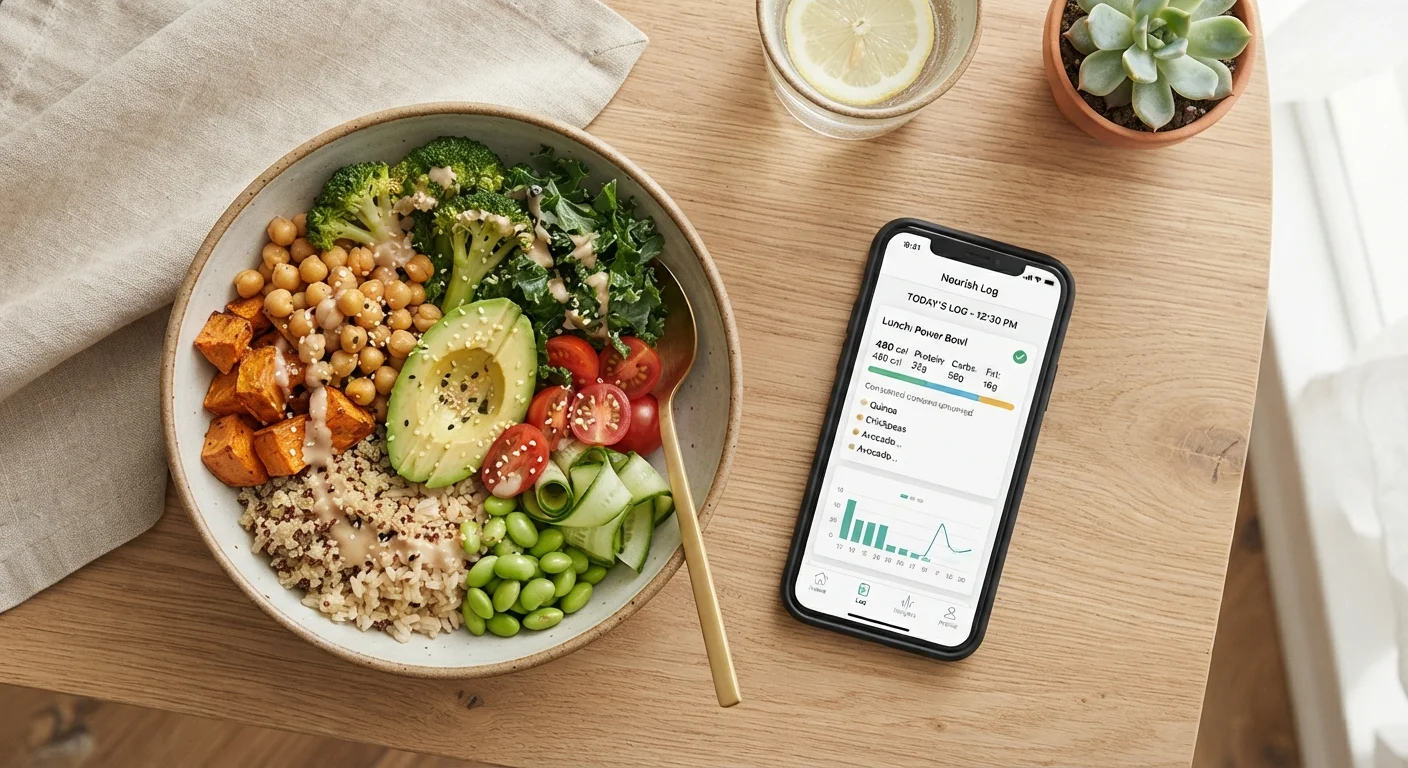
Food tracking — also called dietary self-monitoring — means systematically recording what you eat and drink, typically using an app, spreadsheet, or written log. Most digital tools allow users to log foods from large databases and automatically calculate calories, macronutrients (protein, carbohydrates, and fats), and sometimes micronutrients like sodium or fiber.
It's worth distinguishing between different intensities of tracking. Some people log every bite with precise gram-level measurements. Others keep a rough daily food diary without counting calories at all. The evidence base spans both approaches, and the psychological and practical effects can differ considerably depending on how rigidly someone tracks.
Food tracking is one strategy within the broader landscape of weight management tools. For context on how it fits alongside approaches like low-carb eating or intermittent fasting, see how major weight loss strategies compare.
The Advantages of Logging What You Eat
Builds concrete awareness of actual food intake
Most people underestimate how much they eat. Logging creates an objective record that makes portion sizes, calorie density, and meal patterns visible in ways that memory alone cannot reliably achieve.
Linked to better weight loss outcomes in research
Consistent dietary self-monitoring is one of the behavioral strategies most frequently identified in studies of successful long-term weight management, including analyses of the National Weight Control Registry.
Reveals hidden dietary patterns
Tracking can surface non-obvious habits — frequent high-calorie beverages, low protein intake, or late-evening eating — that would otherwise go unnoticed and unaddressed.
Supports informed, targeted dietary adjustments
Rather than overhauling an entire diet, data from food logs allows people to make specific, evidence-based changes to the areas that have the most impact on their goals.
Can serve as a short-term calibration tool
Even a few weeks of diligent tracking can improve long-term portion intuition and nutrient awareness, meaning it doesn't necessarily need to be a permanent practice to deliver lasting benefit.
The most well-documented benefit of food tracking is heightened awareness. Many people significantly underestimate portion sizes and calorie density of everyday foods — research consistently shows this gap between perceived and actual intake can be substantial. Logging closes that gap by making eating behaviors visible and concrete.
Self-monitoring is also one of the behavioral strategies most consistently associated with successful weight loss maintenance in clinical literature. A frequently cited analysis of the National Weight Control Registry — a study of individuals who maintained significant weight loss long-term — found that regular self-monitoring was among the most common shared habits.
Tracking can also reveal patterns that are hard to notice otherwise: late-night eating, calorie-dense beverages, or protein intake that's lower than assumed. These insights can guide meaningful, targeted adjustments rather than broad, arbitrary dietary overhauls.
The Real Limitations and Risks
Food database accuracy is inherently limited
Even well-maintained databases contain errors, and home portion estimation adds further variability. Logged calorie and nutrient figures are useful approximations — not precise measurements — and should be interpreted accordingly.
Significant time and cognitive burden
Consistent logging requires ongoing effort at every meal and snack. Adherence typically declines over time, and the mental overhead can make the practice difficult to sustain for many people.
Can increase food-related anxiety
Focusing heavily on numbers may foster an anxious or rule-bound relationship with eating for some individuals, making meals feel stressful rather than nourishing.
Poses clear risks for those with disordered eating history
Calorie counting can reinforce harmful thought patterns in people with past or current eating disorders. Clinical guidance consistently advises caution or avoidance of tracking for this population.
Doesn't address the quality of eating behaviors
Tracking quantifies what is eaten but not how — eating speed, hunger cues, emotional context, and food satisfaction are all invisible to a calorie log, leaving important behavioral drivers unaddressed.
Adherence drops sharply over months
Research on dietary self-monitoring consistently shows that frequency and completeness of logging decline significantly within weeks to months, limiting the long-term utility of the approach for many users.
The most significant practical limitation is accuracy. Food databases — even large, well-maintained ones — contain errors, and home portion estimation introduces additional variability. Studies comparing self-reported dietary intake to objective measures routinely find meaningful discrepancies. Logging numbers should be treated as useful approximations, not precise measurements.
The time and cognitive load of tracking is another genuine barrier. Logging every meal requires consistent effort, and adherence tends to decline over weeks or months. This limits long-term sustainability for many people.
Perhaps most importantly, tracking carries psychological risks for certain individuals. For people with a history of disordered eating, obsessive health behaviors, or high dietary anxiety, calorie counting can reinforce harmful thought patterns. Anyone with these concerns should consult a qualified healthcare professional before starting a tracking regimen. Those interested in a less number-focused approach may find value in what mindful eating actually involves.
Tracking and Disordered Eating: A Key Caution
Calorie and food tracking apps are not designed with eating disorder screening or safeguards in mind. For individuals with a history of anorexia, bulimia, binge eating disorder, or orthorexia, logging can amplify harmful patterns. If you have concerns about your relationship with food, speak with a qualified healthcare provider — such as a registered dietitian or therapist specializing in eating disorders — before beginning any tracking practice.
Who Should — and Shouldn't — Consider It
Food tracking is not a universal prescription. It tends to suit people who are comfortable with data, prefer structured feedback, and are in a stable psychological relationship with food. Used thoughtfully, it can serve as a temporary calibration tool that eventually becomes unnecessary as eating habits and portion intuition improve.
It is generally not recommended as a standalone strategy for people with active or past eating disorders, significant food-related anxiety, or those who find logging increases stress around mealtimes. For these individuals, behavior-based approaches that don't center numbers may be more appropriate — see building eating habits that support a healthy weight without constant tracking.
Special populations — including pregnant individuals, children, adolescents, and people managing chronic health conditions — should work directly with a registered dietitian or physician rather than relying on self-directed tracking apps.
This article is for general informational purposes only and does not constitute medical or nutritional advice. Consult a qualified healthcare professional for guidance tailored to your individual health circumstances.