Three Metrics, Three Different Questions
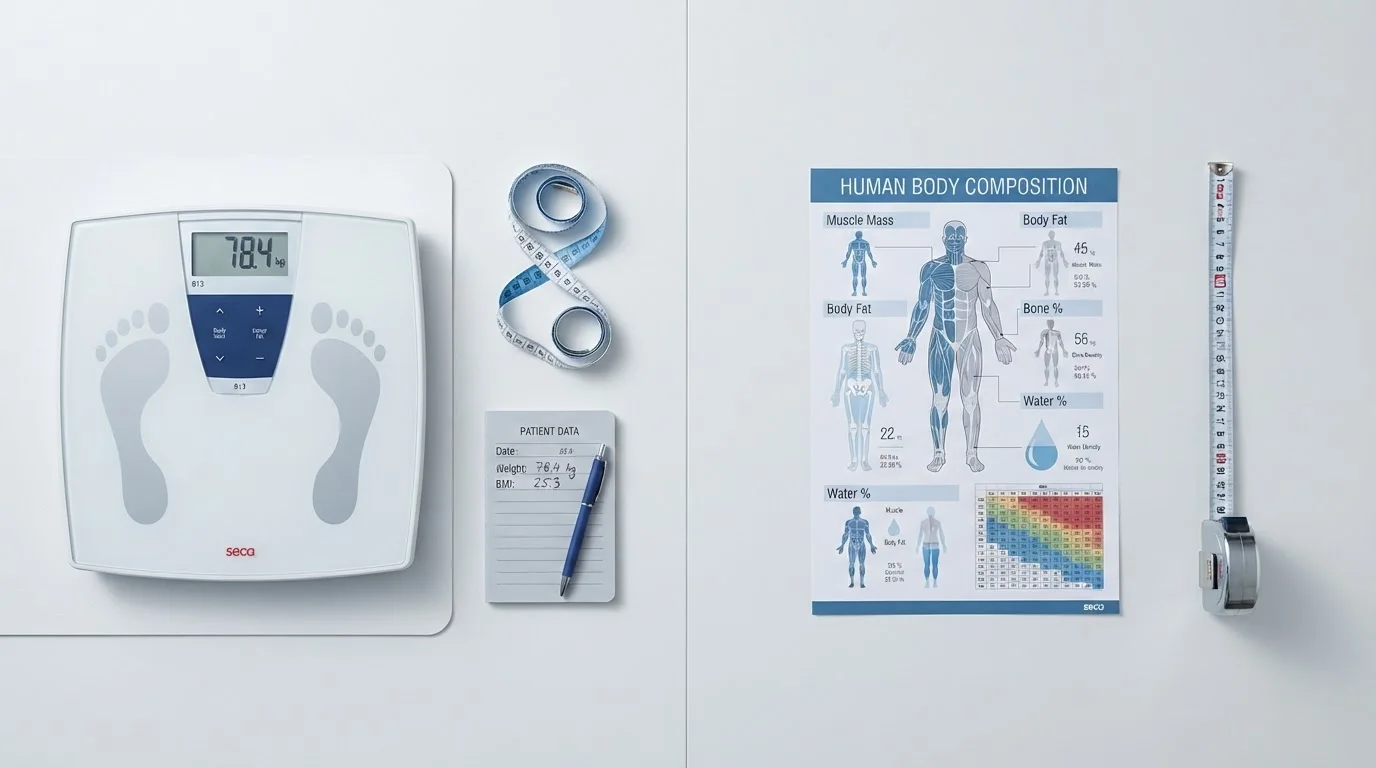
When a healthcare provider evaluates body weight and composition, they rarely rely on a single number. BMI, body fat percentage, and waist circumference are the three most commonly used screening metrics — and each one answers a distinct question. Understanding what each measures, and what it doesn't, helps you interpret your own numbers more accurately.
None of these metrics diagnoses a condition on its own. They are screening tools — starting points for a broader clinical conversation. For a deeper look at why overall body makeup matters beyond any single number, see our guide to body composition.
| BMI Formula | Weight (kg) ÷ Height (m²) (CDC standard) |
| BMI 'Normal' Range | 18.5 – 24.9 (CDC classification) |
| Elevated Waist Circumference (Women) | Above 35 inches (88 cm) (NIH guidelines) |
| Elevated Waist Circumference (Men) | Above 40 inches (102 cm) (NIH guidelines) |
| Body Fat % — Healthy Range (Women) | Approx. 20–35% (Population-level reference; varies by age and source) |
| Body Fat % — Healthy Range (Men) | Approx. 8–24% (Population-level reference; varies by age and source) |
| Most Accurate Body Fat Method | DEXA scan (Generally accepted clinical standard) |
| Most Accessible Metric | Waist circumference (Requires only a flexible measuring tape) |
BMI: A Population Tool Applied to Individuals
Body Mass Index (BMI) is calculated by dividing weight in kilograms by height in meters squared (kg/m²). In the United States, clinicians and public health agencies use the following standard categories established by the Centers for Disease Control and Prevention (CDC): underweight (below 18.5), normal weight (18.5–24.9), overweight (25–29.9), and obese (30 and above).
BMI is inexpensive, fast, and reproducible — which explains its widespread use. Its core limitation is that it measures total body mass relative to height, with no way to distinguish between lean muscle, bone, fat, and fluid. A muscular athlete and a sedentary person of the same height and weight will share identical BMIs despite very different body compositions. BMI also does not account for where fat is stored, which matters significantly for metabolic health.
Research has also documented that BMI thresholds were historically derived from predominantly white European populations, meaning they may misclassify health risk in people of Asian, Black, or Hispanic descent. Some clinical organizations now recommend adjusted thresholds for certain ethnic groups. For a direct comparison of what BMI captures versus what it misses, see BMI vs. body fat percentage.
Body Fat Percentage: A Closer Look at Composition
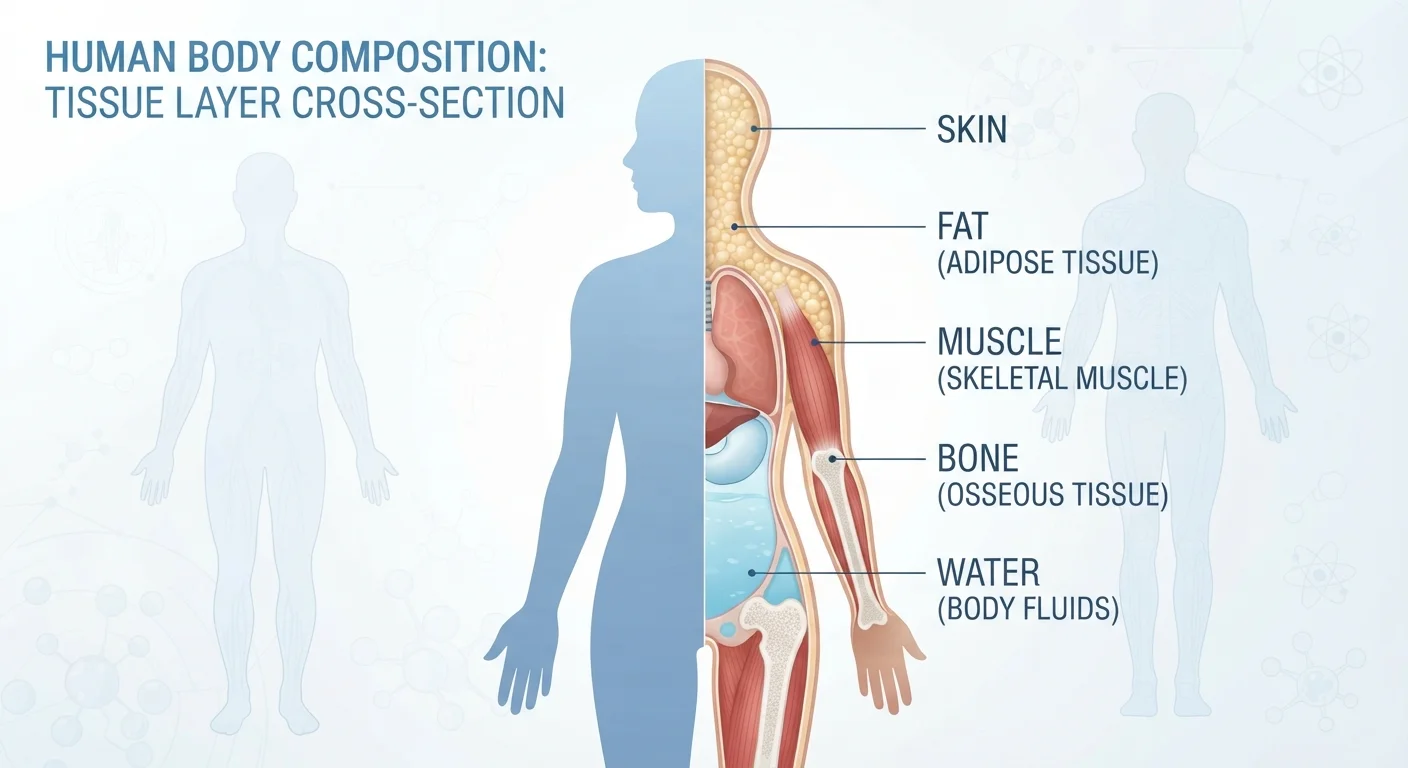
Body fat percentage expresses the proportion of total body weight that comes from fat tissue. It distinguishes between fat mass and fat-free mass (muscle, bone, organs, and water) — information that BMI cannot provide. General reference ranges vary by sex and age. For adult women, body fat between approximately 20–35% is often cited as a healthy range; for adult men, roughly 8–24%. These are population-level reference ranges, not personal prescriptions.
Body fat percentage can be measured several ways: dual-energy X-ray absorptiometry (DEXA), hydrostatic weighing, air displacement plethysmography, skinfold calipers, and bioelectrical impedance analysis (BIA). Each method carries its own margin of error and practical trade-offs. DEXA is generally considered highly accurate but requires specialized equipment. BIA devices are accessible and affordable but sensitive to hydration status. See how body composition is measured for a detailed breakdown of each method.
BMI (Body Mass Index)
A number calculated from height and weight (kg/m²) used to categorize body weight status at the population level. It does not directly measure body fat or distribution.
Body Fat Percentage
The proportion of total body weight made up of fat tissue. It separates fat mass from fat-free mass and provides more compositional detail than BMI alone.
Visceral Fat
Fat stored within the abdominal cavity around internal organs. Elevated visceral fat is associated with increased risk of metabolic and cardiovascular conditions.
Waist Circumference
A measurement around the torso used as a clinical proxy for abdominal and visceral fat. Used alongside BMI to improve assessment of cardiometabolic health risk.
Fat-Free Mass
Everything in the body that is not fat — including muscle, bone, organs, and water. Also called lean mass.
Metabolic Syndrome
A cluster of conditions — including elevated blood pressure, high blood sugar, excess abdominal fat, and abnormal cholesterol levels — that together increase risk for heart disease and type 2 diabetes.
Waist Circumference: Where Fat Lives Matters
Waist circumference measures the distance around the narrowest part of the torso, typically just above the navel. It serves as a practical proxy for visceral fat — the metabolically active fat stored around internal organs in the abdominal cavity. Visceral fat is associated with elevated risk for type 2 diabetes, cardiovascular disease, and metabolic syndrome, independent of total body weight or BMI.
The National Institutes of Health (NIH) identifies elevated health risk at waist circumferences above 35 inches (88 cm) for women and above 40 inches (102 cm) for men. Some research suggests these thresholds should be adjusted downward for people of Asian descent, as cardiometabolic risk may appear at lower measurements in this population.
Waist circumference is low-tech and requires only a flexible measuring tape — making it one of the most accessible clinical screening tools available. When used alongside BMI, it meaningfully improves the ability to identify individuals who may face elevated metabolic risk that BMI alone would miss.
This article is for general informational and educational purposes only and does not constitute medical advice. Always consult a qualified healthcare professional before making decisions about your health, weight, or any medical condition.