Why Standing Desks Became So Popular
Over the past decade, height-adjustable desks have become one of the most requested office perks in America. The pitch was simple and appealing: sitting all day is killing us, so stand instead. Headlines ran with comparisons to smoking, wellness culture embraced the standing desk as a status symbol of health-consciousness, and employers invested heavily in adjustable workstations.
The underlying concern is legitimate. Extended sitting affects posture, circulation, and metabolism in measurable ways. But the solution turned out to be more nuanced than simply swapping one static posture for another. Research that followed the standing desk boom revealed a more complicated picture—and some surprising findings about what actually benefits desk workers' health.
Myths vs. Facts About Standing Desks and Workplace Movement
The evidence on standing desks has matured considerably, and it challenges several widely held beliefs. Before adjusting your workspace or workplace habits, it's worth separating what research supports from what has been overstated.
Myth
Standing all day at a standing desk is healthy and offsets the harms of a sedentary job.
Fact
Prolonged standing carries its own health risks, including lower limb fatigue, varicose veins, and musculoskeletal discomfort. It is not a straightforward replacement for sitting.
A 2017 study published in Ergonomics found that participants who stood for prolonged periods reported increased discomfort and showed signs of mental fatigue. Standing is not inherently more healthful than sitting when done in long, uninterrupted bouts. The body needs postural variety and movement—not just a different static position.
Myth
A standing desk will automatically lead to more calories burned and better metabolic health.
Fact
The caloric difference between sitting and standing is modest—research suggests roughly 8–10 additional calories burned per hour of standing. This is unlikely to produce meaningful metabolic change on its own.
Studies measuring energy expenditure show the gap between sitting and standing is small. One frequently cited analysis found that replacing sitting with standing burns only marginally more energy. For genuine metabolic benefit, light-intensity movement—walking, stretching, stair climbing—is substantially more effective than standing in place.
Myth
If you have a standing desk, you don't need to worry about taking movement breaks.
Fact
Movement breaks are beneficial regardless of whether your baseline posture is sitting or standing. Regular interruptions to stillness are the key variable, not which posture fills the gaps.
Research on sedentary behavior consistently highlights uninterrupted time without movement as a key risk factor—not sitting per se. Breaking up time at a desk every 20–30 minutes with a brief walk or stretch benefits circulation and blood sugar regulation more than maintaining any single posture, including standing.
Myth
Standing desks improve focus and productivity throughout the workday.
Fact
Evidence on cognitive performance is mixed. Some users report improved energy early on, but studies show discomfort from prolonged standing can impair concentration and reaction time.
A few small studies have suggested short-term mood and alertness benefits from standing. However, longer-duration standing tends to introduce physical discomfort that can interfere with cognitive tasks. Individual responses vary considerably, and productivity benefits are not reliably demonstrated across study populations. Comfort and sustainable posture tend to be better predictors of sustained focus than standing alone.
Myth
Desk exercises and fidgeting don't make a meaningful difference to health.
Fact
Non-exercise activity thermogenesis (NEAT)—the energy expended through low-level movement throughout the day—is a significant contributor to overall energy expenditure and metabolic health.
NEAT includes activities like walking to the printer, standing during phone calls, and shifting posture frequently. Research by exercise physiologist James Levine at the Mayo Clinic established that NEAT can vary by up to 2,000 calories per day between individuals and has meaningful implications for weight and metabolic health. Small habitual movements add up substantially over time.
What the Evidence Actually Recommends
The clearest message from exercise science is that movement variety—not a single posture—is what benefits the body. The goal is to break up long uninterrupted periods of stillness, whether you're sitting or standing.
A practical framework supported by researchers is the sit-stand-move cycle. This means alternating between sitting, standing, and light movement throughout the day in roughly 20–30 minute blocks, rather than standing for hours at a stretch. Walking to a colleague instead of sending an email, taking a brief walk during lunch, or doing a few minutes of stretching between tasks are all examples of movement that research shows can help manage blood sugar, improve circulation, and reduce musculoskeletal discomfort.
~9 cal/hr
Extra calories burned standing vs. sitting
Research estimates that standing burns only about 8–10 more calories per hour than sitting, making standing alone an inefficient strategy for energy balance.
Every 30 min
Recommended movement break frequency
Health organizations including the American Heart Association suggest interrupting prolonged sitting with light movement approximately every 30 minutes for cardiovascular benefit.
54%
U.S. workers in sedentary occupations
According to U.S. Bureau of Labor Statistics data, more than half of American workers hold jobs that involve predominantly sitting or minimal physical activity.
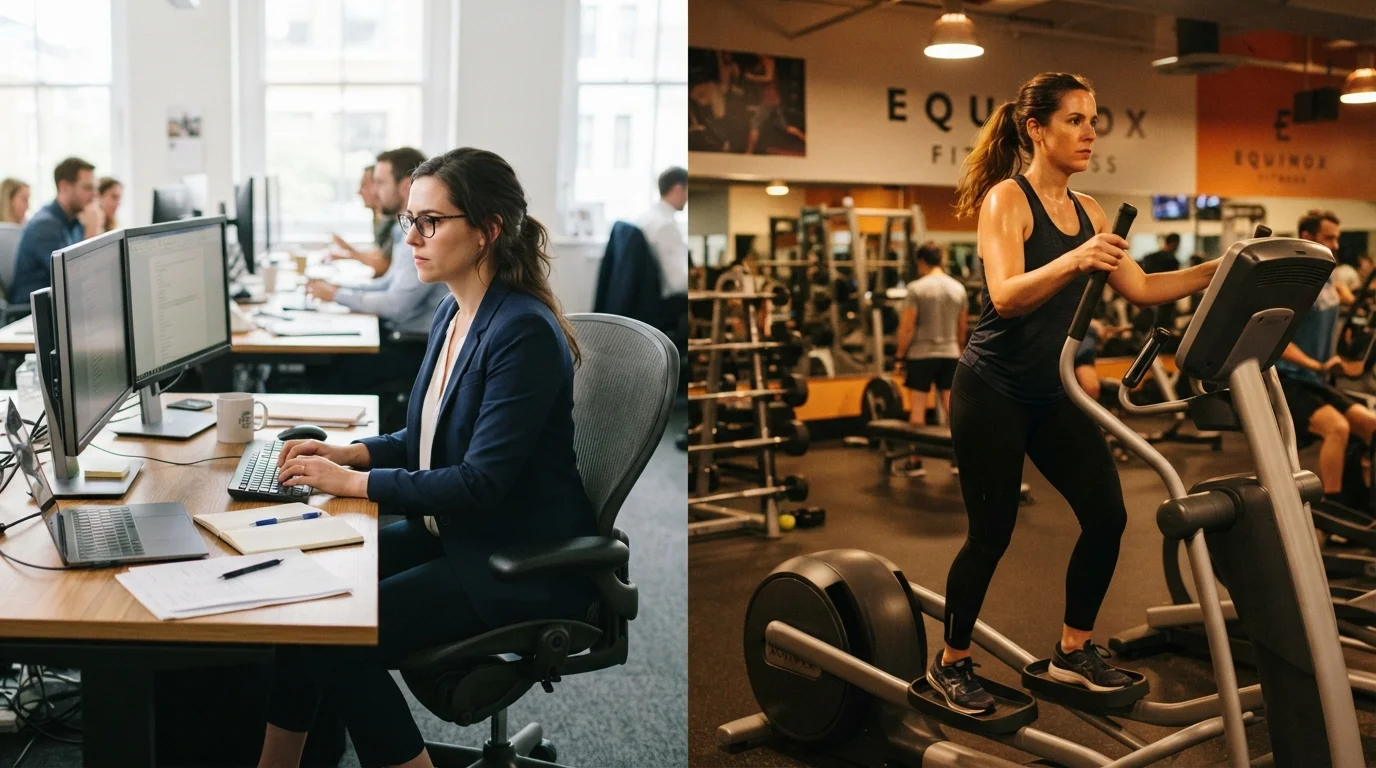
It's also worth noting that exercising after a sedentary workday helps but may not fully offset the effects of prolonged sitting. Spreading activity throughout the day is more beneficial than concentrating it in one post-work session.
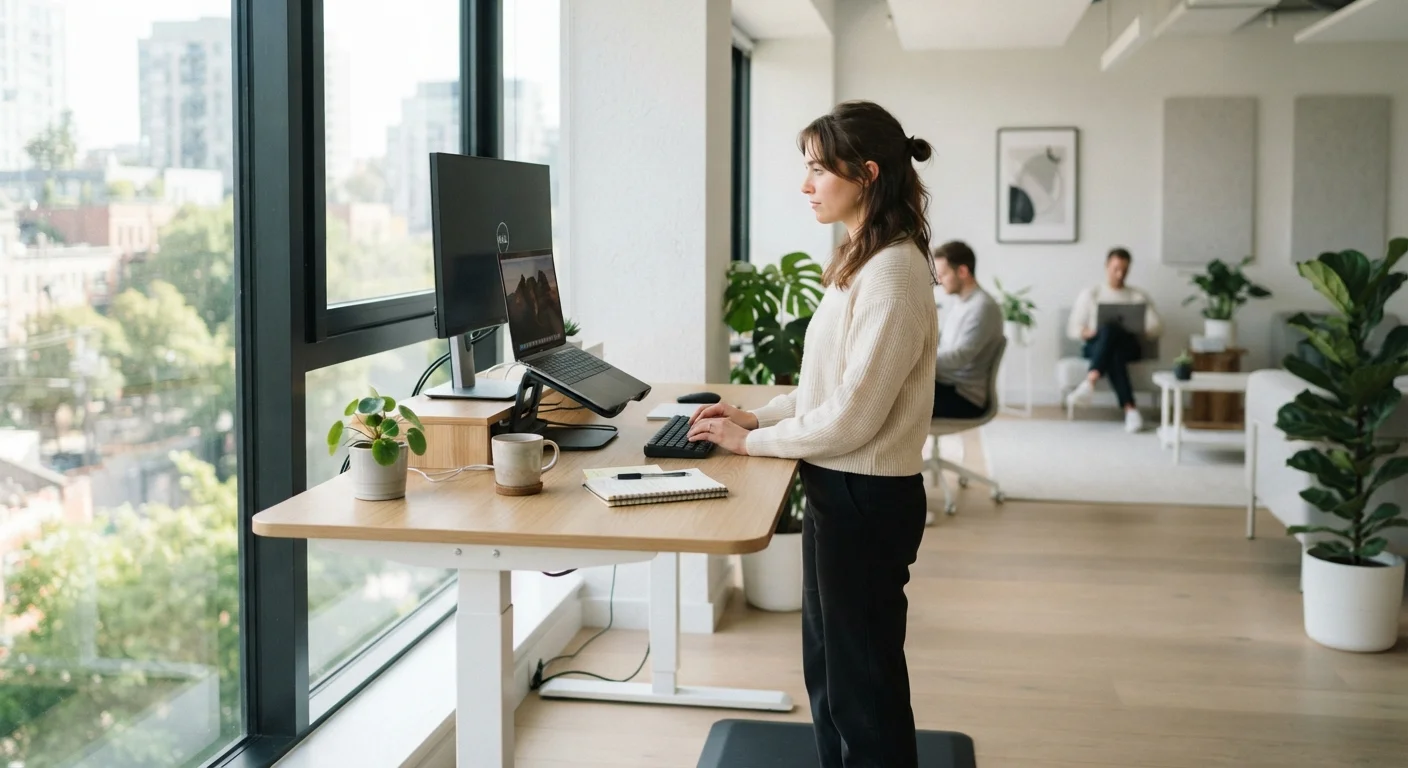
If you do use a standing desk, ergonomics still matter: monitor at eye level, elbows at roughly 90 degrees, feet flat on the floor or a supportive mat. Anti-fatigue mats can reduce lower-limb discomfort during extended standing.
This article is for general informational and educational purposes only and does not constitute medical advice. Consult a qualified healthcare professional before making changes related to a medical condition or workplace injury.