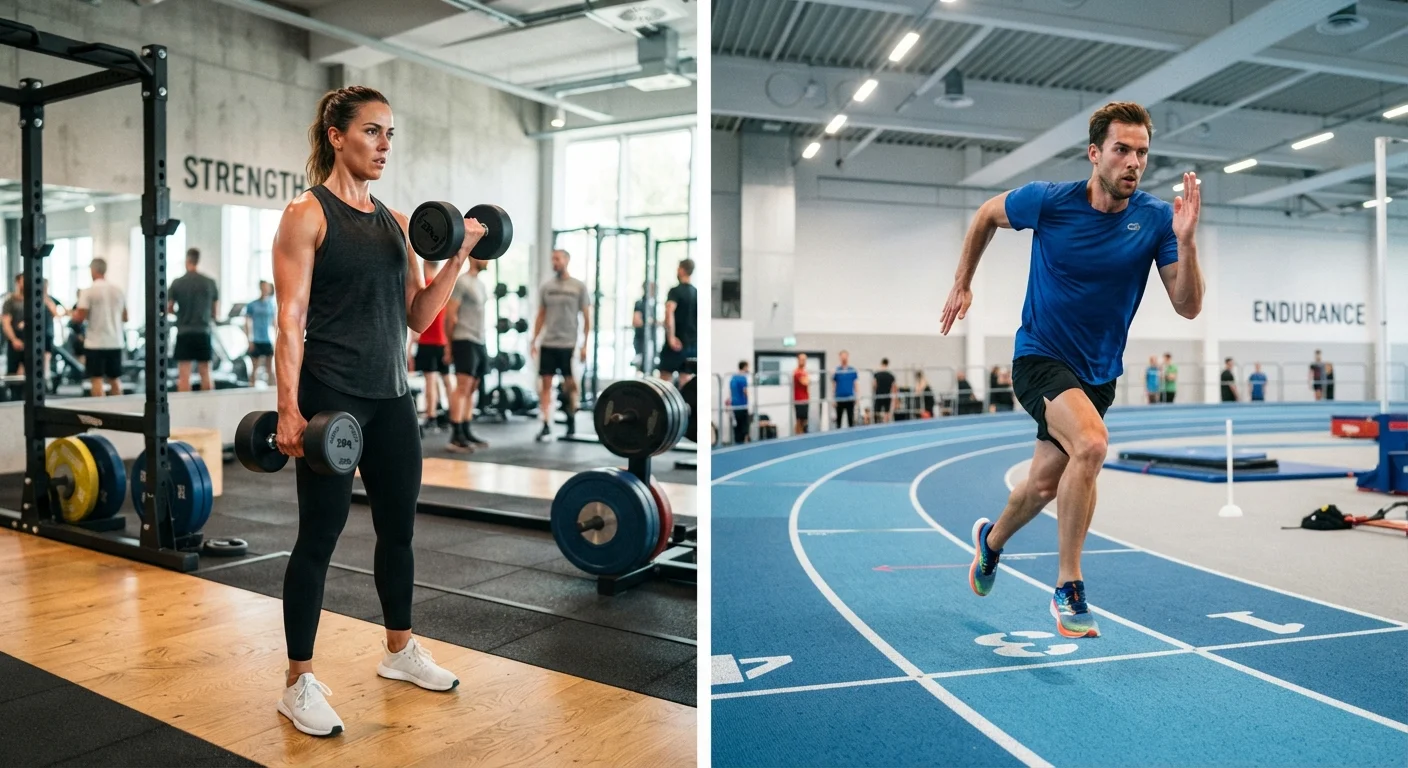

Why Single-Modality Training Creates Gaps
Human movement requires a range of physical qualities: cardiovascular endurance, muscular strength, flexibility, balance, and coordination. No single workout format develops all of these simultaneously. When one modality dominates your routine for months or years, the qualities it doesn't train gradually weaken — a concept exercise scientists sometimes call detraining of unused capacities.
For example, someone who runs daily but never lifts may develop strong aerobic capacity while losing muscle mass, particularly in the upper body. Someone who lifts heavy several times per week but avoids cardio may have impressive strength but reduced cardiovascular efficiency. Neither profile reflects the kind of broad-based fitness that research consistently links to long-term health outcomes.
Understanding how strength training and cardio contribute differently can help clarify why both deserve a place in most routines — not as competitors, but as complements.
Single-Modality Training Is Not Inherently Wrong
Focusing on one workout style for a period is a legitimate strategy — especially for beginners building a habit or athletes in a specific training phase. The concern arises when that singular focus becomes permanent and excludes entire categories of movement. This article is general educational information, not personal medical or fitness advice. Consult a qualified fitness or healthcare professional before making significant changes to your exercise routine.
Common Mistakes When You Stick to One Workout Type
The following mistakes aren't about working hard in the wrong direction — they're about working in only one direction. Each represents a predictable gap that emerges when a single fitness modality becomes the whole strategy.
Doing only cardio and skipping resistance training entirely.
Why it happens: Cardio feels intuitive for weight management and heart health, and it's easy to track — miles logged, calories estimated. Many people associate gyms primarily with running or cycling and never branch into strength work.
Lifting weights exclusively without any cardiovascular or mobility work.
Why it happens: Strength training produces visible results that feel motivating, and adding other modalities can feel like a distraction from the primary goal. Some lifters also believe that cardio will undermine muscle gains — a concern that research suggests is overstated when volume is managed appropriately.
Relying solely on yoga or stretching-based movement as your entire fitness practice.
Why it happens: Flexibility-focused workouts feel restorative and low-stress, which appeals to people managing busy or high-pressure lives. It's easy to conflate feeling calm and loose with being comprehensively fit.
Never changing intensity, volume, or format within a chosen workout style.
Why it happens: Consistency feels like commitment, and routines become mentally comfortable. Many people repeat the same workout — same distance, same weight, same class — for months without realizing the body has largely adapted.
Ignoring rest and recovery because one workout style feels 'easy enough' to do daily.
Why it happens: Low-intensity activities like walking or light yoga don't produce acute soreness, leading many people to believe they can be performed every single day without consequence. But cumulative load on tendons, joints, and the nervous system still adds up.
It's also worth noting that structured workouts and daily lifestyle movement serve different purposes. Even a well-rounded gym routine doesn't fully substitute for general physical activity throughout the day.
How to Build a More Complete Routine Without Overhauling Everything
Adding variety doesn't mean tripling your time commitment. A practical approach is to audit what your current routine is missing and add one new element at a time. If you run four days a week, swapping one run for a 30-minute bodyweight strength session introduces the missing stimulus without a dramatic schedule change.
The U.S. Department of Health and Human Services recommends adults get at least 150 minutes of moderate-intensity aerobic activity per week alongside muscle-strengthening activities on two or more days. These guidelines are intentionally broad — they're designed to accommodate a wide range of lifestyles, not prescribe a single format.
150 min
Recommended weekly moderate aerobic activity
According to the U.S. Physical Activity Guidelines for Americans, adults should aim for at least 150 minutes of moderate-intensity aerobic activity per week, plus muscle-strengthening on two or more days.
2 in 3
Adults not meeting strength training guidelines
Data from the CDC's National Health Interview Survey has consistently shown that fewer than one-third of U.S. adults meet both aerobic and muscle-strengthening activity recommendations.
~40%
Muscle mass decline risk without resistance training
Research in exercise physiology suggests adults can lose a significant portion of muscle mass over decades without resistance training, contributing to reduced metabolic rate and functional capacity.
Think of fitness modalities as tools, not ideologies. Cardio builds your engine. Strength training builds your frame. Mobility work keeps both running smoothly. None of them is redundant — each addresses something the others don't.
This article is for general informational purposes only and does not constitute medical or personal fitness advice. Consult a qualified healthcare or fitness professional before making changes to your exercise routine, especially if you have an existing health condition or injury.