Defining the Three Sleep Patterns
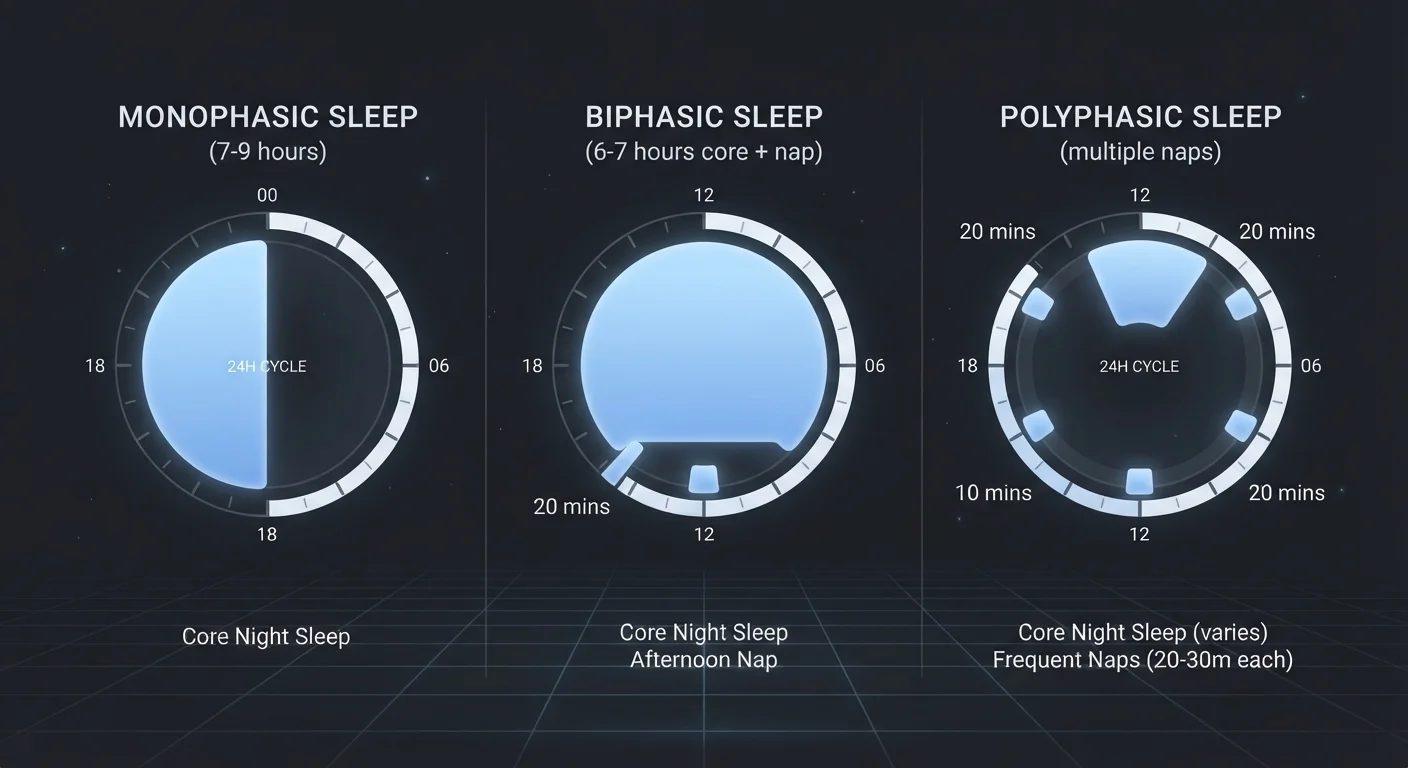
Sleep can be structured in fundamentally different ways across a 24-hour period. The three main patterns — monophasic, biphasic, and polyphasic — differ in how sleep is distributed rather than necessarily in total duration.
Monophasic sleep means sleeping once per day, typically as a single consolidated block at night, lasting roughly seven to nine hours. This is the standard pattern across most industrialized societies today.
Biphasic sleep involves two sleep periods — usually a longer nocturnal block paired with a shorter daytime nap or rest. This can range from a formal siesta of one to two hours to a brief 20-minute nap after lunch.
Polyphasic sleep breaks rest into three or more periods spread across the day. Schedules vary widely, from the relatively mild "Everyman" pattern (one longer core sleep plus two or three naps) to extreme variants like "Uberman," which replaces consolidated sleep with six 20-minute naps per day.
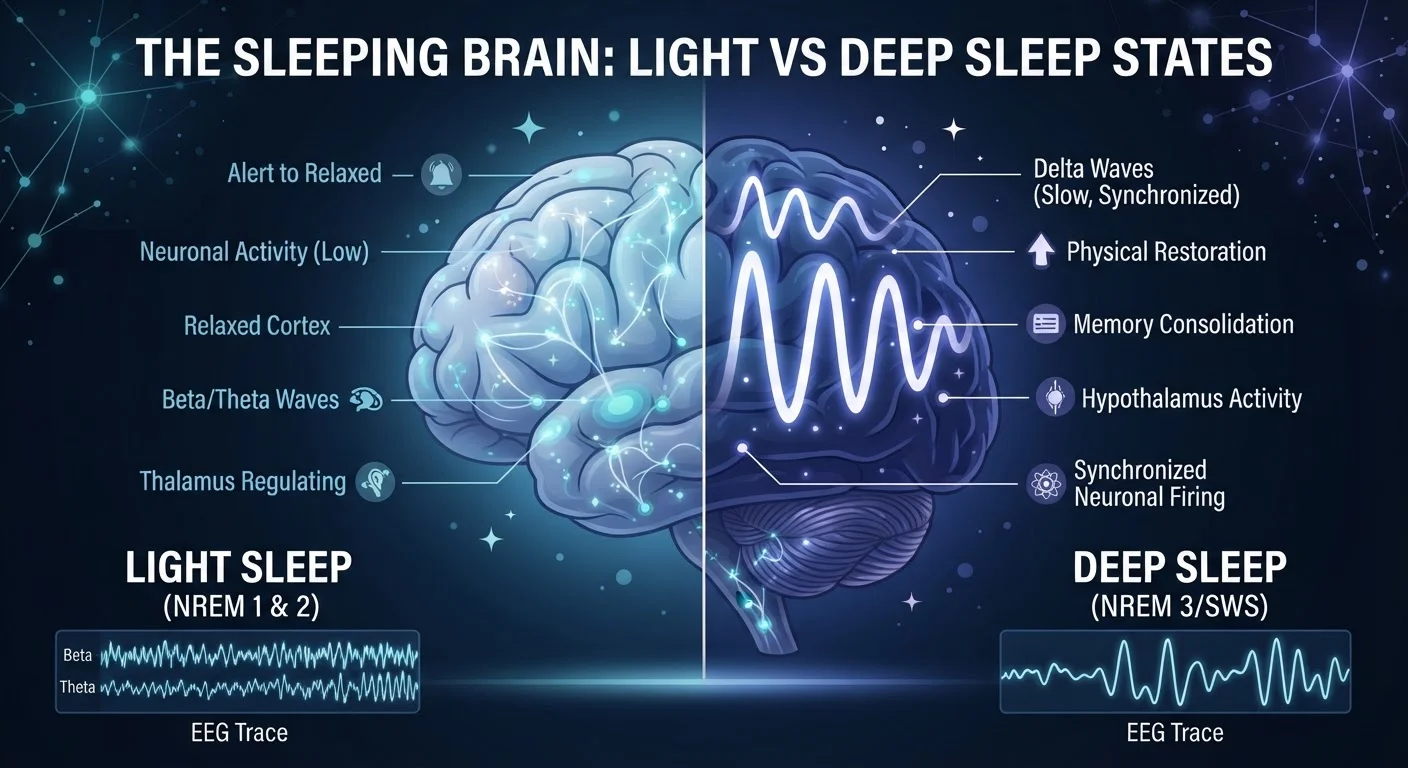
Understanding what distinguishes these patterns is the first step toward evaluating what the science actually says about each. For background on what happens within a single sleep cycle, see our breakdown of light and deep sleep stages.
What the Evidence Says
The scientific literature is not evenly distributed across these three patterns.
Monophasic: The Best-Studied Baseline
Monophasic sleep has been studied most extensively. Research consistently links seven to nine hours of consolidated nightly sleep in healthy adults with better cognitive function, immune health, metabolic regulation, and cardiovascular outcomes. It naturally accommodates complete sleep cycles — including the deeper slow-wave and REM stages critical for memory and restoration. Most clinical recommendations from bodies like the American Academy of Sleep Medicine are built around this model.
Biphasic: Modest but Interesting Evidence
Biphasic patterns receive moderate research support. Historians and anthropologists have noted that pre-industrial societies often slept in two distinct overnight segments. Some research suggests humans may have a mild natural dip in alertness in the early afternoon — a circadian trough sometimes called the post-lunch dip — that could reflect a biological inclination toward brief midday rest. Studies on short napping (10–30 minutes) show benefits for alertness and mood without significantly disrupting nighttime sleep, particularly for those who are mildly sleep-deprived. However, longer naps can cause sleep inertia and may fragment nighttime sleep in some people.
Polyphasic: Limited and Concerning Evidence
Extreme polyphasic schedules have very little peer-reviewed safety data. Most evidence comes from self-reported online communities rather than controlled studies. A key concern is chronic sleep deprivation: many polyphasic schedules reduce total sleep time well below the recommended threshold. Sleep architecture — the sequencing of light, deep, and REM sleep — may also be disrupted because the brain cannot complete full cycles in very short nap windows. Several common sleep beliefs — including the idea that the body quickly adapts to radical schedule changes — lack rigorous scientific backing.
| Monophasic | Biphasic | Polyphasic | |
|---|---|---|---|
| Scientific evidence quality | Strong, extensive | Moderate, growing | Weak, largely anecdotal |
| Alignment with circadian biology | High | Moderate to high | Low for extreme variants |
| Full sleep cycle completion | Consistently achieved | Achievable with adequate night sleep | Often disrupted |
| Risk of sleep deprivation | Low when duration is adequate | Low with proper night sleep | High for extreme schedules |
| Real-world practicality | High — suits most schedules | Moderate — requires nap opportunity | Low — very restrictive timing |
| Mainstream medical support | Recommended | Generally accepted | Not recommended |
Practical Considerations and Individual Variation
Sleep pattern suitability is not one-size-fits-all. Chronotype — the natural tendency toward being a morning or evening person — is partly genetic and influences when the body most efficiently consolidates sleep. Age also matters: older adults often experience more fragmented sleep naturally, making biphasic patterns more common and potentially more appropriate in that group.
Work schedules and social obligations play a major practical role. Polyphasic schedules, in particular, demand rigid timing that is incompatible with most conventional work and family commitments. This real-world friction means many people who attempt extreme polyphasic patterns abandon them within weeks.
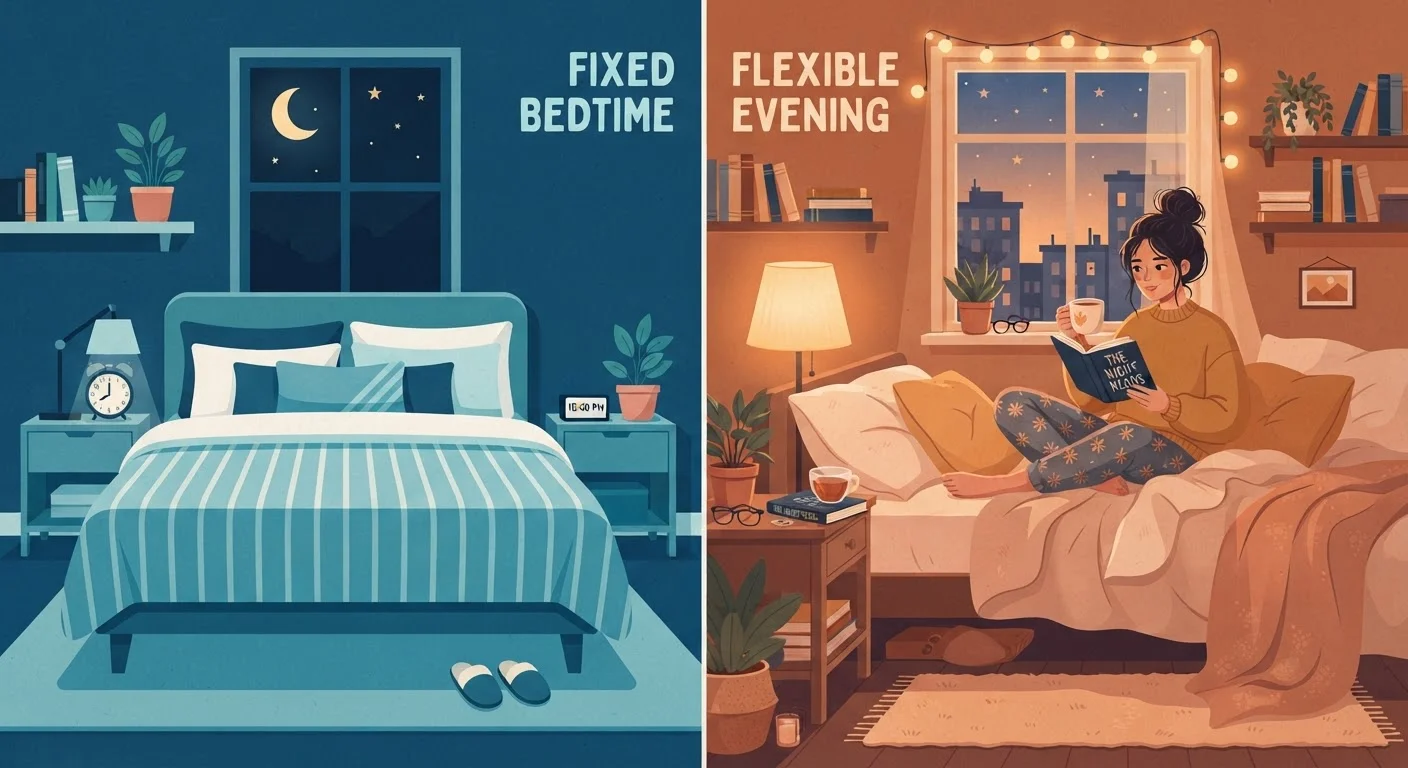
If you're rethinking your sleep schedule, comparing fixed versus flexible sleep timing is a useful place to start before changing how many periods of sleep you take. Strong sleep hygiene habits matter regardless of pattern; explore evidence-based sleep hygiene strategies as a foundation.
For anyone considering a significant change to their sleep structure — especially those with existing health conditions, mood disorders, or sleep disorders — consulting a qualified healthcare provider or board-certified sleep specialist is strongly recommended.
This article is for informational and educational purposes only and is not a substitute for professional medical advice, diagnosis, or treatment. Always consult a qualified healthcare provider with questions about your sleep or health.