
Why Nap Length Changes Everything
When most people think about napping, they picture a single, undifferentiated rest. In reality, a 10-minute nap and a 90-minute nap are nearly as different as a sprint and a marathon — physiologically, neurologically, and in terms of what you'll feel like afterward.
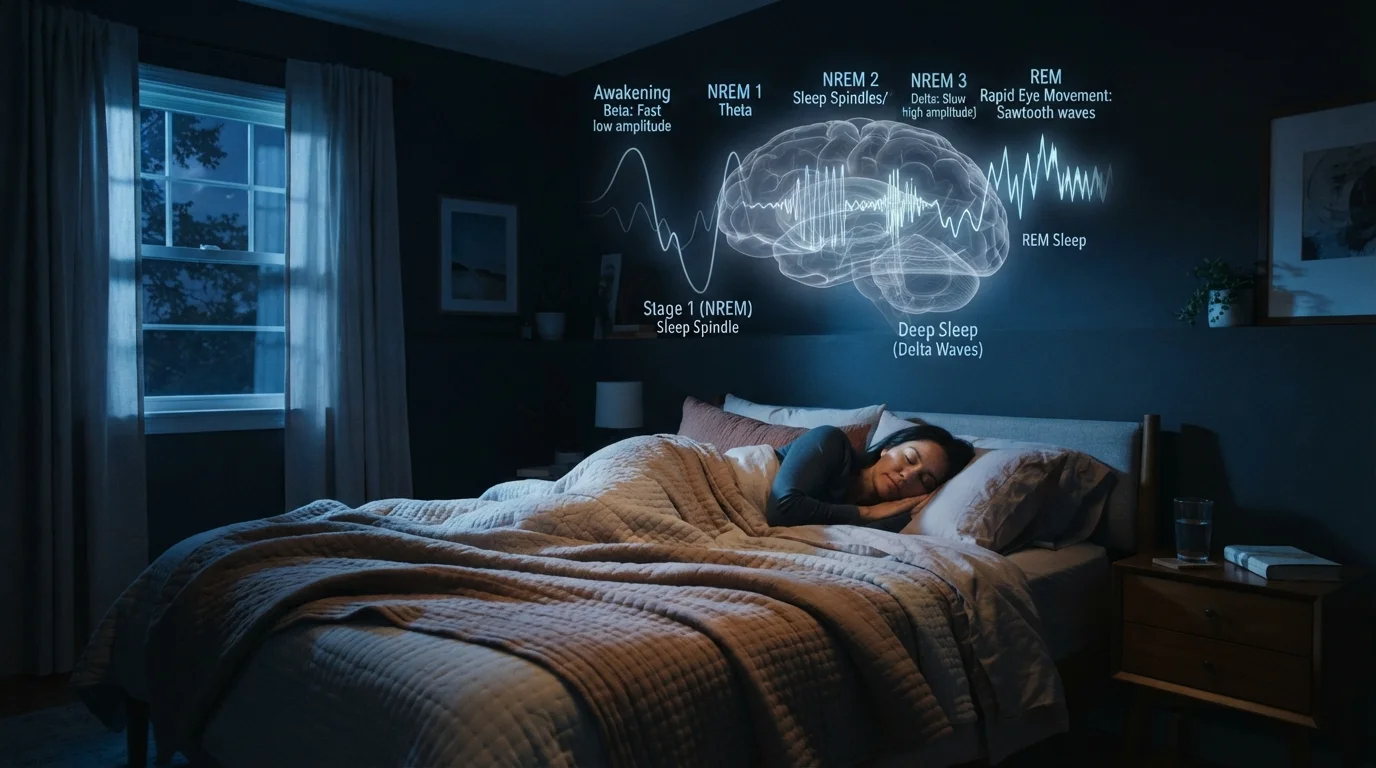
The core reason lies in sleep architecture. Your brain doesn't just switch off during sleep; it cycles through structured stages with distinct functions. To understand nap outcomes, it helps to first understand that framework. Our article on REM and NREM sleep stages covers this in depth.
In practical terms, the longer a nap runs, the deeper into the sleep cycle your brain travels — and the harder it becomes to surface cleanly on the other side.
The Short Nap: 10–20 Minutes
Short naps — often called "power naps" — are the most studied and most consistently beneficial for daytime performance. Research published in sleep journals has found that naps in this range improve alertness, reaction time, and mood without producing significant sleep inertia upon waking.
Why? Because in under 20 minutes, most people remain in the lighter stages of NREM sleep (stages 1 and 2). These stages are restorative — they help clear adenosine, the chemical that accumulates in the brain during wakefulness and drives sleepiness — but they're shallow enough that waking from them feels relatively clean.
34%
Performance improvement from a short nap
NASA research on military pilots found a 40-minute nap improved performance by approximately 34% compared to no nap.
20–30 min
Typical duration of sleep inertia
Sleep inertia — the groggy impairment after waking from deep sleep — can persist for up to 30 minutes, according to sleep science literature.
90 min
Length of one complete sleep cycle
A 90-minute nap approximates a full NREM-to-REM cycle, offering memory and emotional processing benefits closer to nighttime sleep.
One frequently cited finding from NASA research on military pilots showed that a 40-minute nap improved performance by 34% and alertness by 100%, demonstrating just how powerful even brief daytime sleep can be. That said, individual responses vary considerably.
The Long Nap: 60–90 Minutes and Sleep Inertia
Naps that stretch past 30 minutes carry a meaningful trade-off: sleep inertia. This is the disorientation, cognitive fog, and reduced performance that occurs when you wake from deep slow-wave sleep (SWS) — the third stage of NREM. Slow-wave sleep is among the most physically restorative states the brain enters, but interrupting it midway leaves the brain partially "offline" as it tries to re-engage.
Sleep inertia can last anywhere from a few minutes to over 30 minutes and can temporarily make performance worse than it was before the nap. This is why a long nap taken before a shift requiring immediate sharp focus can backfire.
The exception is the 90-minute nap, which is timed to approximate one complete sleep cycle. At this length, a napper may move through light NREM, deep NREM, and emerge from a REM episode — the stage most associated with emotional processing and memory consolidation. Waking from REM tends to feel more natural, and the cognitive payoff is closer to what you'd expect from a short block of nighttime sleep.
For more on how timing and duration interact with your personal sleep patterns, see our guide on napping trade-offs for night owls and early risers.
Timing: When You Nap Matters as Much as How Long
Even a well-timed short nap can become counterproductive if taken at the wrong hour. Two biological systems govern this: circadian rhythm and sleep pressure (homeostatic sleep drive).
Circadian rhythm generates a natural dip in alertness in the early-to-mid afternoon for most people — typically between 1 and 3 p.m. — independent of whether they've eaten lunch. Napping during this window aligns with the body's own signaling and tends to produce better-quality rest.
Sleep pressure, meanwhile, builds throughout the waking day as adenosine accumulates. Napping discharges some of that pressure. Nap too late in the day and you arrive at bedtime without enough accumulated sleepiness to fall asleep efficiently — a particular problem for people already prone to insomnia.
Late-day napping is also influenced by individual chronotype. Night owls may tolerate later naps more easily than early risers. The relationship between caffeine timing and sleep pressure is also relevant here — how caffeine stays in your system explains why an afternoon coffee and a late nap can compound sleep disruption.
Set an Alarm for 20 Minutes or 90 Minutes
If you plan to nap, choose one of two target lengths: 20 minutes to stay in light sleep and wake refreshed, or 90 minutes to complete a full cycle. Lengths in between — particularly 30 to 60 minutes — are most likely to leave you waking from deep slow-wave sleep and feeling worse than before. Setting a firm alarm removes the guesswork.
Who Benefits — and Who Should Be Cautious
Research consistently shows napping benefits shift workers, sleep-deprived individuals, older adults with reduced nighttime sleep efficiency, and people in cognitively demanding roles. For these groups, a strategic short nap can measurably restore function.
However, napping is not universally advisable. People managing insomnia disorder are generally counseled to avoid daytime sleep, as it reduces the homeostatic drive needed to consolidate nighttime sleep. Similarly, those experiencing excessive daytime sleepiness not explained by poor nighttime sleep should consult a healthcare provider — it may signal an underlying condition rather than a simple sleep deficit.
The evidence on habitual long napping (more than one hour daily) in older adults is also mixed, with some epidemiological studies associating it with cardiovascular risk markers — though causality is difficult to establish since illness itself can increase the need for sleep.
For a broader look at what the evidence actually supports — and what common beliefs don't hold up — see common sleep science beliefs that don't hold up to scrutiny.
This article is for general informational purposes only and is not a substitute for professional medical advice. If you have concerns about daytime sleepiness, sleep quality, or any sleep-related condition, consult a qualified healthcare provider.