Why a Baseline Matters Before You Set a Goal
Setting a fitness goal without knowing your starting point is like navigating without a map. You might move — but you can't tell how far, in which direction, or whether you're making real progress. That's why gathering body composition metrics before you adjust your training or nutrition plan isn't optional; it's the foundation the rest of your effort rests on.
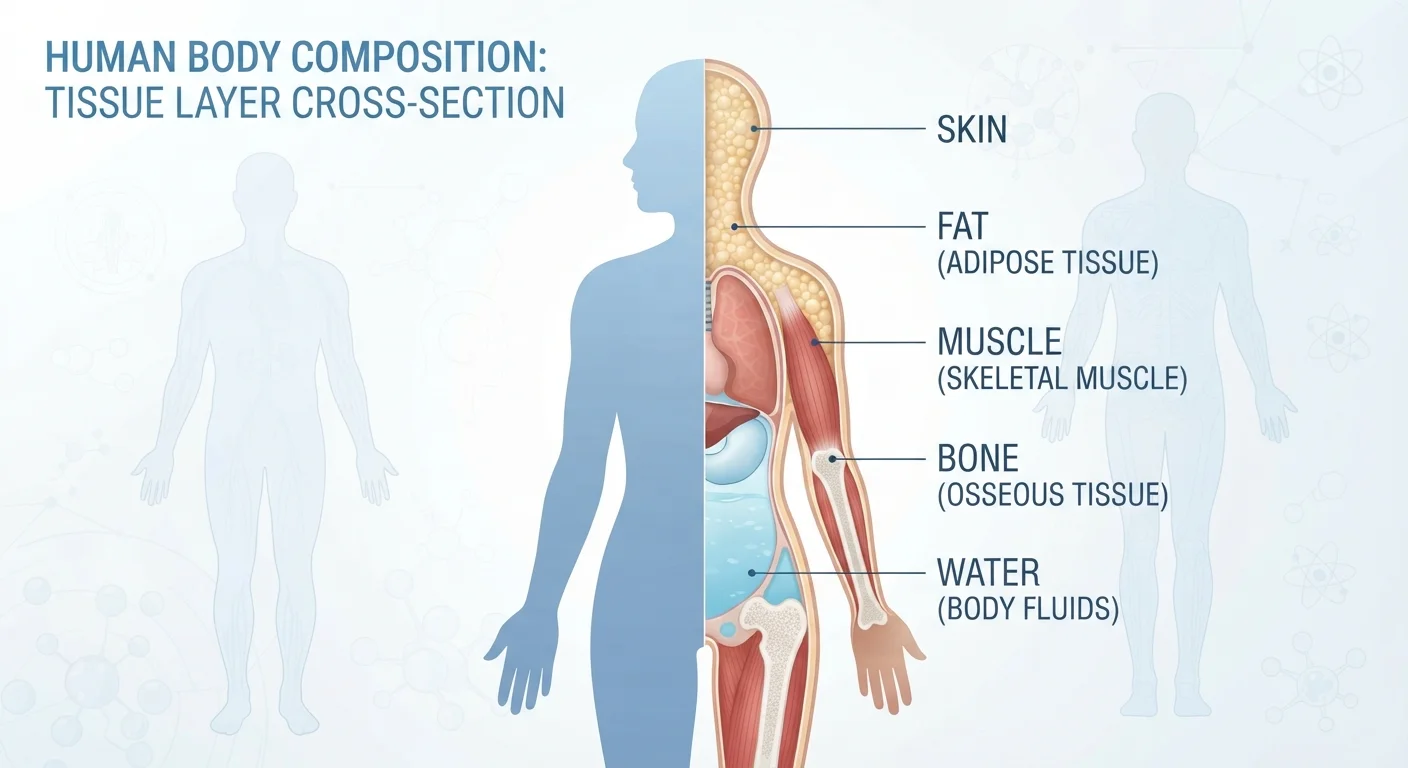
As we explore in our guide to body composition, what your body is made of — the ratio of muscle, fat, bone, and water — tells a far richer story than body weight alone. A person can lose fat while gaining muscle and see little change on the scale, yet be meaningfully improving their metabolic and functional health. Without baseline data, that progress is invisible.
This checklist helps you identify which measurements are worth capturing, which require professional support, and how to document everything so future comparisons are accurate and meaningful.
Consistency Matters More Than Precision
No consumer-grade body composition tool is perfectly accurate — but consistent use of the same tool, under the same conditions, gives you reliable trend data over time. The goal is to track change in the right direction, not to achieve a specific number on a single test. Chasing one-time 'perfect' readings can distort your interpretation of genuine progress.
What to Measure and the Tools You'll Need
The metrics in this checklist fall into four categories: basic anthropometrics (size and shape), body composition estimates (fat versus lean tissue), functional performance (what your body can do), and clinical markers (metabolic and cardiovascular health signals). You don't need to capture every single item before setting any goal, but a stronger baseline produces a clearer target.
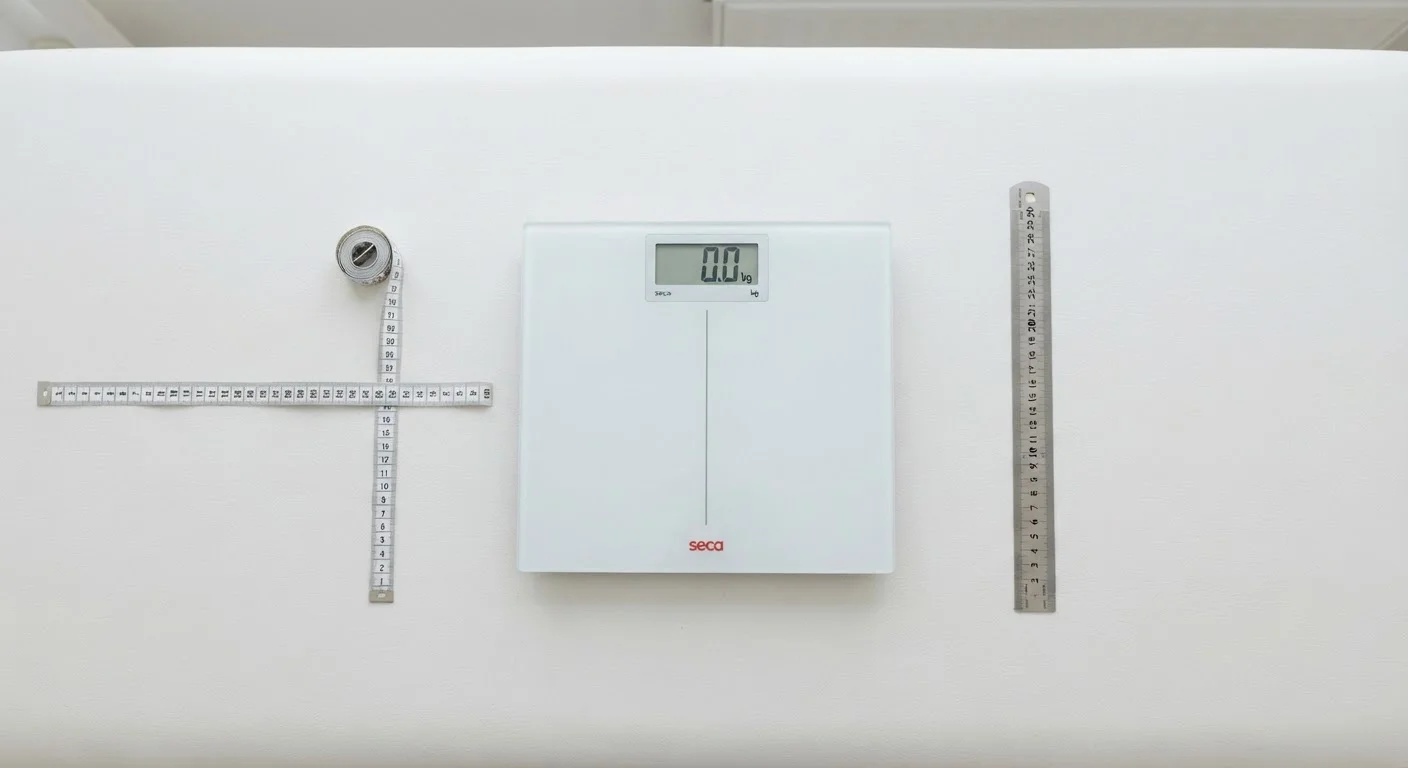
For home measurements, a flexible tape measure, a digital scale, and a blood pressure monitor cover a significant portion of the list. For body fat percentage and clinical blood markers, you'll likely need to work with a gym, clinic, or healthcare provider. Our plain-language breakdown of BMI, body fat percentage, and waist circumference explains what each measurement actually captures and where its limitations lie.
Flexible Tape Measure
Used to take waist, hip, and other circumference measurements accurately at home.
Digital Bathroom Scale
Records body weight consistently; models with BIA capability also estimate body fat percentage.
DEXA Scan (clinical)
Provides a detailed breakdown of fat mass, lean mass, and bone mineral density with high accuracy.
Hand Dynamometer
Measures grip strength as a proxy for overall muscle function; often available through physical therapists or gyms.
Blood Pressure Monitor
Records resting blood pressure, a critical safety metric before increasing exercise intensity.
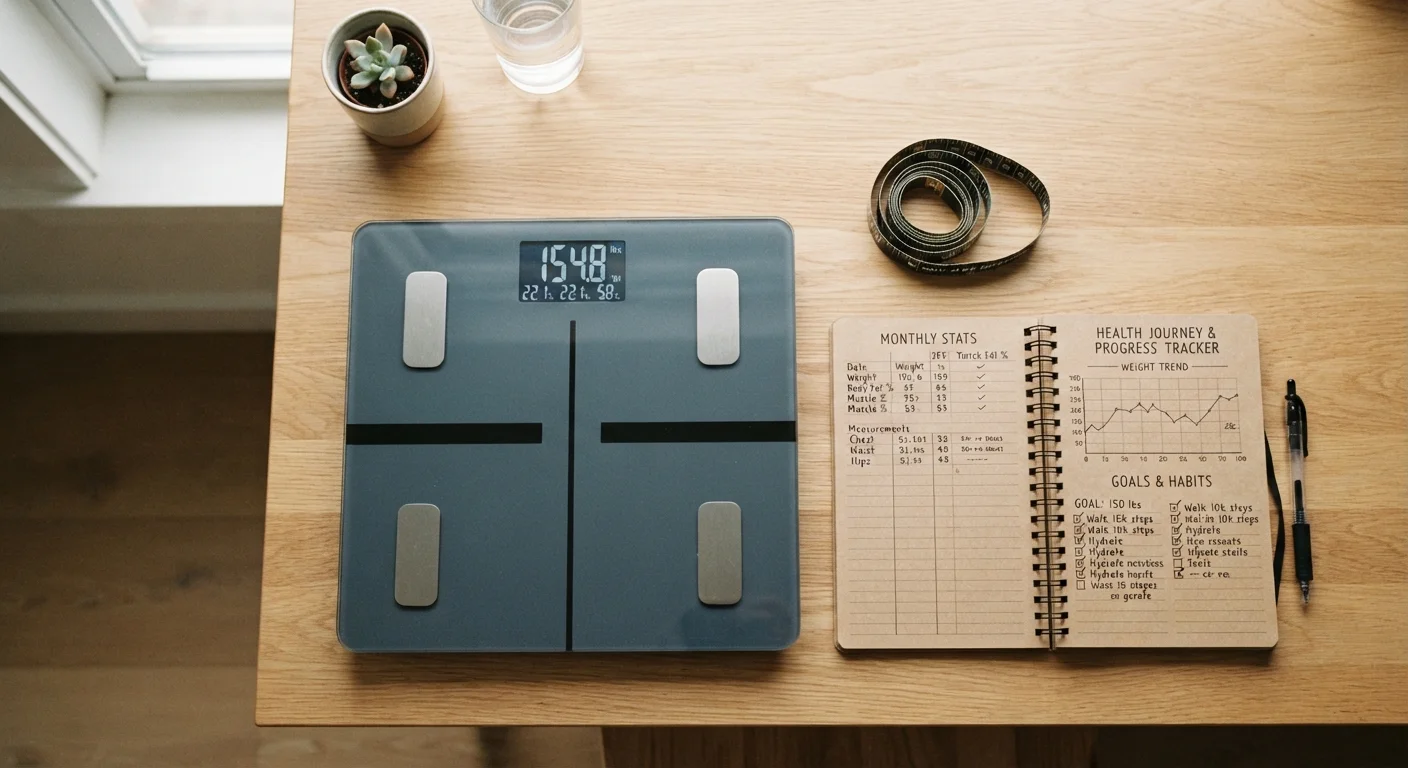
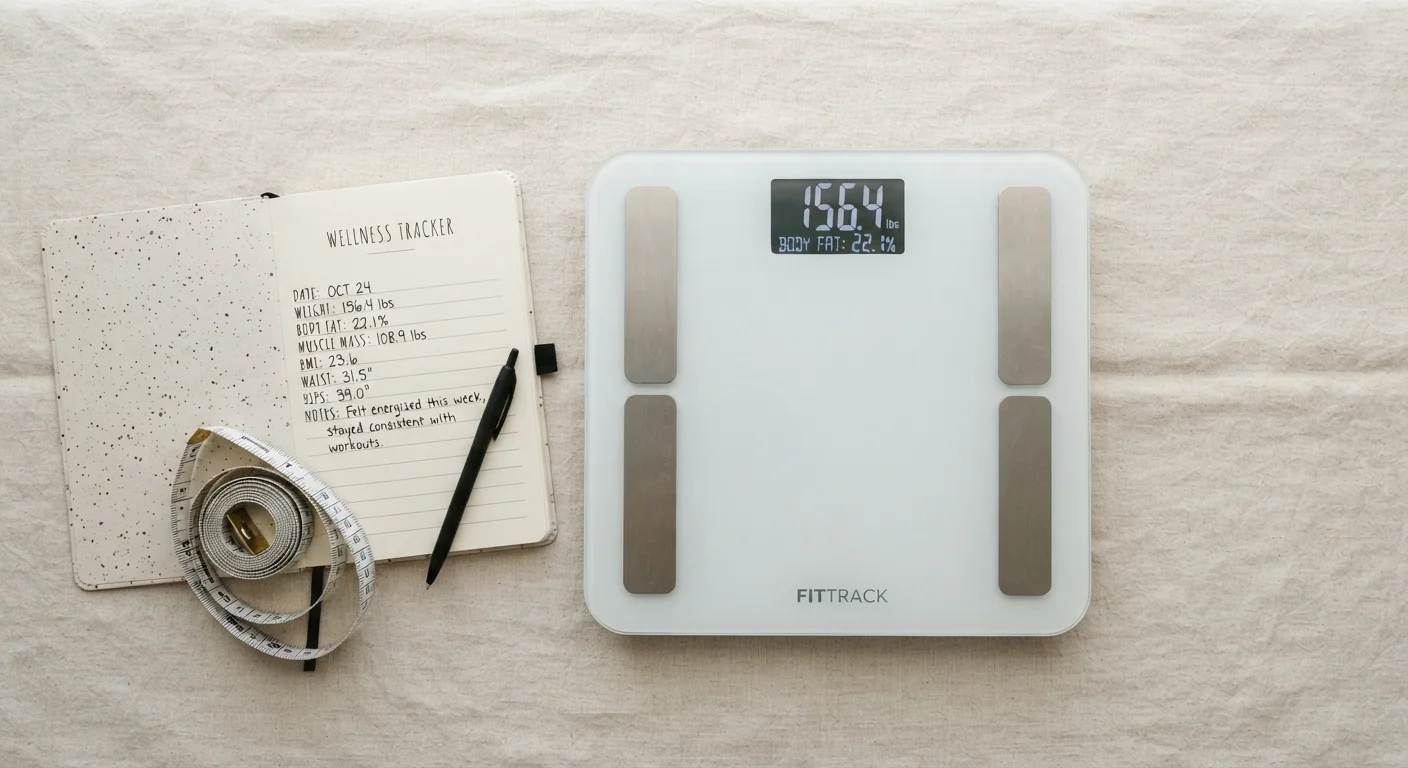
Notebook or Health Tracking App
Stores all baseline measurements in one time-stamped, accessible record for future comparison.
The Body Composition Baseline Checklist
Work through each group below, recording your results in a single dated document. If you can't access a clinical measurement right now, note the gap — a partial baseline is still more useful than none. Once you have your numbers, our beginner's guide to body composition tracking walks you through how often to re-measure and what realistic progress looks like over time.
Basic Anthropometric Measurements
Body Fat and Muscle Composition
Functional Performance Baselines
Metabolic and Clinical Markers
Documentation and Goal Alignment
If you're also reviewing fitness readiness from a safety and exercise standpoint, this pre-exercise checklist covers gear, health screening, and movement safety steps worth reviewing alongside your metrics.
This article is for informational purposes only and is not a substitute for professional medical advice, diagnosis, or treatment. Always consult a qualified healthcare provider before making significant changes to your diet, exercise program, or health management approach.