What Body Composition Actually Measures
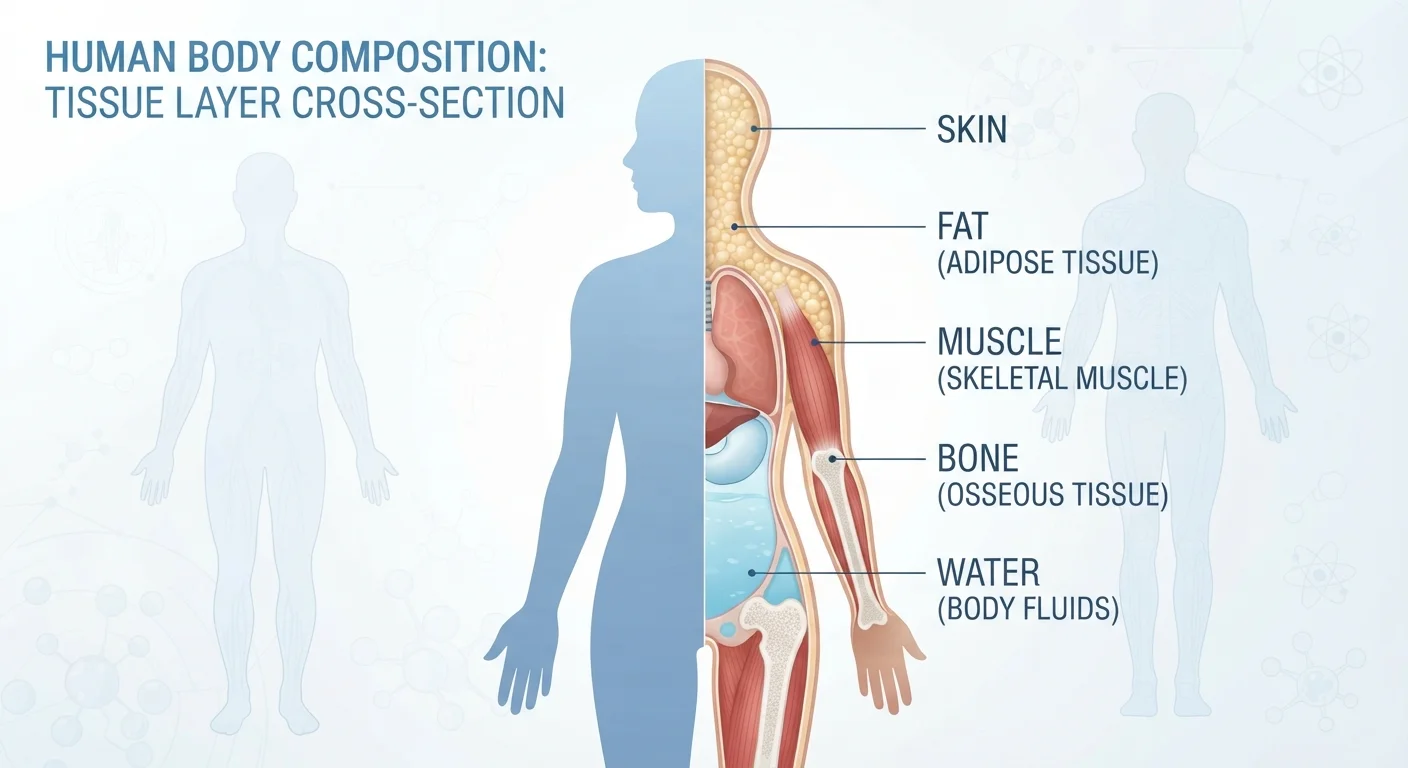
When most people think about their health and weight, they picture a number on a scale. But that number is a single-channel signal in what is actually a multi-dimensional picture. Body composition goes deeper, breaking total body mass into its functional components: fat mass, skeletal muscle mass, bone mineral content, and total body water.
Each component plays a distinct biological role. Skeletal muscle drives movement, supports posture, and serves as a metabolically active tissue that influences how your body processes glucose and stores energy. Fat tissue — often discussed as though it were inert — is hormonally active and serves essential functions including insulation, organ protection, and fat-soluble vitamin storage. The concern arises when fat accumulates beyond functional need, particularly as visceral fat (fat stored around internal organs), which is associated with elevated metabolic and cardiovascular risk.
Bone mineral content, while a smaller fraction of body mass, is central to structural integrity and long-term mobility. Total body water, which accounts for roughly 50–65% of body weight in most adults, varies with hydration, muscle mass, and age — and can cause significant day-to-day fluctuations on the scale that have nothing to do with fat or muscle change.
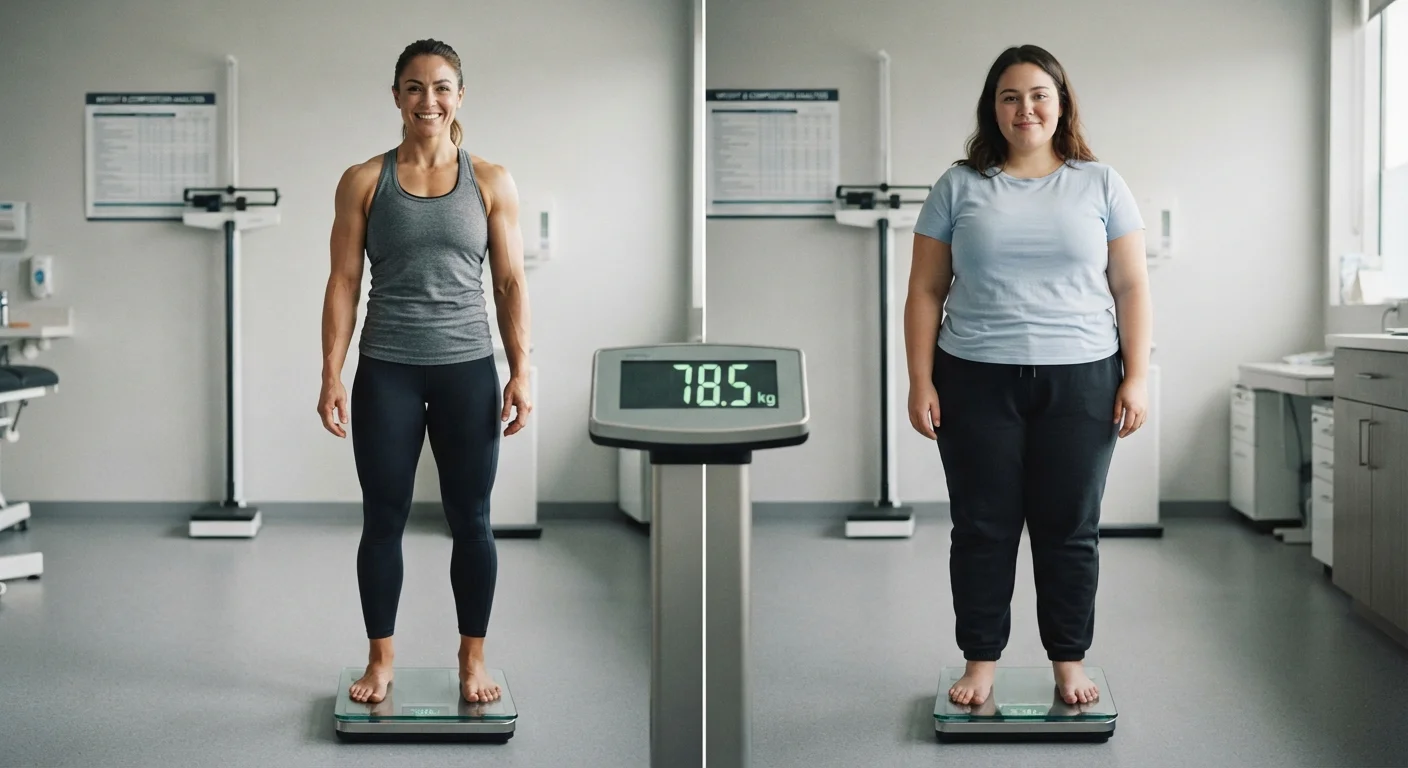
Understanding how these compartments differ — and interact — is the foundation of body composition literacy. As explored in our article on identical-weight health profiles, two people can share a weight and look similar on paper while carrying very different health risks.
Why the Scale Doesn't Tell the Whole Story
The scale has one job: measure gravitational force. It cannot tell you whether a pound lost came from fat, muscle, or water — and that distinction matters enormously. Someone who loses weight through severe caloric restriction without adequate protein or resistance training may shed significant muscle alongside fat, leaving them lighter but with a less favorable body composition than before.
~35%
U.S. adults estimated to have sarcopenic obesity
Research published in the American Journal of Clinical Nutrition suggests a substantial portion of adults carry low muscle and high fat mass simultaneously — a combination invisible to BMI screening.
50–65%
Body weight that is typically water
Total body water varies with age, sex, and muscle mass, and explains why scale weight can fluctuate several pounds day-to-day without any meaningful change in fat or muscle.
~3–8%
Muscle mass lost per decade after 30 (without intervention)
This estimate, cited in multiple geriatric medicine reviews, underscores the long-term impact of body composition on functional capacity and metabolic health.
Conversely, someone beginning a consistent strength-training program may gain several pounds of muscle while losing fat — appearing to "not make progress" by scale alone, even as their metabolic health, physical capacity, and body fat percentage all improve.
This is why clinical and research settings increasingly favor body composition metrics over weight alone. BMI, body fat percentage, and waist circumference each offer different angles on the same underlying question — and each has limitations that the others partially address.
Muscle, Fat, and Functional Health
The relationship between body composition and functional health — your capacity to perform daily tasks, maintain balance, and remain independent over time — is one of the most compelling reasons to think beyond the scale.
Skeletal muscle mass is closely tied to what researchers call functional reserve: the buffer of physical capacity that allows you to absorb the inevitable muscle losses of aging without losing independence. Low muscle mass (sarcopenia) has been independently associated with increased fall risk, slower recovery from illness, and greater vulnerability to disability in older adults.
Fat distribution matters as much as fat quantity. Subcutaneous fat — the kind you can pinch beneath the skin — carries lower metabolic risk than visceral fat, which surrounds organs in the abdominal cavity. Waist circumference is one of the simpler ways to screen for visceral adiposity, though it doesn't replace comprehensive assessment. The functional case for body composition awareness extends well beyond appearance — it's about what your body can actually do.
Metabolism also responds to body composition. Muscle tissue has higher resting energy demands than fat tissue, meaning that individuals with greater muscle mass tend to have higher basal metabolic rates. Understanding this dynamic can inform more effective, sustainable approaches to weight management — a topic covered in depth in our metabolism basics hub.
How Body Composition Changes — and What Influences It
Body composition is not static. It shifts across the lifespan in predictable patterns and responds to lifestyle, hormones, illness, and aging. Adults typically begin losing skeletal muscle mass gradually from their 30s onward, with that rate accelerating after age 50 — a process significantly influenced by physical activity levels and protein intake. How body composition shifts with age is worth understanding at any stage of life.
Key factors that influence body composition over time include:
- Resistance training: The most evidence-supported stimulus for preserving and building skeletal muscle mass across age groups.
- Protein intake: Adequate dietary protein provides the amino acid substrate for muscle protein synthesis. The role of macronutrients in supporting tissue maintenance is detailed in our macronutrients hub.
- Sleep and recovery: Hormones that regulate muscle repair and fat metabolism, including growth hormone and cortisol, are significantly influenced by sleep quality and duration.
- Hormonal changes: Menopause, andropause, thyroid disorders, and other hormonal shifts directly affect where fat is stored and how readily muscle is maintained.
Certain life stages bring additional complexity. Body composition across life stages — including childhood development, pregnancy, and older adulthood — involves distinct physiological norms that general population guidelines don't always capture. Individuals navigating these stages should seek guidance from a qualified healthcare provider rather than applying general population benchmarks.
This article is for general informational and educational purposes only and does not constitute medical advice. Consult a qualified healthcare professional before making changes to your diet, exercise routine, or health management plan.