
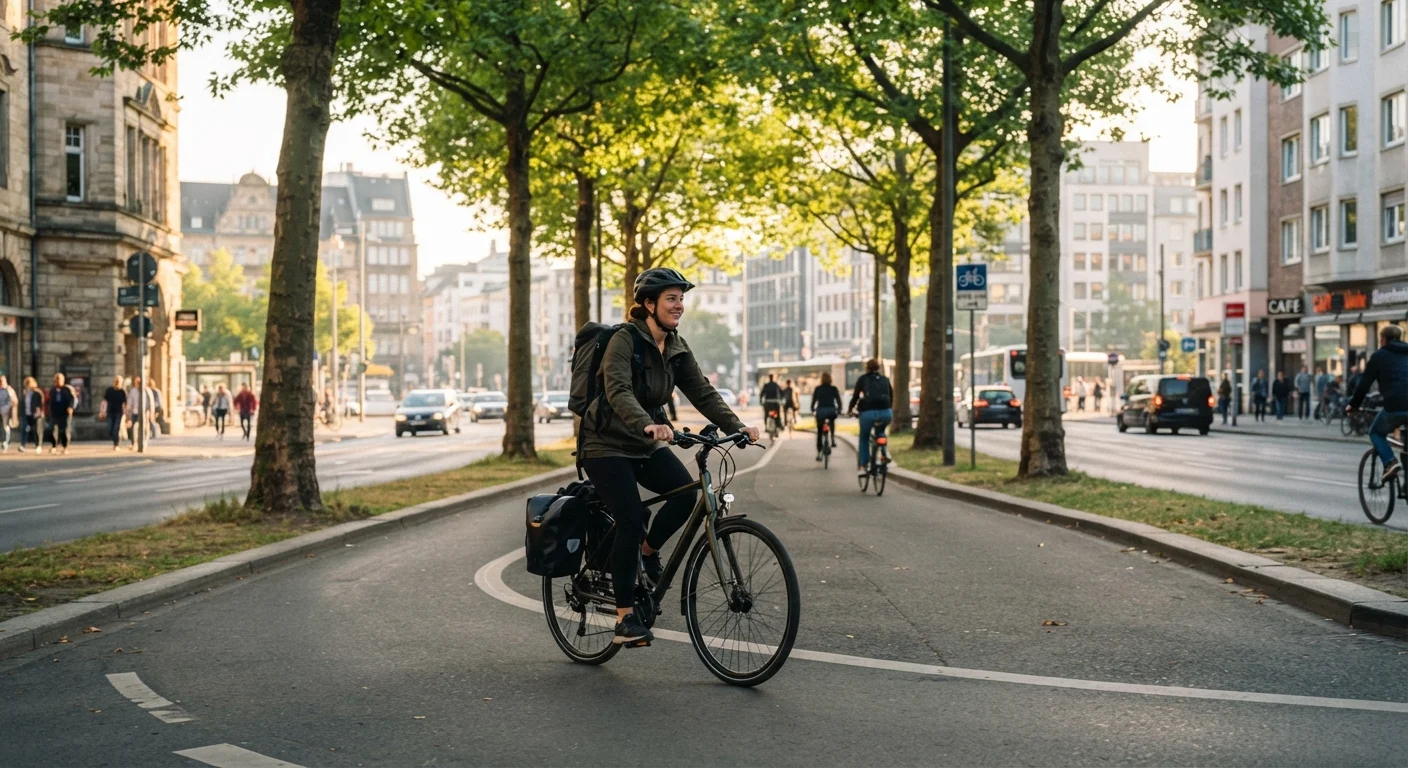
What Active Commuting Actually Involves
Active commuting means traveling to and from work using your own physical effort — most commonly walking or cycling, though running and skateboarding also qualify. Unlike a dedicated gym session, the movement is built directly into time you'd already spend getting somewhere.
For most American adults, this means replacing some or all of a car, bus, or train trip with self-powered travel. The health appeal is straightforward: the U.S. Department of Health and Human Services recommends at least 150 minutes of moderate-intensity aerobic activity per week for adults, and a round-trip commute of 20–30 minutes each way can contribute meaningfully toward that target.
Active commuting isn't a monolith. A 0.7-mile walk to a subway station is very different from a 9-mile bike ride across city traffic. Understanding what it actually requires for your specific situation is the starting point for any honest evaluation. For a broader look at how lifestyle movement compares to planned exercise, see how structured workouts and lifestyle activity compare.
The Real Advantages
Builds exercise into time already spent commuting
Active commuting eliminates the need to find separate workout time, making regular physical activity more sustainable for busy schedules.
Linked to lower cardiovascular disease risk
Multiple large observational studies associate regular active commuting — especially cycling — with meaningfully reduced rates of heart disease and premature mortality.
Can reduce daily transportation costs
Replacing car trips with walking or cycling lowers spending on fuel, parking, and vehicle maintenance, though upfront gear costs apply to cycling.
Supports mental health and stress reduction
Physical activity combined with outdoor exposure during a commute is associated with lower stress levels and improved mood at the start and end of the workday.
Reduces prolonged sitting time
Active commuting replaces sedentary travel time with movement, which matters independently of total exercise volume according to current activity guidelines.
Research consistently links regular active commuting to lower rates of cardiovascular disease, type 2 diabetes, and all-cause mortality. A large UK Biobank study found that cycling to work was associated with a substantially reduced risk of cardiovascular disease and cancer compared to non-active commuting — though it's worth noting that observational studies like this can't fully isolate commuting as the sole cause.
Beyond physical health, many active commuters report lower perceived stress and improved mood, likely tied to the combination of physical exertion and time outdoors. There are also practical financial benefits: replacing car trips reduces fuel, parking, and vehicle wear costs over time.
Perhaps the most underrated advantage is time efficiency. Rather than carving out separate exercise time, active commuting layers movement onto an obligation that already exists. For people with demanding schedules, this integration can be the difference between regular physical activity and none at all.
Where It Falls Short
Distance limitations exclude many workers
A large share of the U.S. workforce lives far enough from their workplace that active commuting would require impractically long travel times.
Weather creates significant reliability problems
Rain, heat, cold, and ice can make active commuting unsafe or uncomfortable, and there's no reliable workaround that doesn't disrupt a workday.
Safety risks are real, especially for cyclists
In areas without dedicated cycling infrastructure, road exposure increases accident risk; this varies widely by city and neighborhood but should not be understated.
Requires managing appearance and hygiene at work
Arriving sweaty or needing to change clothes is only manageable if your workplace offers facilities — an option many employers don't provide.
Doesn't replace a comprehensive fitness program
Active commuting typically provides cardiovascular activity but lacks the resistance or strength-training components needed for a well-rounded fitness routine.
Logistical complexity grows over time
Managing gear, route planning, bad weather days, late workdays, and cargo needs adds friction that causes many people to abandon the habit within months.
Distance is the most common barrier. Many Americans live too far from their workplace for walking or cycling to be practical without significantly extending commute time. The average U.S. commute is roughly 27 minutes each way by car — cycling that same route could easily double or triple travel time.
Weather is a persistent challenge. Rain, extreme heat, ice, and humidity all affect both safety and comfort, and arriving at work sweaty or soaked creates real professional complications unless shower facilities are available.
Safety is a legitimate concern, particularly for cyclists in areas with limited dedicated infrastructure. Traffic exposure, road quality, and driver behavior vary enormously by region, and this risk shouldn't be minimized in the name of promoting activity.
~27 min
Average U.S. one-way commute by car
U.S. Census Bureau data shows the average American spends roughly 27 minutes commuting one way, a distance that may or may not be walkable or cycleable depending on geography.
150 min
Weekly moderate aerobic activity recommended for adults
According to the U.S. Department of Health and Human Services Physical Activity Guidelines for Americans, adults should aim for at least 150 minutes of moderate-intensity activity weekly.
~45%
U.S. workers who live within 5 miles of work
Research from the U.S. Census Bureau suggests a substantial portion of workers live within cycling range, though infrastructure and safety gaps affect actual participation rates.
Carrying work materials, maintaining professional appearance, and managing return-trip logistics after long workdays add friction that erodes the appeal over time for many people.
Making an Honest Assessment for Your Situation
Before committing to active commuting, a realistic audit of your specific circumstances matters more than enthusiasm. Key questions: How far is the route? Are there safe lanes or paths? Does your workplace offer changing facilities? What happens on days when you're running late or carrying heavy materials?
You Don't Have to Go All-In
Active commuting doesn't have to mean biking or walking every day. Many people find that commuting actively two or three days per week, or walking from a transit stop rather than driving door-to-door, delivers real benefits with far less logistical strain. A partial approach can also serve as a practical starting point for building the habit gradually. Structuring this kind of partial commitment is easier when you have a consistent daily routine — see the trade-offs of highly structured daily schedules for context on balancing flexibility and consistency.
Part-time active commuting — biking two or three days per week, or walking the final mile from a transit stop — is a legitimate middle path that preserves the benefits while reducing logistical stress. It also allows you to build fitness gradually before committing to a full-distance active commute.
If you're considering tracking your activity during an active commute, understanding what wearable health tracking does and doesn't capture can help you set realistic expectations. And if walking is your mode of choice, comparing walking and running for daily routines offers useful context on intensity and health outcomes.
This article is for general informational purposes only and does not constitute medical advice. Consult a qualified healthcare professional before making significant changes to your physical activity routine, especially if you have existing health conditions.