What Strength Training Actually Is
Strength training — sometimes called resistance training or weight training — is any physical activity that requires your muscles to work against an opposing force. That force can be gravity acting on a dumbbell, the tension of a resistance band, or simply your own bodyweight during a push-up. The defining feature is muscular effort against resistance, not any particular tool or setting.
Regular strength training supports bone density, joint health, metabolic function, and everyday physical capability. It's one of the most broadly recommended forms of exercise by major public health organizations — and it's accessible to people at virtually any fitness level. For a broader look at building physical activity into daily life, explore the Exercise Basics hub.
Resistance training
Any exercise in which muscles work against an opposing force, such as weights, bands, or bodyweight. Strength training and resistance training are often used interchangeably.
Rep (repetition)
One complete execution of an exercise — for example, lowering into a squat and standing back up counts as one rep.
Set
A group of consecutive reps performed without stopping. Resting between sets allows your muscles to partially recover before the next group.
Progressive overload
The principle of gradually increasing the difficulty of your workouts over time so your muscles continue to adapt and grow stronger.
Compound movement
An exercise that involves more than one joint and recruits multiple muscle groups at once — squats, deadlifts, and rows are common examples.
Range of motion
The full extent through which a joint moves during an exercise. Moving through a full range of motion generally makes an exercise more effective and safer.
Core Concepts: Sets, Reps, and Rest
Three terms form the skeleton of almost every strength workout: reps, sets, and rest. A rep (repetition) is one complete movement — lowering and raising yourself through a squat, for example. A set is a group of reps performed back-to-back before you pause. Rest is the recovery period between sets.
A typical beginner session might call for 3 sets of 10 reps on several exercises, with 60–90 seconds of rest between sets. These variables — how many reps, how many sets, how long you rest — shape whether a workout leans toward building strength, muscular endurance, or power. For a deeper breakdown of these terms, see our plain-English guide to strength training vocabulary.
As a beginner, keep it simple: choose 4–6 exercises that cover major movement patterns (push, pull, squat, hinge), do 2–3 sets of 8–12 reps each, and rest enough that you can maintain consistent effort across all sets.
Progressive Overload: The Engine of Progress
Your muscles adapt to stress. When you repeatedly perform the same exercise with the same weight for the same number of reps, your body eventually stops changing because the demand is no longer challenging. Progressive overload is the practice of systematically increasing that demand over time so adaptation continues.
For beginners, progression often happens quickly and naturally — you may add a small amount of weight or an extra rep each week for several months. Progression doesn't always mean heavier weight; you can also progress by increasing your number of sets, shortening rest periods, improving your range of motion, or slowing the tempo of each rep to increase time under tension.
Track Every Workout From Day One
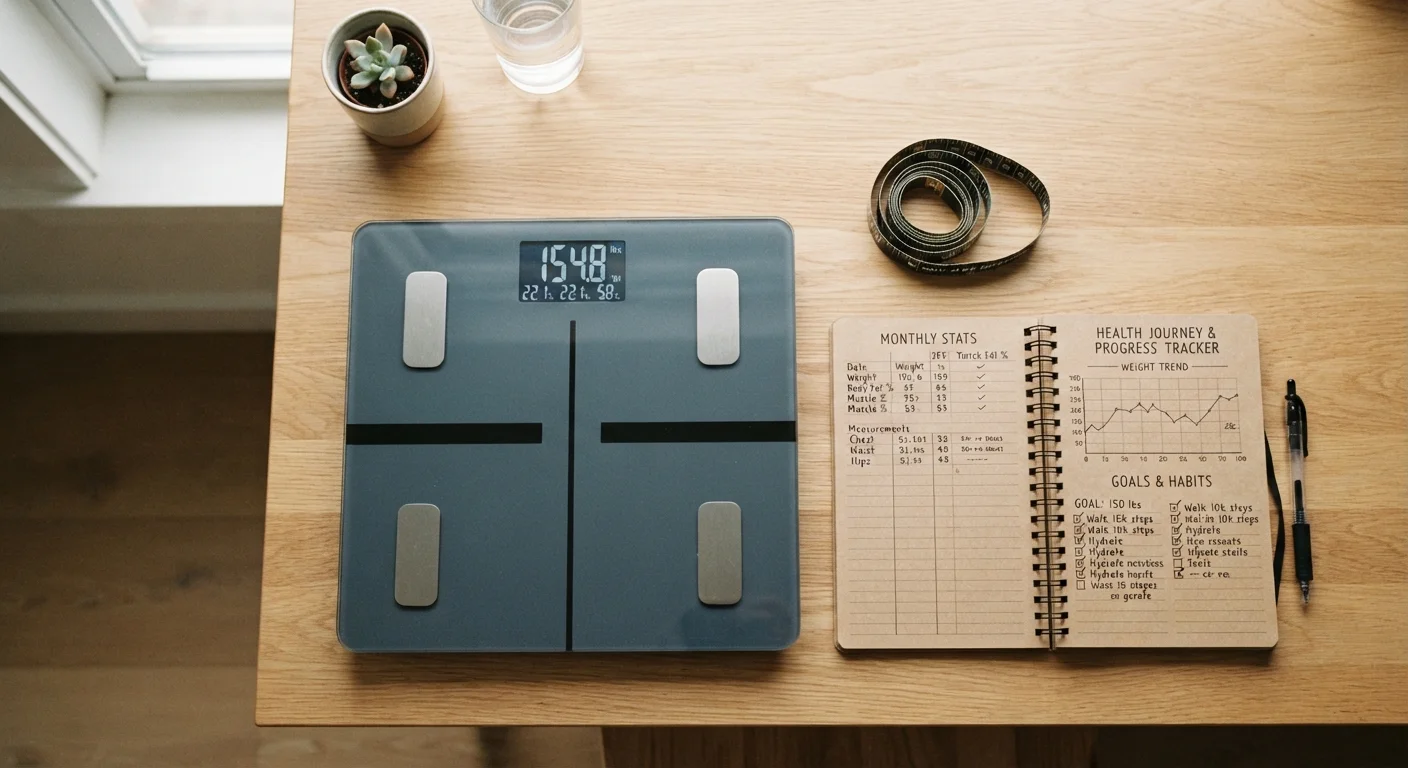
Write down the exercise, weight used, sets, and reps after each session. Even a simple notebook works. This record makes it easy to identify when you're ready to progress and helps you stay motivated by showing how far you've come over weeks and months.
The goal is gradual, sustainable challenge — not pushing to failure every session. Tracking your workouts in a notebook or app makes it much easier to see when and how to progress. This same principle of consistent, measurable progress applies when getting started with body composition tracking.
Form First: Why Technique Matters More Than Weight
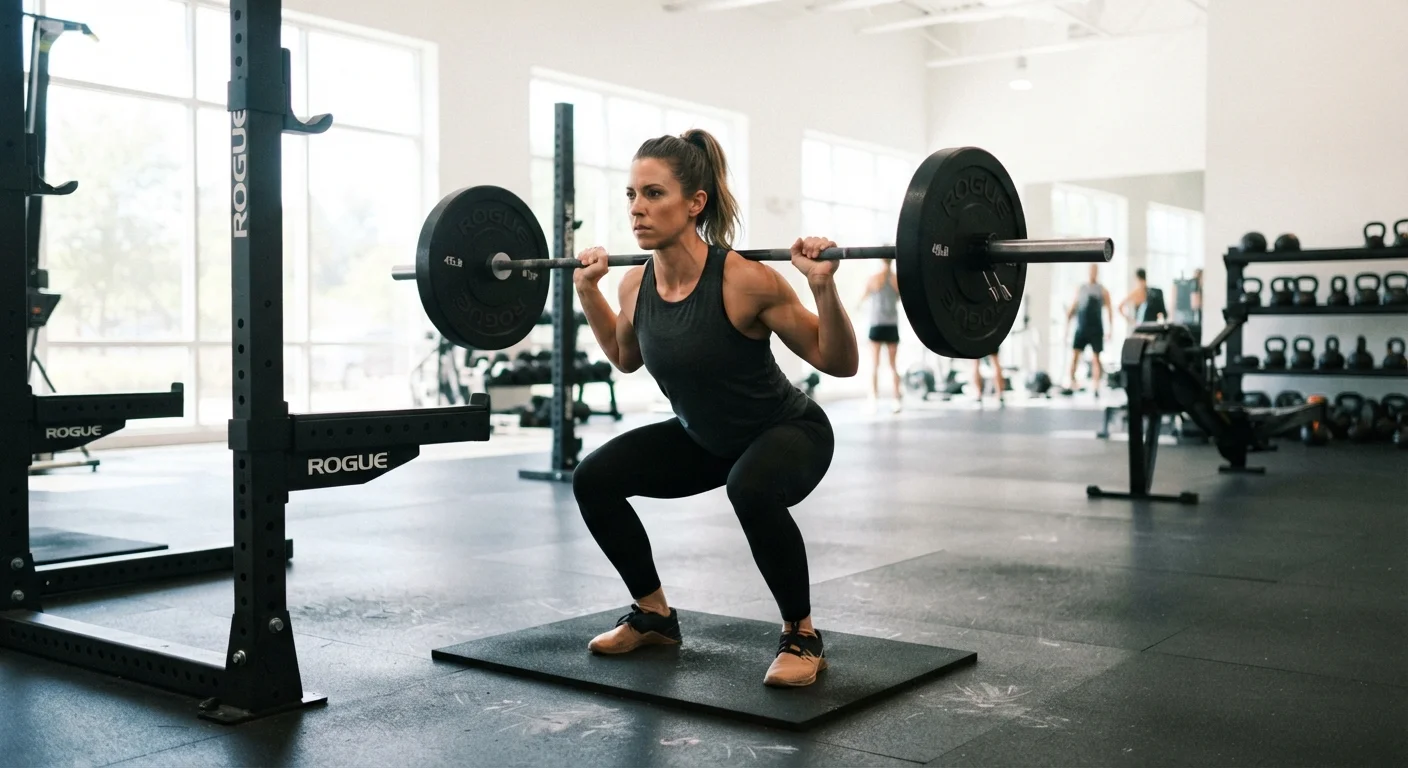
The weight on the bar is far less important than how you move through an exercise. Poor form shifts stress onto joints, tendons, and tissues that aren't designed to handle it — increasing injury risk and reducing the effectiveness of the movement for your target muscles.
For every foundational exercise — squat, deadlift, row, press — invest time learning the correct movement pattern before adding significant load. Use a mirror, record yourself, or consult a certified personal trainer. Movement quality is a skill, and like any skill, it improves with deliberate practice at manageable intensity.
If you're building your exercise habit from scratch, the guide to starting a workout routine when you've never had one covers how to set realistic expectations for the early weeks.
This article is for general informational purposes only and does not constitute medical advice. Consult a qualified healthcare professional before beginning any new exercise program, especially if you have an existing health condition or injury.
Choosing Your Tools and Getting Started
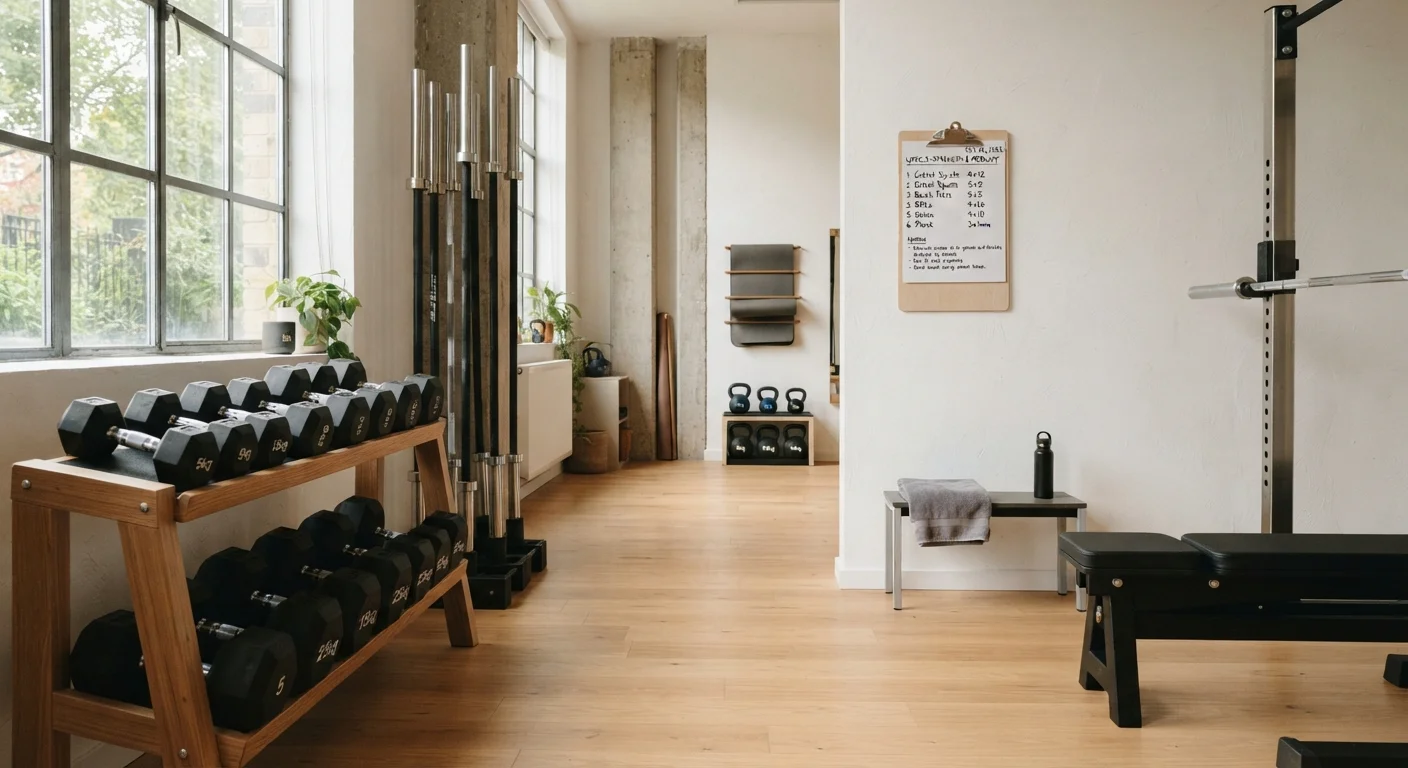
Beginners have more options than they often realize. Bodyweight training is a legitimate starting point — mastering a controlled bodyweight squat or push-up builds the neuromuscular coordination that makes barbell training safer later. Resistance bands offer adjustable tension and are joint-friendly. Free weights (dumbbells, barbells, kettlebells) and machines each challenge muscles differently; understanding those differences helps you choose intentionally. Our article on resistance bands, free weights, and machines explains the mechanical distinctions clearly.
A practical starting plan for most beginners: two to three full-body sessions per week, built around compound movements (exercises that work multiple joints at once), with a focus on form and steady progression. Give yourself rest days between sessions for recovery — that's when muscle tissue repairs and grows stronger.
Strength training is a long-term investment in your physical capability. You don't need a perfect program or an ideal gym — you need consistency, patience, and a willingness to learn how your body responds to effort. For anyone who hasn't been active in a while, building an active lifestyle from scratch offers a grounded perspective on returning to movement at any starting point.
Exercise Basics Hub
A curated collection of foundational articles covering physical activity principles for beginners and everyday movers. A useful companion as you build your training knowledge.
Starting a Workout Routine When You've Never Had One
A low-pressure introduction to building an exercise habit from zero, covering frequency, intensity, and what to realistically expect in the early weeks.