Why the Tool Actually Matters
Most people think of resistance as a single concept — you push or pull against something, your muscles work, you get stronger. But the type of resistance shapes the training stimulus in ways that matter over time. Before picking up a dumbbell or looping a band around a squat rack, it helps to understand what each tool is actually doing to your muscles mechanically.
If you're newer to the vocabulary of strength training, this plain-English guide to training terms is a helpful primer before diving deeper. And for a broader view of what strength training does for your body alongside cardio and other modalities, see this overview of the four major exercise categories.
Resistance Bands: Variable Tension Across the Range of Motion
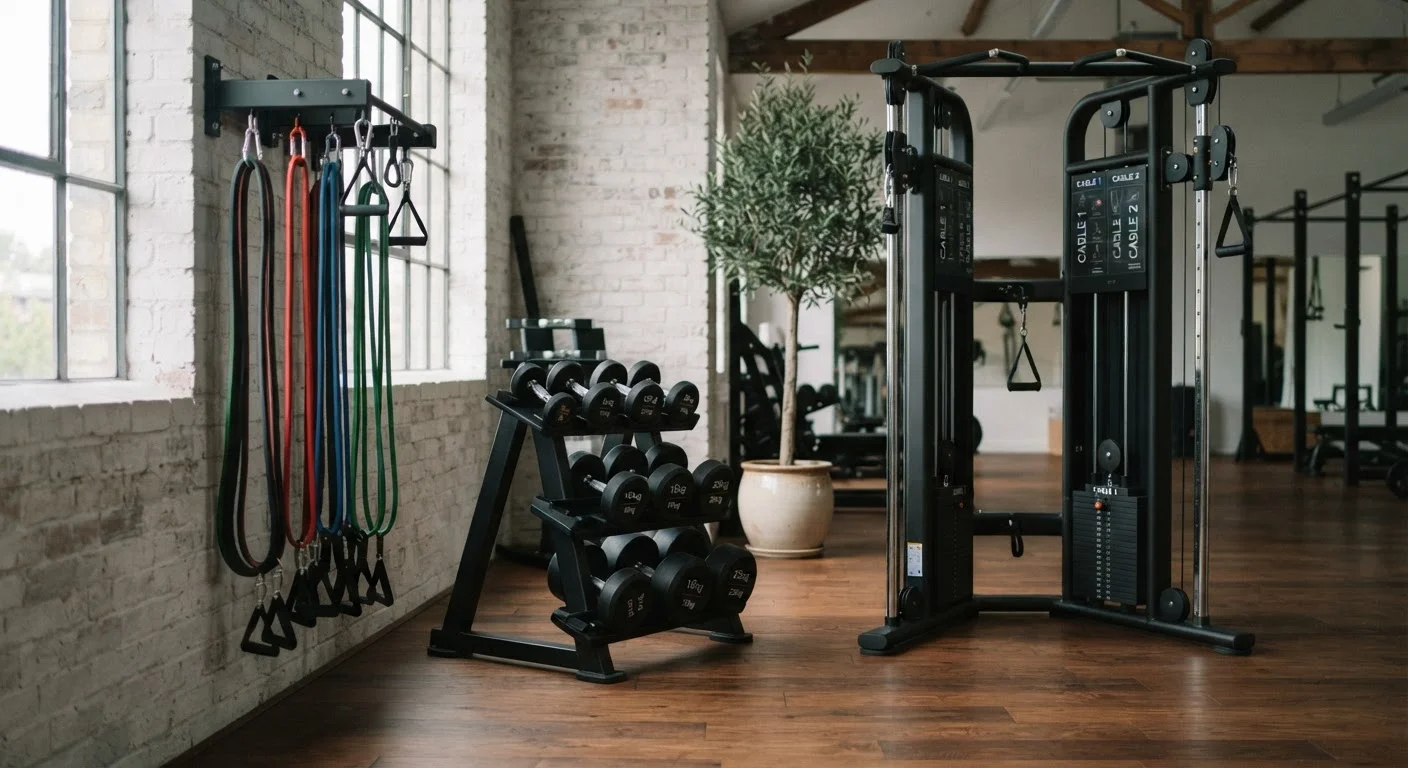
Resistance bands operate on elastic tension — the more you stretch them, the harder they pull back. This creates what exercise scientists call accommodating resistance: the load is lightest at the start of a movement (where you're typically weakest) and heaviest at the top (where you're often strongest). This matches your natural strength curve more closely than a fixed weight does.
That variable tension also means bands challenge your muscles through the full range of motion rather than letting you coast at either end. They're particularly useful for working smaller stabilizing muscles, performing low-impact exercises, and training in spaces without equipment. However, they're harder to load progressively with precision, which can make systematic strength gains trickier to track over time.
Try Bands as a Warm-Up, Not Just a Workout
Resistance bands are well-suited for activation work before a lifting session — think banded clamshells before squats or pull-aparts before pressing movements. Using them this way primes stabilizer muscles without fatiguing the primary movers you'll rely on for heavier lifts. It's a simple addition that can improve both movement quality and injury resilience.
Free Weights: Constant Load and Full Coordination Demands
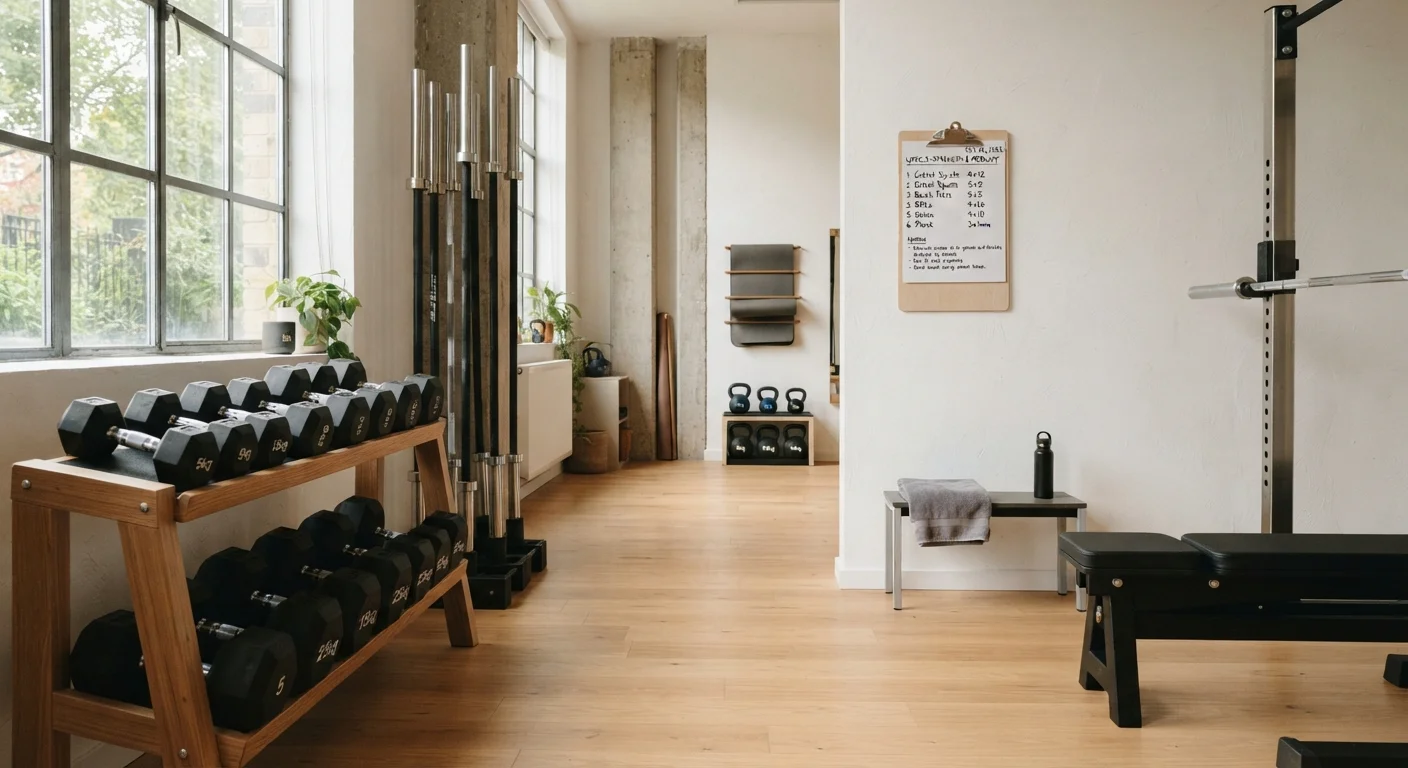
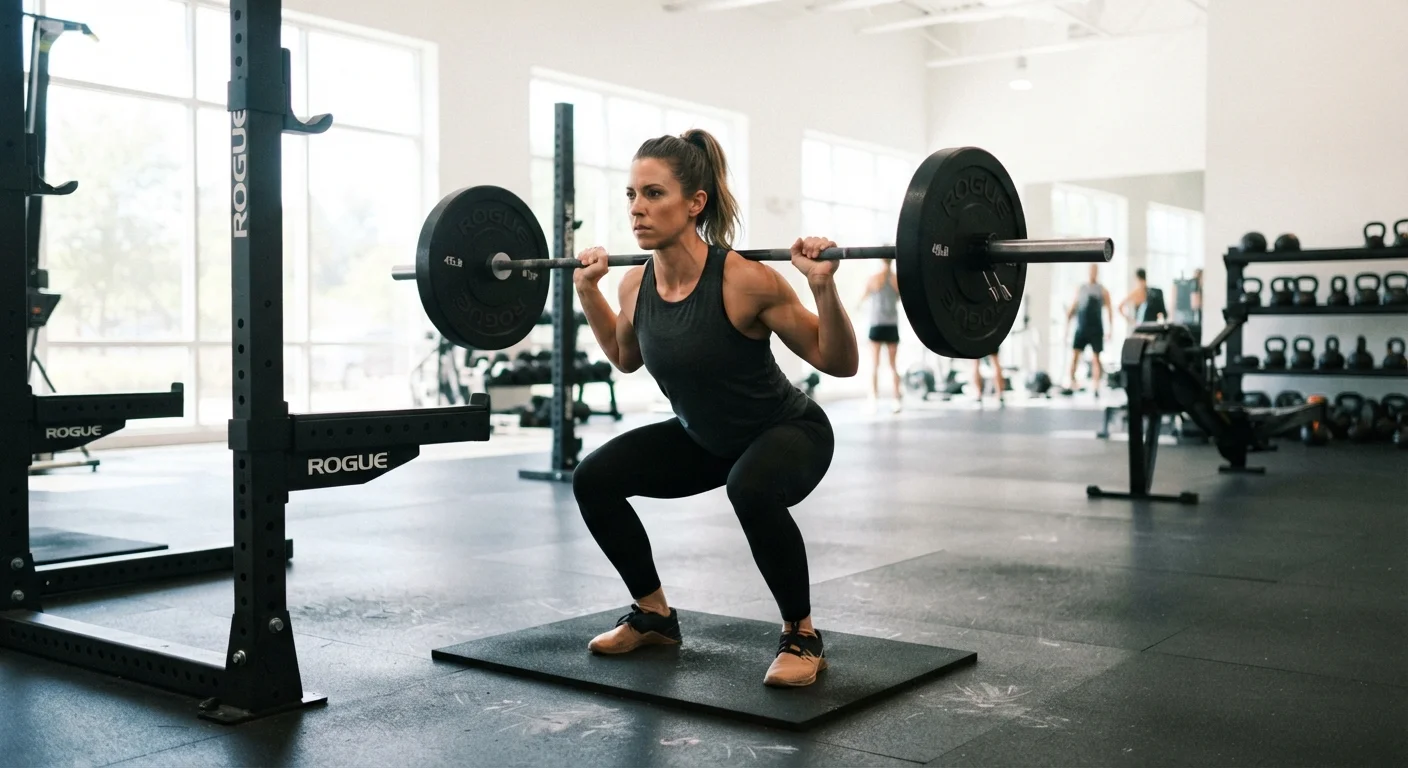
Dumbbells, barbells, and kettlebells apply constant gravitational load — the resistance doesn't change as you move through the exercise. This means the difficulty varies based on where you are in your strength curve, and muscles must work hardest at their weakest joint angle.
What makes free weights especially valuable is what they demand beyond the target muscle: stabilizer muscles throughout the shoulder, hip, and core activate continuously to control the path of movement. This coordination demand transfers more directly to everyday physical tasks — lifting, carrying, pushing — than most machine-based exercises do. Free weights are a cornerstone of foundational strength training for exactly this reason. The tradeoff is that improper technique carries a higher injury risk than guided equipment.
Machines: Fixed Paths and Isolated Loading
Cable machines, selectorized stack machines, and leg press units guide movement along a predetermined path. By removing the stabilization demand, they isolate specific muscle groups more purely — which is precisely their advantage in certain contexts.
For beginners still learning movement patterns, machines reduce the coordination barrier and let the target muscle bear most of the load. For rehabilitation or post-injury training, they allow controlled strengthening without stressing surrounding structures. For advanced trainees, machines can isolate a lagging muscle group in ways free weights make difficult.
| Resistance Bands | Free Weights | Machines | |
|---|---|---|---|
| Resistance type | Variable / elastic tension | Constant gravitational load | Guided / fixed-path load |
| Stabilizer muscle activation | Moderate | High | Low |
| Beginner accessibility | High | Moderate | High |
| Functional carryover | Moderate | High | Lower |
| Progressive overload precision | Harder to measure | Easy to track | Easy to track |
| Portability | Excellent | Low | None |
| Injury risk (with poor form) | Low to moderate | Moderate to high | Lower |
The limitation is functional carryover: because machines remove the stabilization challenge, the strength built doesn't always translate as directly to real-world tasks or sport movements.
Using All Three Intentionally
The most productive training programs typically draw from all three tools depending on the goal of each exercise, not a loyalty to one category. You might use a machine for a targeted isolation exercise, shift to free weights for a compound movement that builds coordinated full-body strength, and incorporate bands for warm-up activation or as added resistance on a barbell lift.
Understanding how these tools differ also informs how strength training fits alongside other exercise. Comparing strength and cardio training highlights why both serve distinct physiological purposes — and the same logic applies within strength training itself. Each tool has a place; knowing which place that is turns random equipment use into an intentional practice.
This article is for informational purposes only and is not a substitute for professional medical or fitness advice. Consult a qualified healthcare or exercise professional before beginning any new training program, particularly if you have an existing health condition or injury.