
What Happens in Your Brain When a Habit Forms
Every habit you hold — from your morning coffee ritual to your evening wind-down — started as a deliberate choice. What changed it into something automatic is a process rooted in how the brain manages energy.
When you perform a new behavior, your prefrontal cortex — the region responsible for planning and conscious decision-making — is heavily engaged. This takes real cognitive effort. As you repeat the behavior consistently in the same context, the brain begins shifting that processing load toward the basal ganglia, a deeper structure specialized for procedural, automatic responses.
This transfer is essentially the brain finding a shortcut. Once a behavior is sufficiently encoded, the relevant cue can trigger the routine with little to no conscious thought. Researchers describe this process as chunking: the brain compresses a sequence of actions into a single automatic unit.
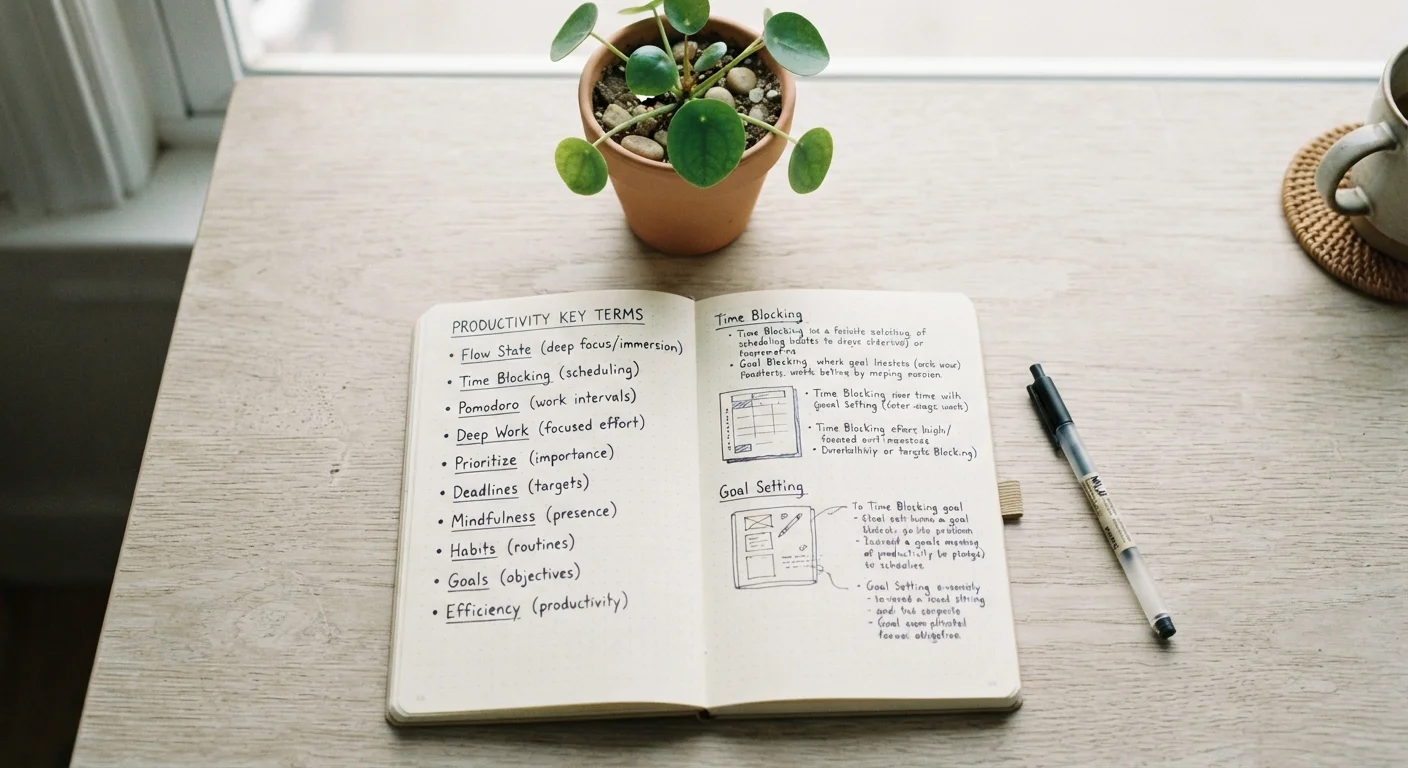
This is why habits feel invisible once formed. They no longer compete for conscious attention — and that is precisely what makes them so powerful for sustaining health-supportive behaviors over time. For a plain-language breakdown of the key terms involved, see our glossary of habit and routine concepts.
The Habit Loop: Cue, Routine, Reward
Behavioral researchers have long described habit formation through a three-part structure often called the habit loop. Understanding each component helps explain why some behaviors stick and others fade.
- Cue: A trigger — internal (hunger, stress, time of day) or external (a location, sound, or social situation) — that initiates the behavior.
- Routine: The behavior itself, which may be physical, cognitive, or emotional.
- Reward: The positive outcome or relief that reinforces the loop, signaling to the brain that this sequence is worth repeating.
Each time the loop completes successfully, the neural pathway connecting cue to routine is strengthened. Over repetitions, the cue alone becomes sufficient to launch the routine automatically.
This framework also explains why habits are difficult to simply eliminate: the neural pathway does not disappear. Instead, behavioral science suggests it is more effective to replace the routine within an existing loop than to attempt to break the loop entirely.
“Habits are the invisible architecture of everyday life. We repeat about 40 percent of our behavior almost daily, so our habits shape our existence as much as our deliberate choices.”
— Gretchen Rubin, Author and researcher focused on human nature and behavioral change
Why Consistency of Context Accelerates Habit Encoding
One of the most reliable findings in habit research is the importance of contextual consistency — performing a behavior in the same environment, at the same time, and in the same sequence. This is because context cues become deeply woven into the habit's neural representation.
When the context is stable, the cue is always present, which means the loop fires more frequently and the encoding accelerates. Disrupting the context — traveling, changing work schedules, or moving homes — can temporarily weaken even well-established habits because the cues that triggered them are no longer present.
This insight has a practical upside: you can deliberately engineer your environment to provide strong, reliable cues. Laying out workout clothes the night before, keeping a water bottle visible on your desk, or establishing a consistent wind-down routine before bed all function as environmental cues that prompt the behaviors you want to make automatic.
Aligning your routine with your natural energy rhythms can further strengthen contextual consistency by pairing behaviors with biological states that recur predictably each day.
Use Habit Stacking to Build New Behaviors
Choose an existing, reliable habit as an anchor — something you do every day without thinking, like making coffee or brushing your teeth. Immediately after that habit, perform the new behavior you want to build. The existing habit's cue effectively becomes the trigger for your new routine, making it far easier to remember and repeat consistently.
How Daily Routines Reduce Decision Fatigue
Beyond neurological encoding, daily routines offer a cognitive benefit that is easy to overlook: they dramatically reduce the number of decisions you must make each day.
Decision fatigue is a well-documented phenomenon in which the quality of decisions declines after a person has already made many choices. Each deliberate decision depletes a limited pool of cognitive resources. When healthy behaviors are embedded in a routine, they no longer require a decision — they simply happen as part of the sequence.
This is why structured routines are particularly valuable for behaviors that require consistency to be effective, such as regular physical activity, sleep hygiene practices, or stress management techniques. When the behavior is automatic, it does not compete with the day's accumulating cognitive demands.
For a practical look at how to start building these structures, our beginner's guide to building a daily health routine offers a step-by-step framework grounded in these same principles.
18–254 days
Range for a habit to become automatic
A study published in the European Journal of Social Psychology found wide individual variation in how long automaticity takes to develop, with a median around 66 days.
~40%
Daily behaviors that are habitual, not deliberate
Research published in Psychological Science estimated that roughly 40% of daily actions are performed habitually in the same location and at the same time each day.
Minimal impact
Effect of a single missed day on habit formation
The same European Journal of Social Psychology study found that missing one day did not meaningfully derail the overall habit formation trajectory for most participants.
It is also worth noting that not all routines need to be rigid to be effective. Behavioral research on rigid versus flexible routine structures suggests that some degree of adaptability can support long-term habit durability without sacrificing the cognitive benefits of predictable structure.
This article is for informational purposes only and is not a substitute for professional medical or behavioral health advice. Consult a qualified healthcare provider for guidance specific to your health needs.