How Caffeine Lingers Longer Than You Think
Caffeine is the most widely consumed psychoactive substance in the United States, and its relationship with sleep is frequently underestimated. Most people know caffeine promotes alertness — but fewer realize how long it continues working in the body after the last sip.
Caffeine works by blocking adenosine receptors in the brain. Adenosine is a chemical that accumulates throughout the day and signals your body to feel sleepy. When caffeine occupies those receptors, that sleepiness signal is muted — even if real physiological fatigue is building underneath.
The average half-life of caffeine in a healthy adult is roughly 5 to 6 hours, meaning half of the caffeine from a 3 p.m. coffee is still active in your system at 8 or 9 p.m. For some individuals — particularly those who metabolize caffeine slowly due to genetic variation — the half-life can stretch to 9 hours or more. This is one of the most underappreciated timing effects in everyday sleep hygiene.
Research suggests caffeine consumed even 6 hours before bedtime can measurably reduce total sleep time. It also suppresses slow-wave (deep) sleep — the stage most critical to physical restoration — even when a person feels they fell asleep without difficulty.
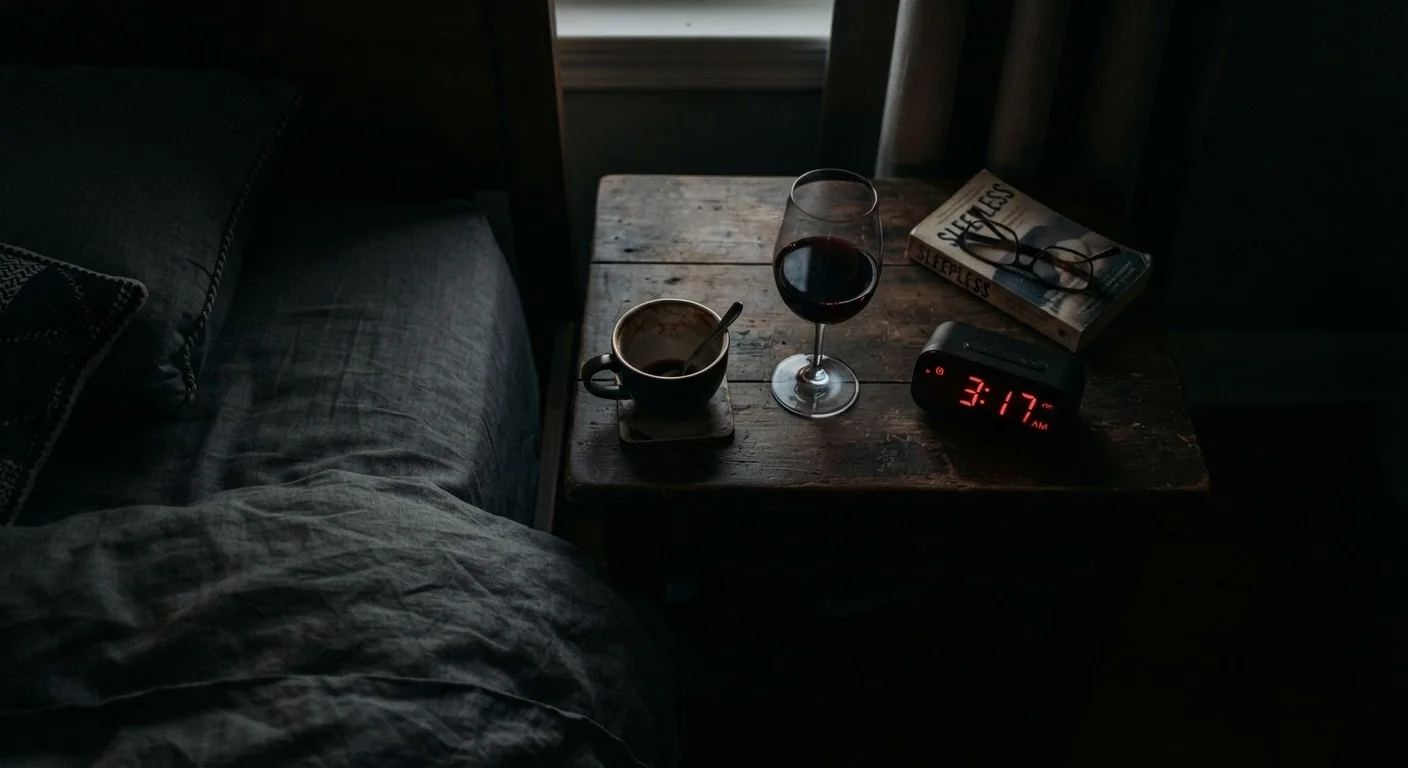
If you're consistently waking unrefreshed despite adequate time in bed, caffeine timing is worth examining. Evening habits that quietly undermine your sleep may include caffeine sources you haven't considered, such as tea, chocolate, or certain medications.
What Alcohol Actually Does to Sleep Architecture
Alcohol is commonly believed to be a sleep aid. It does accelerate the onset of sleep — but the quality of that sleep is significantly compromised. This is one of the most persistent and consequential sleep myths in circulation. Common sleep myths, including the alcohol-as-sleep-aid belief, are worth understanding clearly.
Alcohol acts as a central nervous system depressant, which is why it feels sedating. In the first half of the night, it tends to increase slow-wave sleep while suppressing REM sleep — the stage associated with memory consolidation, emotional regulation, and cognitive recovery. As the body metabolizes alcohol in the second half of the night, there is a rebound effect: REM sleep surges in an irregular pattern, and sleep becomes fragmented and lighter.
The practical result is waking up feeling unrestored, even after a full night in bed. Alcohol also relaxes the muscles of the throat, worsening snoring and increasing the risk of obstructive sleep apnea episodes. It also acts as a diuretic, increasing the likelihood of waking to use the bathroom.
There is no safe threshold established for alcohol and sleep quality. Even moderate consumption — one to two drinks — can measurably alter sleep architecture. The effects are dose-dependent, meaning more alcohol corresponds to greater disruption.
If you've been using alcohol to fall asleep regularly, this pattern is worth discussing with a healthcare provider. Habits that quietly deepen sleep problems often include routines that feel helpful in the short term but compound over time.
This article is for general informational purposes only and does not constitute medical advice. Consult a qualified healthcare professional about any personal sleep concerns or health conditions.