
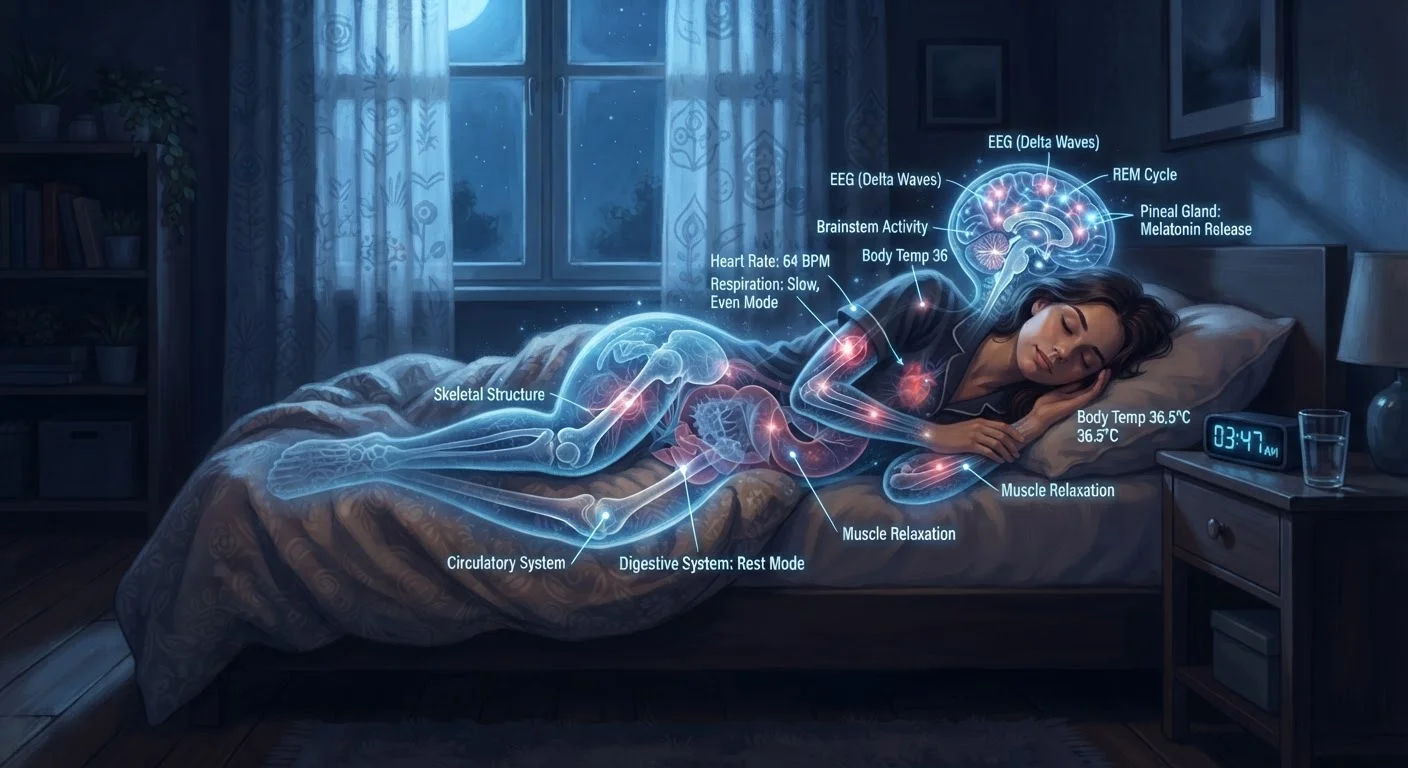
Sleep Is Not Downtime — It's Active Maintenance
Most people think of sleep as the brain and body simply switching off. In reality, the moment you fall asleep, a coordinated series of biological processes begins — processes that are impossible to replicate while you're awake. Understanding what those processes are is the foundation of sleep science.
Sleep is structured into repeating cycles, each lasting roughly 90 minutes. Within each cycle, you move through lighter non-REM stages, into deep slow-wave sleep, and eventually into REM sleep. The ratio shifts across the night: deep sleep dominates early cycles, while REM sleep lengthens in the early morning hours. This architecture is not random — each phase is timed to accomplish specific tasks.
Keep Your Sleep Schedule Consistent
Going to bed and waking at the same time every day — including weekends — helps anchor your circadian rhythm and ensures your body cycles through all stages of sleep in their proper proportions. Even a one-hour shift on weekends can disrupt the timing of deep and REM sleep. Consistency is one of the most powerful levers you have for sleep quality.
Deep Sleep: The Body's Repair Window
Deep sleep — also called slow-wave or N3 sleep — is when your body does the heaviest physical work of the night. The pituitary gland releases the majority of daily growth hormone during this stage, which drives muscle repair, bone maintenance, and cellular regeneration. This is why athletes and people recovering from illness or injury see dramatically worse outcomes when deep sleep is disrupted.
Immune function also depends heavily on this stage. During deep sleep, the immune system produces cytokines — signaling proteins that help coordinate responses to infection and inflammation. Blood pressure drops, breathing slows, and the cardiovascular system gets a sustained period of reduced workload, which researchers associate with long-term heart health.
For a broader look at how sleep requirements shift across life, see how much sleep different life stages actually call for.
90 min
Average length of one sleep cycle
According to the National Sleep Foundation, most adults complete four to six of these cycles per night.
20–25%
Proportion of sleep spent in REM
Research published in sleep physiology literature consistently finds healthy adults spend roughly one-fifth of the night in REM sleep.
7–9 hrs
Recommended nightly sleep for adults
The American Academy of Sleep Medicine and the Sleep Research Society jointly recommend seven to nine hours for adults aged 18–60.
REM Sleep: Memory, Emotion, and the Brain's Filing System
REM sleep gets its name from the rapid eye movements that occur beneath closed eyelids. Brain activity during REM is strikingly similar to wakefulness — the difference is that the body's muscles are temporarily paralyzed, preventing you from acting out your dreams.
This is the stage where memory consolidation happens most intensively. Experiences and information gathered during the day are replayed and integrated into long-term memory networks. Emotional memories are also processed during REM, which is why sleep quality is closely linked to mood regulation and stress resilience. Disrupting REM sleep — through alcohol, sleep aids, or simple sleep deprivation — impairs learning and can heighten emotional reactivity the following day.
The sleeping brain is remarkably active — and the REM stage is one of the clearest examples of why.
Brain Waste Clearance: The Glymphatic System at Work
One of the more striking discoveries in sleep research over the past decade involves a brain-specific waste-clearance pathway called the glymphatic system. During sleep — particularly during deep sleep — cerebrospinal fluid is pumped more actively through narrow channels surrounding blood vessels in the brain, flushing out metabolic byproducts that accumulate during waking hours.
Among the substances cleared is beta-amyloid, a protein fragment associated with Alzheimer's disease when it accumulates in excess. While it is too early to draw direct causal conclusions, this mechanism has significantly raised scientific interest in chronic sleep deprivation as a potential risk factor for cognitive decline over a lifetime.
If you're curious about how clinicians measure brain and body activity during sleep, a sleep study can reveal a great deal about what's happening across these stages.
Building Better Sleep Habits Based on Biology
Understanding what your body does during sleep makes it easier to see why consistent, quality rest matters so much. Cutting sleep short doesn't just leave you tired — it interrupts hormone cycles, impairs memory encoding, suppresses immune defenses, and reduces the brain's ability to clear waste.
The good news is that the body is highly responsive to improved sleep habits. Prioritizing a consistent sleep schedule, managing light exposure in the evening, and reducing late-night stimulants are among the evidence-backed steps that support the full cycling of sleep stages. For practical, actionable guidance on building those routines, explore better sleep habits grounded in this same biology.
This article is for general informational and educational purposes only and is not a substitute for professional medical advice. If you have concerns about your sleep health, please consult a qualified healthcare provider.