
Why Sleep Looks Like Rest but Isn't
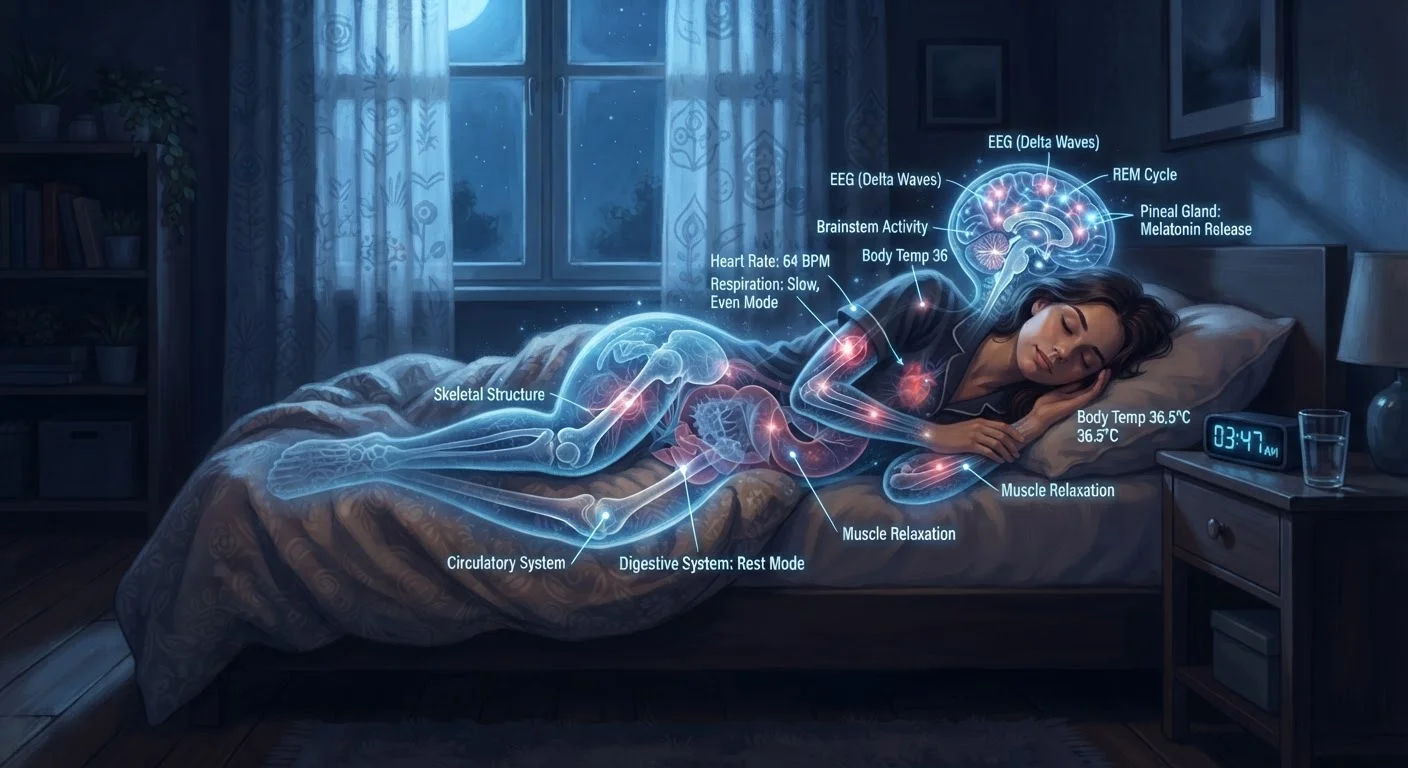
From the outside, a sleeping person appears completely still. But inside the skull, the brain is running what might be its most demanding shift of the day. Neurons fire in coordinated waves, hormones are released on precise schedules, and complex biochemical processes unfold that simply cannot occur at the same pace — or at all — during wakefulness.
This misconception — that sleep is biological downtime — has real consequences. It shapes how people prioritize rest, and it underlies the widespread tendency to sacrifice sleep in favor of productivity. Understanding what actually happens in a sleeping brain makes it easier to appreciate why those hours cannot simply be borrowed from or skipped. For a fuller picture of how the body responds alongside the brain, see what your body is doing during sleep.
The Brain's Nightly Architecture
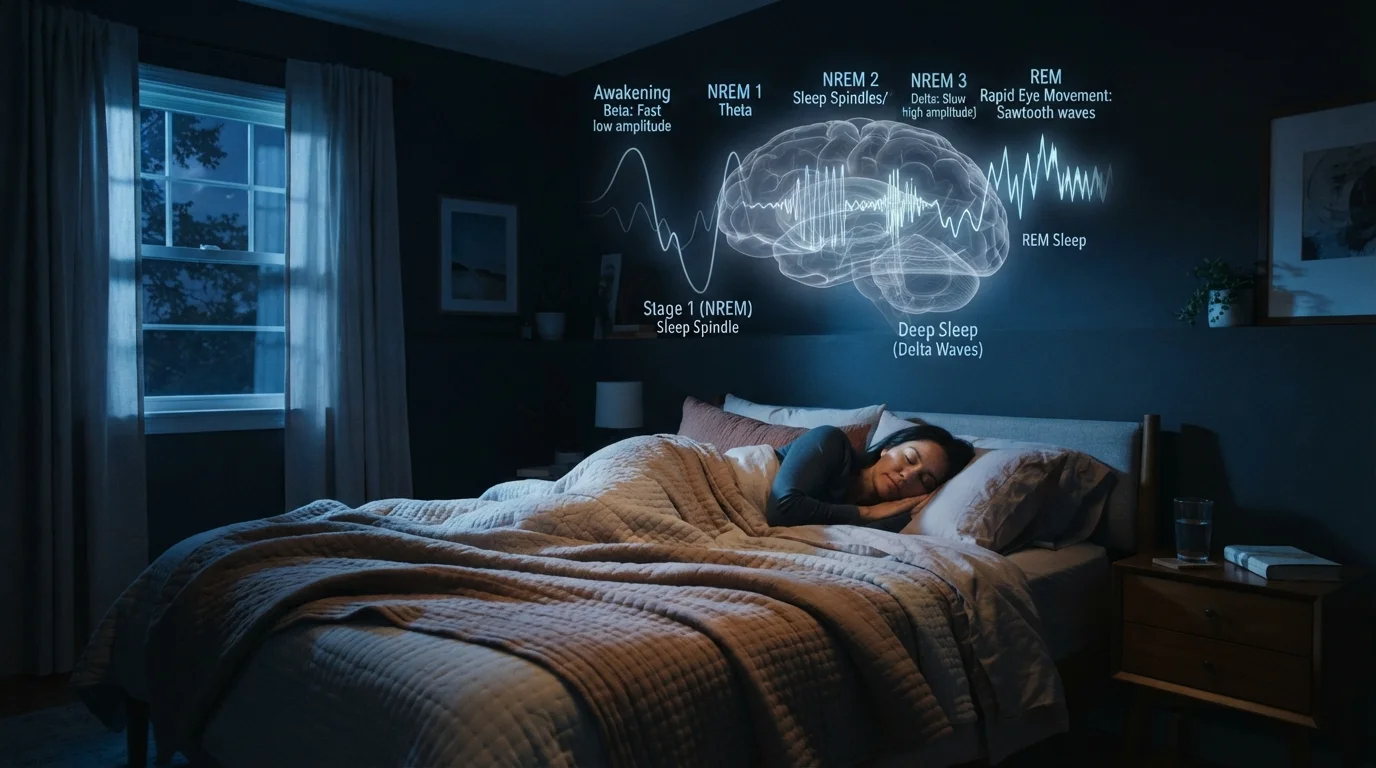
Sleep is not a single uniform state. It is structured into repeating cycles — typically four to six per night — each lasting roughly 90 minutes and composed of distinct stages. These stages fall into two broad categories: NREM (non-rapid eye movement) sleep, which includes light and deep phases, and REM (rapid eye movement) sleep, characterized by vivid dreaming and a brain activity pattern that resembles wakefulness on an EEG.
During the early part of the night, deep NREM sleep dominates. Slow, high-amplitude brain waves called delta waves sweep across the cortex. This is when the body's most intensive physical repair occurs and when the brain does much of its memory-filing work. As the night progresses, REM periods grow longer and deeper NREM shrinks — meaning the brain's activity profile shifts considerably across just a single night.
Learn how REM and NREM cycles are structured and what each phase contributes to cognitive and physical health.
4–6
Complete sleep cycles per typical night
Each roughly 90-minute cycle includes both NREM and REM stages, according to established sleep physiology research.
~60%
Of a night's sleep spent in light NREM stages
Sleep stage composition shifts across the night, with deep NREM dominating early and REM expanding toward morning.
~10x
Increase in glymphatic clearance during sleep
A landmark 2013 study published in Science (Xie et al.) found the brain's waste-clearance system was substantially more active during sleep.
Memory Consolidation: Filing the Day's Experiences
One of sleep's most well-documented roles is memory consolidation — the process by which newly acquired information is stabilized and integrated into long-term storage. During wakefulness, the hippocampus temporarily holds new learning. During deep NREM sleep, this information is replayed and transferred to the cortex, where it becomes more durable and less vulnerable to interference.
REM sleep appears to play a complementary role, helping the brain integrate new learning with existing knowledge networks and process emotionally significant experiences. This is one reason why both deep and REM sleep matter — cutting either short impairs different aspects of learning and memory.
The Glymphatic System: Taking Out the Brain's Trash
One of the most striking sleep-science discoveries of recent decades is the glymphatic system — a network of channels alongside blood vessels in the brain that uses cerebrospinal fluid to flush out metabolic waste. Research has shown that this clearance system is significantly more active during sleep than during wakefulness, and that brain cells may actually shrink slightly during sleep to allow better fluid flow.
Among the waste products cleared is beta-amyloid, a protein whose accumulation in the brain has been associated with Alzheimer's disease. While it would be an overstatement to say sleep prevents neurodegeneration — the science is still evolving — this finding has added urgency to research on sleep quality as a component of long-term brain health.
Emotional Regulation and the Sleeping Brain
Sleep also plays a critical role in emotional processing. The amygdala — the brain's threat-detection center — becomes highly active during REM sleep, while the prefrontal cortex, which moderates emotional responses, is relatively quieted. This pairing may allow the brain to reprocess emotionally charged experiences in a lower-stakes environment, effectively taking the edge off difficult memories.
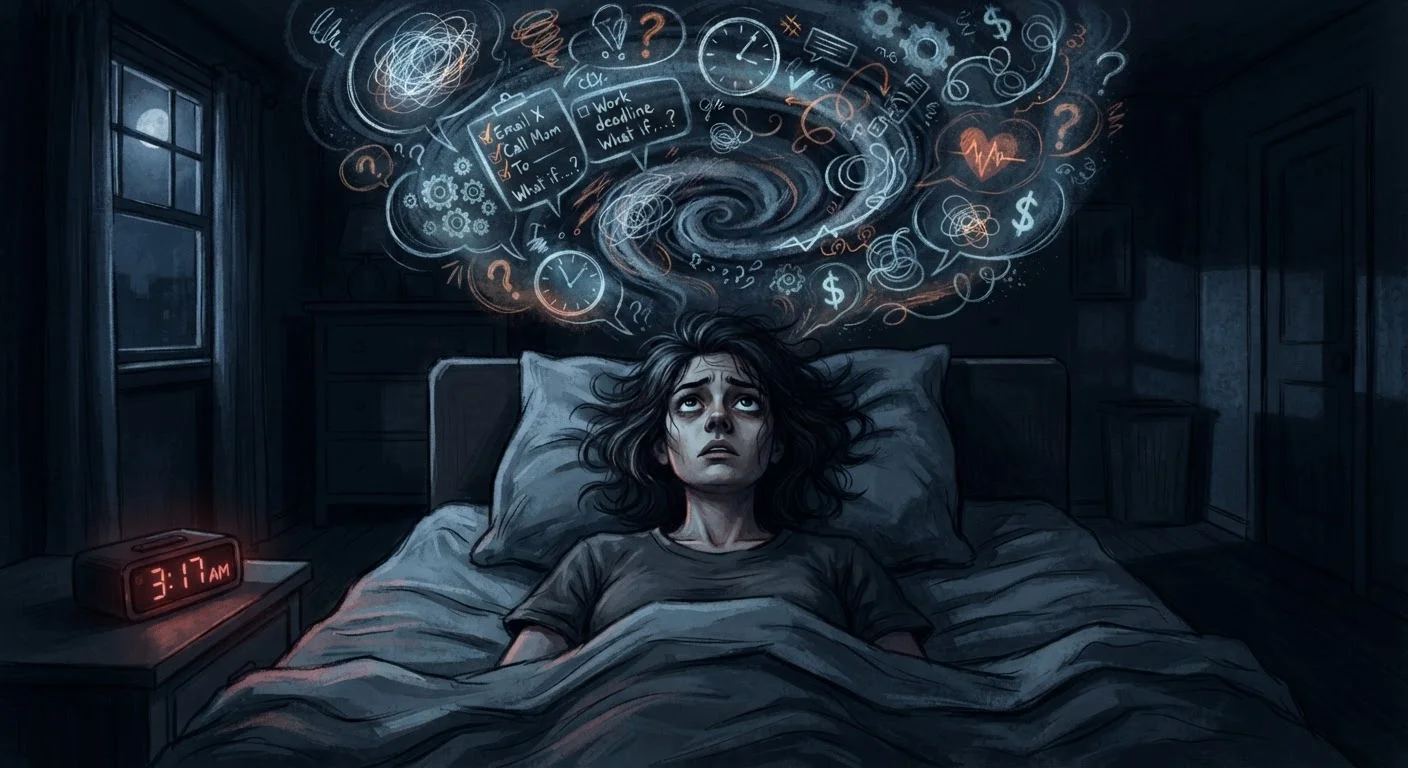
When sleep is disrupted, emotional regulation suffers noticeably. People who are sleep-deprived show heightened amygdala reactivity and reduced connectivity to the prefrontal cortex — a pattern that contributes to irritability, poor decision-making, and increased anxiety. This relationship works both ways: anxiety can also disrupt sleep, creating a difficult cycle. For more on that connection, see how stress and rumination interfere with sleep.
This article is for general informational and educational purposes only and is not a substitute for professional medical advice, diagnosis, or treatment. If you are experiencing persistent sleep problems, please consult a qualified healthcare provider.