Why Relaxation Techniques Are Worth Comparing
Stress is a near-universal experience in American daily life, yet the tools people use to manage it vary enormously. From apps to therapy to simple breathing cues, the landscape can feel overwhelming. Understanding how individual techniques work — and who they work best for — removes the guesswork.
This article compares four well-researched relaxation methods: deep breathing, body scan meditation, guided visualization, and progressive muscle relaxation (PMR). For a broader look at how breathwork, meditation, and movement each fit into a stress-management plan, see our comparison of stress management approaches.
| Deep Breathing | Body Scan | Guided Visualization | Progressive Muscle Relaxation | |
|---|---|---|---|---|
| Time required | 2–10 minutes | 10–30 minutes | 10–20 minutes | 15–25 minutes |
| Learning curve | Very low | Low to moderate | Low to moderate | Low to moderate |
| Equipment needed | None | None | Optional audio guide | None |
| Physical tension relief | Moderate | Moderate to high | Moderate | High |
| Suitable for sleep prep | Yes | Yes | Yes | Yes |
| Usable in public settings | Yes | Difficult | Difficult | Difficult |
| Research support | Strong | Strong (MBSR) | Moderate to strong | Strong (decades of study) |
Deep Breathing: The Quickest Entry Point
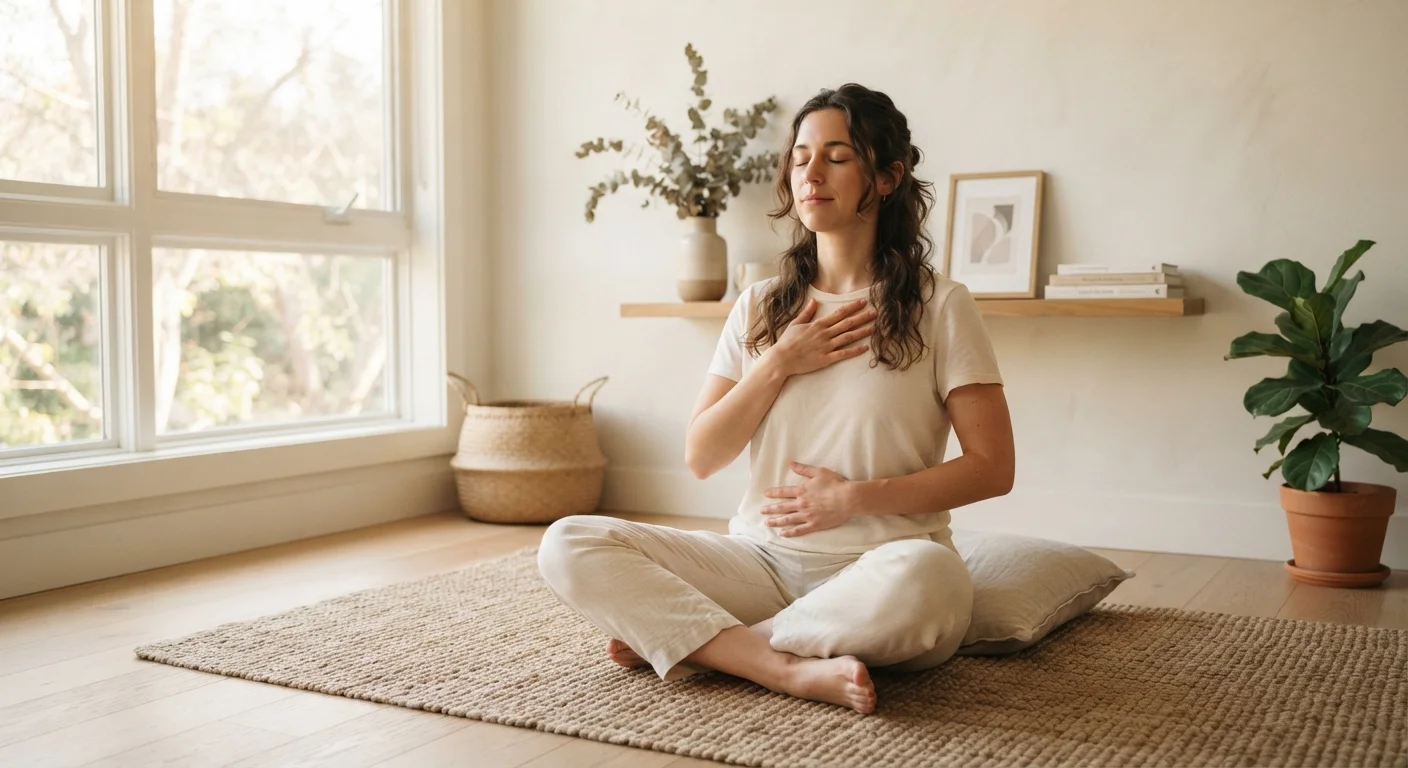
Deep breathing — often called diaphragmatic or belly breathing — works by activating the parasympathetic nervous system, which counteracts the body's fight-or-flight response. Slow, controlled exhales in particular signal safety to the brain. The science behind this mechanism is well established and involves the vagus nerve.
How to start: Inhale slowly through the nose for a count of four, hold briefly, then exhale through the mouth for a count of six. Even three to five cycles can produce a noticeable shift in how you feel.
Best suited for: Acute stress moments — a tense meeting, a traffic jam, a difficult conversation. No equipment or prior training needed. For specific breath patterns with clinical backing, explore breathing techniques supported by research.
Body Scan Meditation: Tuning Into Physical Sensations
A body scan involves directing attention slowly and sequentially through different parts of the body — typically from the feet upward — noticing sensations without judgment. It draws from mindfulness-based stress reduction (MBSR), a structured program developed at the University of Massachusetts Medical School that has been studied extensively.
How to start: Lie down or sit comfortably. Close your eyes and bring attention to your feet. Notice warmth, tension, or tingling. Move gradually upward, spending 20–30 seconds on each region. A full practice typically runs 10–30 minutes, though shorter versions exist.
Best suited for: People who carry stress physically (tight shoulders, clenched jaw), those preparing for sleep, or anyone building a consistent mindfulness practice. Research suggests body scan practice may improve sleep quality and reduce anxiety symptoms over time.
Guided Visualization: Harnessing Mental Imagery
Guided visualization — also called guided imagery — involves mentally immersing yourself in a calm, detailed scene: a quiet beach, a forest path, a familiar peaceful room. The brain responds to vivid mental imagery in ways that partly mirror real sensory experience, triggering a relaxation response similar to actually being in a restful place.
How to start: Use a recorded guide or script, or create your own. Choose a setting that feels genuinely calming to you personally. Engage all imagined senses — what do you hear, smell, and feel? Sessions of 10–15 minutes are typical.
Best suited for: People with active imaginations, creative thinkers, or those managing performance anxiety. It's also used in clinical settings to support pain management and procedural anxiety, though you should consult a healthcare provider for any clinical application. For help managing everyday stress and anxiety, visualization is a practical self-directed tool.
Progressive Muscle Relaxation: Releasing Tension Systematically
PMR, developed by physician Edmund Jacobson in the early 20th century, involves deliberately tensing and then releasing specific muscle groups in sequence. The contrast between tension and release helps the body recognize — and achieve — a deeper state of physical relaxation.
How to start: Begin with the feet. Squeeze the muscles firmly for five to seven seconds, then release completely for 20–30 seconds. Notice the difference. Work upward through calves, thighs, abdomen, hands, arms, shoulders, and face. A full session takes roughly 15–20 minutes.
Best suited for: Chronic muscle tension, headache-prone individuals, and pre-sleep wind-down. PMR is among the most evidence-supported relaxation techniques, with decades of controlled research behind it. It pairs well with other approaches — for example, winding down before bed using PMR alongside deep breathing. Those comparing PMR to mindfulness-based methods may also find our side-by-side comparison useful.
This article is for general informational purposes only and does not constitute medical advice. If you are experiencing significant stress, anxiety, or any health concern, please consult a qualified healthcare professional.