Why Your Breath Has Such Direct Power Over Stress
Most bodily functions — your heartbeat, digestion, immune responses — operate entirely outside your conscious control. Breathing is a rare exception: it runs automatically, yet you can override it deliberately at any moment. That dual nature gives it unusual leverage over your nervous system.
When you experience stress, your sympathetic nervous system — the fight-or-flight branch — accelerates your heart rate, tightens your muscles, and floods your bloodstream with cortisol and adrenaline. These are useful survival adaptations, but chronic activation takes a toll. To understand this cascade in detail, see what happens inside your body when you worry.
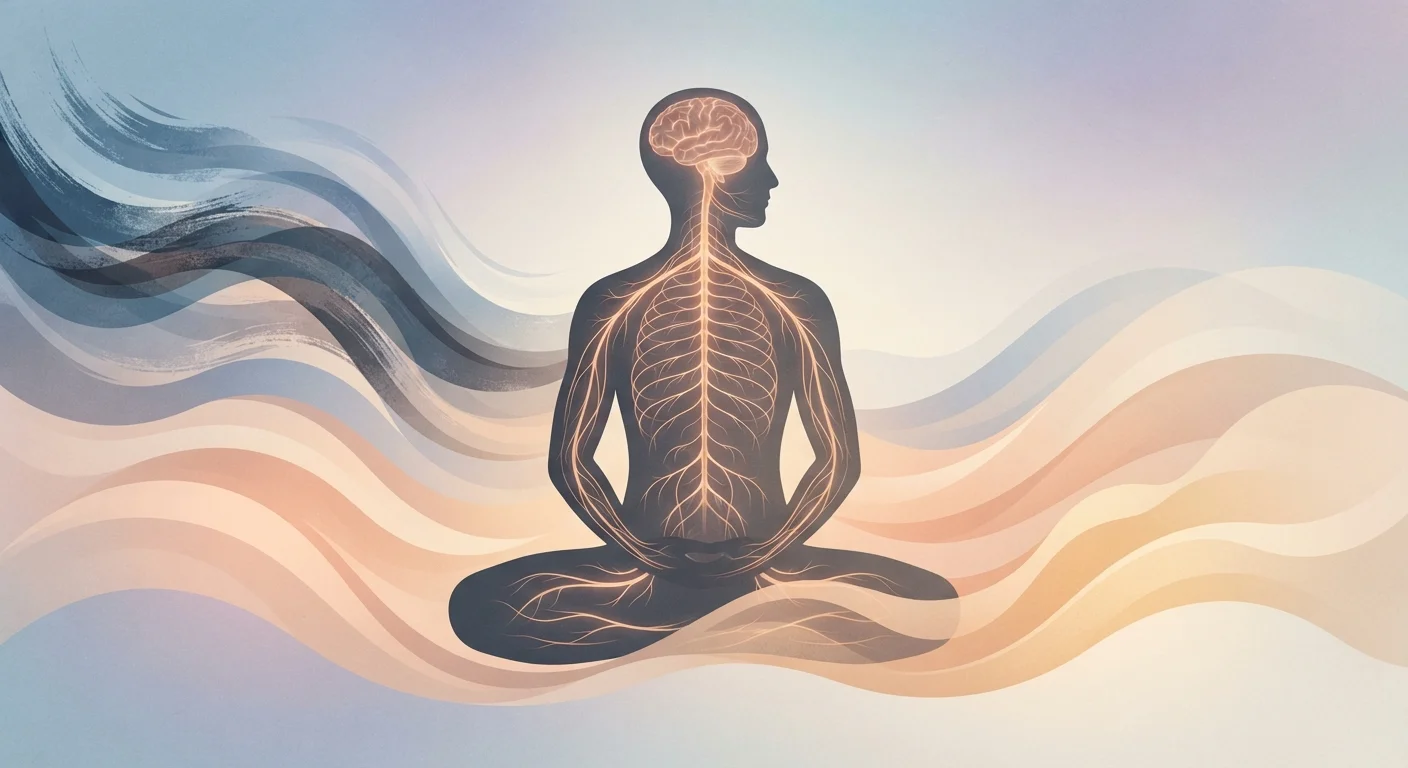
The parasympathetic nervous system — often called rest and digest — is the counterbalance. Slow, deep breathing is one of the most reliable ways to activate it deliberately, because breath directly stimulates the vagus nerve, the longest cranial nerve in the body and the main highway of parasympathetic signaling.
Breathing and the Vagus Nerve
The vagus nerve carries signals in both directions between the brain and major organs, including the heart and gut. When slow breathing stimulates its afferent (upward-traveling) fibers, the brain receives a calming signal and reduces sympathetic output. This bidirectional communication is why breath control has effects that feel both mental and physical simultaneously. Explore mindfulness basics for more techniques that work through similar pathways.
The Physiology: What Happens When You Breathe Slowly
Slowing your breath triggers a cascade of measurable physiological changes. Research published in journals such as Frontiers in Psychology has documented that paced breathing at around five to six breath cycles per minute — slower than the typical twelve to twenty — produces increases in heart rate variability (HRV), a key marker of nervous system flexibility and resilience.
Higher HRV is associated with better stress regulation, improved mood, and stronger cardiovascular health. Slow breathing also reduces the activity of the amygdala, the brain region most associated with fear and threat detection, while engaging the prefrontal cortex — the area involved in rational thinking and emotional regulation.
Diaphragmatic breathing specifically increases intra-abdominal pressure in a way that further stimulates vagal afferent fibers, reinforcing the parasympathetic response. In short: the slower and deeper the breath, the stronger the calming signal sent to your brain.
~5–6
Optimal breaths per minute for HRV increase
Research in Frontiers in Psychology and related journals identifies approximately five to six breath cycles per minute as particularly effective for boosting heart rate variability.
23%
Reduction in perceived stress after breathwork
A review in the Journal of Clinical Psychology found participants practicing slow-paced breathing reported meaningful reductions in perceived stress compared to control conditions.
77%
Of adults report stress affecting physical health
According to the American Psychological Association's ongoing Stress in America surveys, the majority of U.S. adults link stress to physical health impacts, underscoring the importance of accessible management tools.
Evidence-Based Techniques You Can Use Today
Several structured breathing methods have accumulated meaningful research support. None require equipment, special training, or a quiet room — though a calm environment can help when you're starting out.
- Diaphragmatic (belly) breathing: Inhale slowly through your nose, letting your belly rise rather than your chest. Exhale gently through pursed lips. Aim for a longer exhale than inhale — for example, four counts in, six counts out. This ratio emphasizes parasympathetic activation.
- Box breathing (4-4-4-4): Inhale for four counts, hold for four, exhale for four, hold for four. This technique is used in military and first-responder training for acute stress management.
- 4-7-8 breathing: Inhale for four counts, hold for seven, exhale for eight. The extended hold and exhale are thought to enhance vagal tone and induce noticeable relaxation.
If you want to compare these methods against other evidence-based relaxation strategies, relaxation techniques compared offers a useful side-by-side overview.
Building a Sustainable Breathing Practice
The calming effect of a single breathing session is real, but the greater benefit comes from consistency. Regular practice appears to recalibrate the baseline sensitivity of the stress response, making the body quicker to return to equilibrium after a stressor.
Start small: two to five minutes once or twice a day is enough to build the habit. Anchor the practice to an existing routine — before your morning coffee, at your desk before a meeting, or in the minutes before sleep. Starting a breathing practice walks through a structured approach to making breath awareness a daily habit.
Breathing exercises also fit within a broader toolkit. If you're weighing whether breathwork or another approach — such as meditation or movement — is the right fit for your lifestyle, stress management approaches compared offers practical guidance. These methods work well together and address different dimensions of the stress response.
This article is for general informational and educational purposes only and is not a substitute for professional medical advice. Always consult a qualified healthcare provider before beginning any new health practice, particularly if you have a medical condition or are pregnant.