
How Stress Changes the Way Your Body Responds to Food
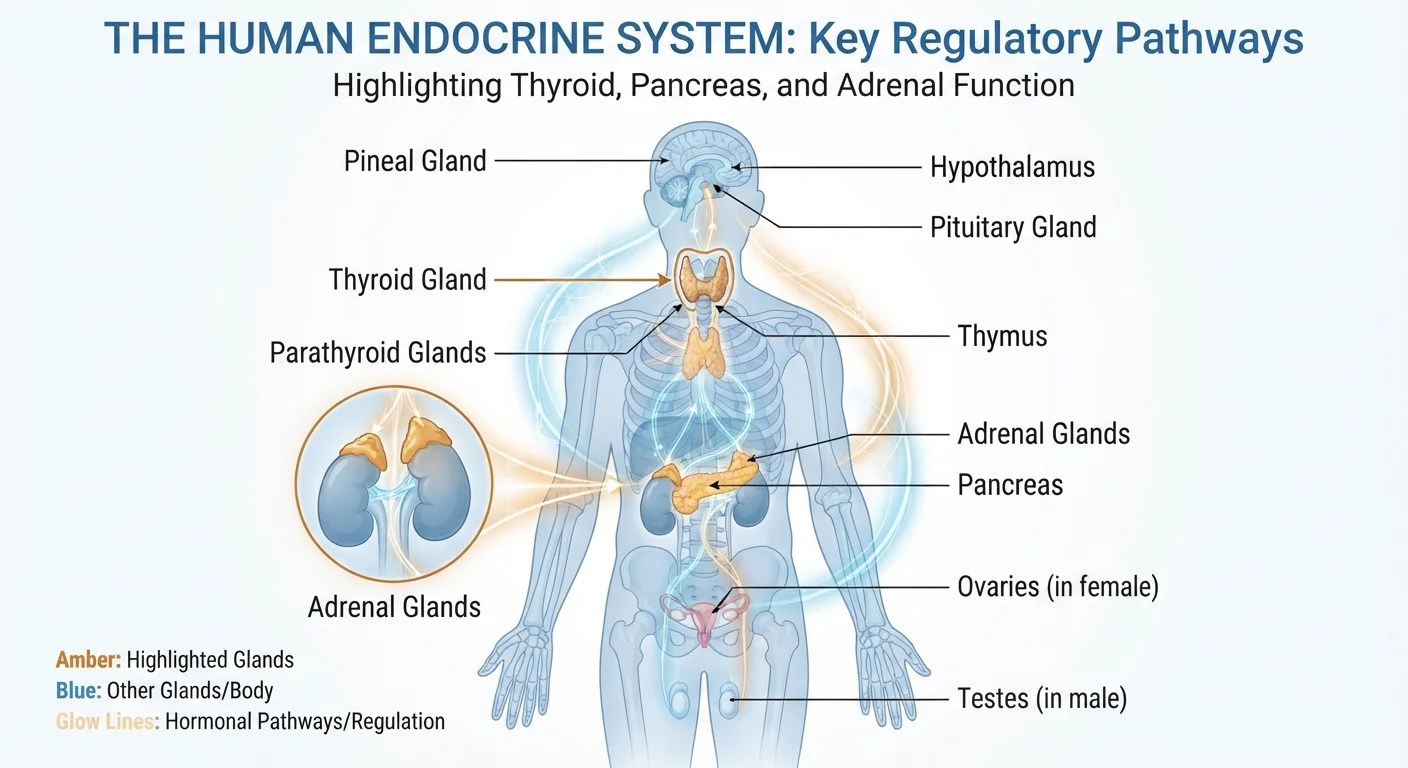
When you encounter a stressor — whether a work deadline or a difficult conversation — your body activates what is commonly called the "fight-or-flight" response. This triggers the release of cortisol and adrenaline from the adrenal glands. In the short term, these hormones redirect energy toward immediate survival needs.
Cortisol, in particular, raises blood glucose to fuel muscles and the brain. It also temporarily suppresses digestion, since that's considered non-essential during a perceived threat. If stress is acute and infrequent, the body recovers efficiently. But when stress becomes chronic, cortisol levels remain persistently elevated — and that's when the interaction with nutrition becomes more complex. To understand the broader hormonal picture, see our overview on how thyroid, insulin, and cortisol affect metabolism.
Chronically elevated cortisol is associated with increased appetite — especially cravings for sweet and fatty foods — as well as slowed gut motility and changes in the gut microbiome. These shifts can affect nutrient absorption and mood regulation in ways that researchers are still working to fully characterize.
~75%
Adults reporting diet-mood connection
A survey by the American Psychological Association found that a large majority of adults acknowledge that what they eat affects how they feel emotionally.
2–3x
Higher ultra-processed food intake during stress
Studies in nutritional psychology suggest that perceived stress is associated with significantly higher consumption of calorie-dense, processed foods.
90%
Of serotonin produced in the gut
Research estimates that approximately 90% of the body's serotonin is synthesized in the gastrointestinal tract, highlighting the gut-brain connection.
Blood Sugar Stability and Emotional Regulation
One of the clearest dietary levers in stress management is blood sugar regulation. Large swings in blood glucose — caused by meals heavy in refined carbohydrates and added sugars — can trigger irritability, fatigue, difficulty concentrating, and heightened anxiety. These symptoms overlap significantly with stress responses, making it harder to distinguish between the two.
Eating balanced meals that include protein, fiber, and healthy fats helps slow the absorption of glucose into the bloodstream, reducing these fluctuations. This isn't about eliminating any food group — it's about building meals that provide sustained energy rather than rapid spikes and crashes.
Research published in nutritional psychiatry literature suggests that people who eat more regularly throughout the day — rather than skipping meals under stress — tend to report lower perceived stress levels. Skipping meals during busy, high-pressure periods is common but can inadvertently worsen mood and cognitive performance. For more on the timing dimension, see what current evidence says about when you eat and how it affects your body.
Dietary Patterns Associated With Stress Resilience
Rather than focusing on individual superfoods, the weight of current evidence points toward overall dietary patterns as more meaningful. Mediterranean-style and whole-food-predominant diets are consistently associated with lower markers of inflammation and better reported mental health outcomes in large observational studies.
Key components that appear frequently in this research include:
- Omega-3 fatty acids (found in fatty fish, flaxseed, and walnuts) — associated with reduced inflammation and studied for their potential role in mood regulation.
- Dietary fiber (from vegetables, legumes, and whole grains) — supports gut microbiota diversity, which is increasingly linked to emotional health via the gut-brain axis.
- Magnesium (found in leafy greens, nuts, and seeds) — plays a role in regulating the HPA (hypothalamic-pituitary-adrenal) axis, which governs cortisol release.
- Polyphenols (from berries, tea, and dark vegetables) — associated with reduced oxidative stress in several laboratory and clinical studies.
It's important to note that most nutrition-mood research is observational, meaning it shows associations rather than proven cause and effect. Randomized controlled trials in this space are growing but still limited.
Build a Stress-Support Plate Without Overthinking It
You don't need to overhaul your entire diet to begin supporting your stress response through food. A practical starting point: aim for meals that include a colorful vegetable, a protein source, and a whole grain or legume. This combination naturally provides fiber, key micronutrients, and lasting energy — without requiring calorie counting or strict rules.
The Gut-Brain Axis: A Growing Piece of the Puzzle
Roughly 90% of the body's serotonin — a neurotransmitter central to mood regulation — is produced in the gut, not the brain. The gut and brain communicate continuously via the vagus nerve and a complex network of signals known as the gut-brain axis. This bi-directional pathway means that chronic stress can disrupt gut microbiota composition, and an imbalanced microbiome may, in turn, influence emotional states.
Probiotic and prebiotic research is still in early stages, but some trials suggest that maintaining a diverse, fiber-rich diet may contribute positively to both gut health and psychological resilience. This remains an evolving area — claims about specific strains or products should be approached with appropriate skepticism until more clinical evidence accumulates.
Stress also accelerates or slows gut motility, which can explain why many people experience digestive symptoms — such as nausea, bloating, or changes in bowel habits — during stressful periods. For a broader look at how stress affects the body systematically, see our article on what stress actually does to your body and brain.
Practical, Evidence-Informed Steps
While nutrition cannot replace professional mental health support or stress management therapy, consistent dietary habits can meaningfully support your body's ability to cope. Consider these general principles, which align with guidance from mainstream nutrition and health organizations:
- Prioritize regular, balanced meals — Skipping meals during stressful stretches can worsen mood swings. Including a source of protein and fiber at each meal helps stabilize blood sugar.
- Limit ultra-processed food during high-stress periods — These foods are engineered to be rewarding but often contribute to blood sugar instability and don't provide the micronutrients your body needs under stress.
- Stay adequately hydrated — Even mild dehydration can amplify feelings of fatigue and tension.
- Moderate caffeine and alcohol — Both interact with cortisol and sleep quality in ways that can compound stress over time. Poor sleep and stress have a documented bidirectional relationship — see our article on why sleep and stress affect each other.
- Pair nutrition changes with movement — Diet and exercise are complementary tools. Research consistently shows that physical activity supports cortisol regulation. Learn more about how movement reduces stress.
This article is for general informational and educational purposes only and does not constitute medical or nutritional advice. Please consult a qualified healthcare professional before making significant changes to your diet, especially if you have an existing health condition or are taking medication.