
Why Micronutrient Gaps Are So Common
Most Americans eat enough calories. What research consistently shows, however, is that eating enough food doesn't automatically mean eating enough micronutrients — the vitamins and minerals your body needs for everything from immune function to energy metabolism. The USDA's Dietary Guidelines identify several nutrients of public health concern, including calcium, potassium, dietary fiber, and vitamin D, that large portions of the population consume below recommended levels.
The gap usually isn't dramatic. It's the cumulative result of eating foods that fill you up — refined grains, processed snacks, fast food — without delivering much nutritional return. Nutrient density is the concept that helps here: it describes how many vitamins and minerals a food delivers relative to its calories. A handful of almonds and a handful of chips may have similar calorie counts, but their micronutrient profiles are vastly different.
The good news is that closing these gaps rarely requires a complete dietary overhaul. Strategic additions and substitutions — applied meal by meal — can shift your intake meaningfully over time. For a broader look at how eating patterns evolve across life stages, see how nutritional needs shift through adulthood.
What You'll Need Before You Start
This approach doesn't require special equipment or a pantry full of unfamiliar ingredients. A little awareness of your current eating patterns — and a willingness to make gradual changes — is the real prerequisite.
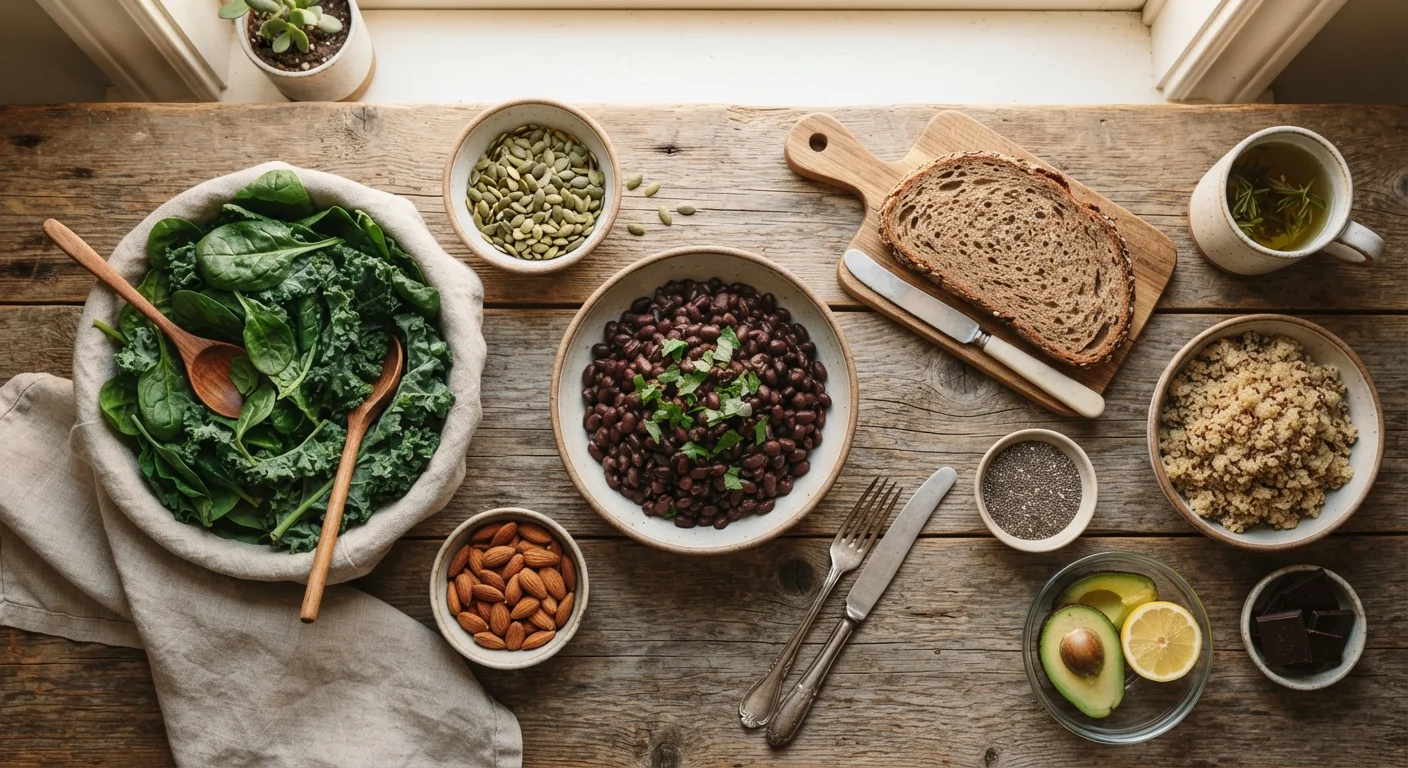
What you will need
Step-by-Step: Building a More Nutrient-Dense Plate
Follow these steps in order, or pick the ones most relevant to where your diet currently stands. Each step is designed to be low-friction and compatible with everyday American meal patterns.
Audit Your Plate for What's Missing
Before adding or swapping anything, take a rough mental inventory of a typical day's meals. Ask yourself: how many different colors of vegetables appear? Are any whole grains present, or mostly refined ones? Do you eat legumes — beans, lentils, chickpeas — at least a few times per week?
These three food categories — colorful vegetables, whole grains, and legumes — collectively address many of the most common micronutrient shortfalls: potassium, magnesium, folate, iron, and B vitamins among them. If one or more category is largely absent, that's your highest-leverage starting point.
Add Leafy Greens to One Meal Per Day
Dark leafy greens — spinach, kale, Swiss chard, collard greens — are among the most nutrient-dense foods available. They deliver meaningful amounts of vitamins K, A, and C, along with folate, calcium, and magnesium, at very low calorie cost.
The easiest entry point is to add a handful of spinach or baby kale to something you already eat: a scrambled egg, a sandwich, a bowl of pasta, or a smoothie. Frozen greens work just as well nutritionally and are often more convenient and less expensive than fresh.
Swap at Least One Refined Grain for a Whole Grain
Whole grains retain the bran and germ layers that refined grains lose during processing. That difference translates into significantly more fiber, B vitamins, magnesium, and iron per serving. You don't need to eliminate refined grains entirely — a single swap per day creates a meaningful shift over time.
Practical substitutions include: brown rice instead of white rice, whole-wheat pasta instead of regular pasta, oats instead of sugary breakfast cereals, or whole-grain bread instead of white bread. Contrast this approach with building macro-aware meals without counting grams — both strategies reinforce each other.
Introduce Legumes Two to Three Times Per Week
Beans, lentils, and chickpeas are nutritional powerhouses: high in fiber, plant-based protein, folate, iron, potassium, and magnesium. They're also inexpensive, shelf-stable, and versatile. Canned varieties are nutritionally comparable to dried and cooked versions — just rinse them to reduce sodium content.
Simple ways to include them: add canned black beans to scrambled eggs or tacos, stir chickpeas into a salad, blend white beans into a pasta sauce for creaminess, or use lentils as a base for soups. These additions work within existing meal structures without requiring new recipes.
Use Color as a Shorthand for Variety
Different pigments in fruits and vegetables correspond to different families of antioxidants and micronutrients. Orange and yellow produce (sweet potatoes, bell peppers, carrots) tends to be rich in beta-carotene, a precursor to vitamin A. Red produce (tomatoes, red peppers) provides lycopene and vitamin C. Purple and blue foods (blueberries, purple cabbage) deliver anthocyanins alongside various B vitamins.
Rather than memorizing specific nutrient profiles, aim for two or three different colors on your plate at most meals. This visual heuristic naturally diversifies your micronutrient intake without requiring detailed nutritional knowledge. Pairing this habit with a structured grocery routine makes it far easier to maintain — see how to build a weekly grocery routine for practical guidance.
Make Gradual Changes Rather Than Wholesale Ones
The most nutritionally sound plate means little if you can't sustain it. Behavioral research consistently shows that small, incremental changes are far more durable than dramatic overhauls. Focus on one new habit per week — perhaps adding greens to breakfast this week, and switching to whole-grain bread next week.
This approach also gives your palate time to adjust. Taste preferences respond to repeated exposure; foods that seem unfamiliar at first become more appealing with consistent, low-pressure contact. For families navigating different preferences at the same table, feeding families nutritiously without two menus offers practical strategies.
Common Pitfalls and How to Avoid Them
One of the most frequent mistakes people make when trying to eat more nutrient-densely is treating it as an all-or-nothing project. A single day of less-than-ideal eating doesn't undo consistent habits built over weeks. Perfectionism tends to derail more people than any specific food choice does.
Another common issue is overlooking cooking methods. Boiling vegetables for extended periods leaches water-soluble vitamins like B vitamins and vitamin C into the cooking water. Steaming, roasting, or light sautéing typically preserves more nutrients. If you do boil vegetables, consider using the cooking liquid in soups or sauces.
Frozen Produce Is a Legitimate Shortcut
Frozen vegetables and fruits are typically harvested and frozen at peak ripeness, which means their vitamin and mineral content is well-preserved. In some cases, frozen spinach or broccoli may retain more nutrients than fresh produce that has been stored for several days. Keeping a variety of frozen vegetables on hand lowers the barrier to adding them to any meal.
Finally, keep in mind that some micronutrients — notably fat-soluble vitamins A, D, E, and K — are absorbed more efficiently when eaten alongside a small amount of healthy fat. Drizzling olive oil on roasted vegetables or pairing leafy greens with avocado isn't just flavorful; it improves absorption. For guidance on specific nutrients like magnesium that many Americans under-consume, see how to get enough magnesium from food.
This article is for general informational and educational purposes only and is not a substitute for personalized medical or dietary advice. Consult a qualified healthcare professional or registered dietitian before making significant changes to your diet, especially if you have a health condition or take medications.