
Where the Fear of Fat Came From
The idea that dietary fat is inherently harmful took hold in mid-20th-century America, driven largely by early research linking saturated fat intake to heart disease. Public health messaging followed, and by the 1980s, low-fat eating had become near-dogma. Food packaging celebrated fat-free labels as a health badge, and fat disappeared from the diet — often replaced by sugar and refined carbohydrates that food scientists added to restore flavor.
Decades later, a much larger body of evidence tells a more complicated story. Fat — in the right forms and amounts — is not only harmless; it is biologically indispensable. This article walks through the most common misconceptions about dietary fat and what current nutrition science actually supports.
Myth vs. Fact: What the Evidence Really Shows
The myths below are among the most durable in popular nutrition culture. Each one has real consequences for how people eat — and correcting them can meaningfully improve everyday food decisions.
Myth
Eating fat makes you fat. Fat in food becomes fat on your body almost directly.
Fact
Body fat accumulation is driven by overall calorie balance and metabolic factors, not dietary fat alone.
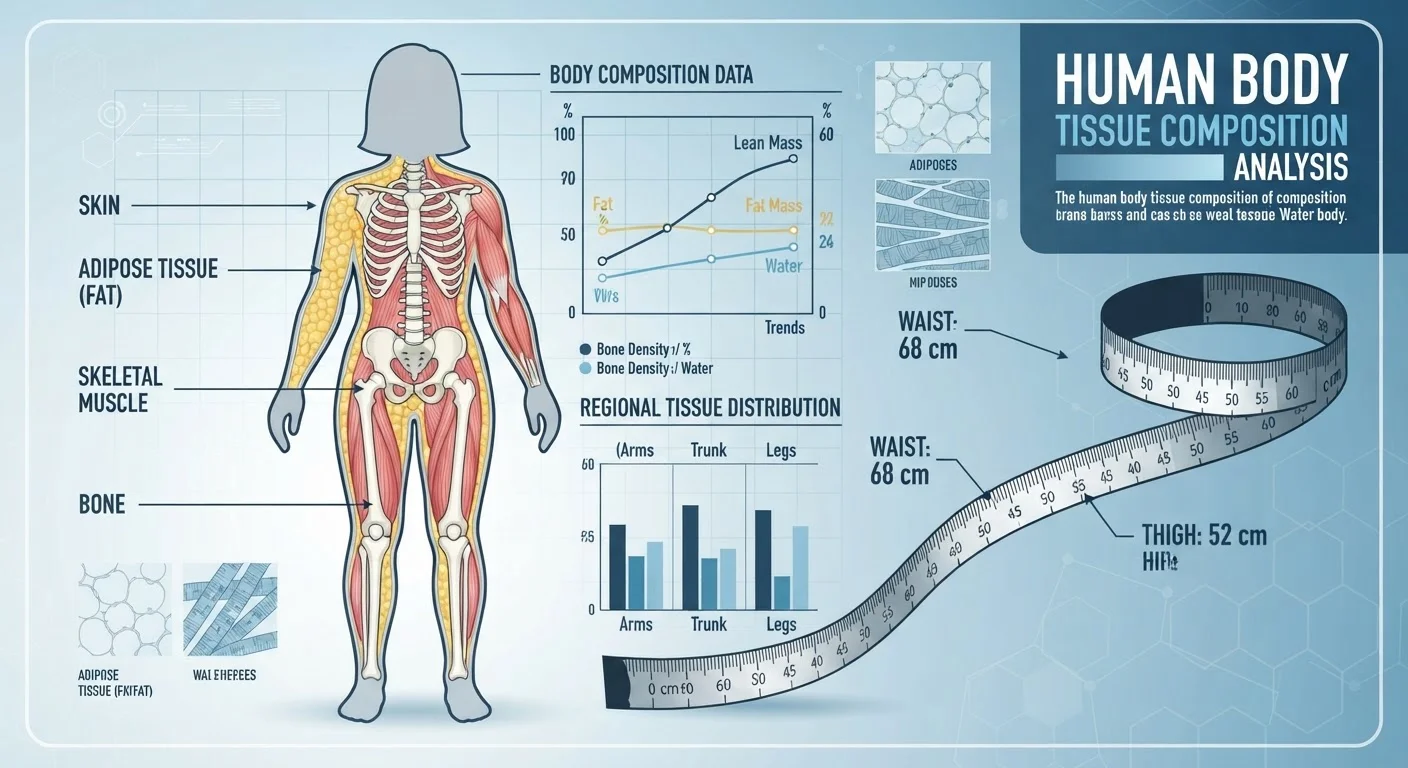
The idea that dietary fat converts directly into body fat is a persistent oversimplification. Fat contains roughly 9 calories per gram — more than carbohydrates or protein — but calorie surplus from any macronutrient can contribute to fat storage. Research consistently shows that the quality and pattern of your overall diet matter far more than isolating a single nutrient. In fact, diets moderate in healthy fats and lower in refined carbohydrates have been shown in multiple studies to support healthy body composition. See what the evidence actually shows about body composition for more on this.
Myth
A low-fat diet is the healthiest approach for most people.
Fact
Low-fat diets have not consistently outperformed moderate- or higher-fat diets in long-term health outcomes.
The low-fat movement of the 1980s and 1990s was based on early epidemiological data that has since been substantially qualified. When food manufacturers removed fat from products, they typically replaced it with sugar and refined starches to preserve palatability — a trade-off that research now links to increased risk of metabolic issues. Large-scale studies such as the Women's Health Initiative found that a low-fat dietary pattern did not significantly reduce the risk of heart disease or certain cancers compared to usual diets. Common nutrition beliefs like this one deserve a closer look against the actual evidence.
Myth
All saturated fat is equally dangerous and should be completely avoided.
Fact
Saturated fat is a diverse category; current evidence presents a more nuanced picture than blanket avoidance.
Saturated fats are not a single molecule — they vary by chain length and food source, and they behave differently in the body. While some saturated fats do raise LDL (low-density lipoprotein) cholesterol, which is a known cardiovascular risk factor, research on their net effect on heart disease risk is more complex. What you replace saturated fat with matters enormously: swapping it for unsaturated fats is associated with benefit, while swapping it for refined carbohydrates is not. For a plain-language breakdown of fat types, see this field guide to dietary fats.
Myth
Fat has no nutritional value beyond being a calorie source.
Fact
Dietary fat is essential for absorbing fat-soluble vitamins, supporting hormone production, and protecting organ function.
Fat serves several critical biological roles that no other macronutrient can fully replicate. Vitamins A, D, E, and K are fat-soluble — meaning your body can only absorb and use them when fat is present in the meal. Fat also forms the structural basis of every cell membrane in the body, contributes to the myelin sheaths that insulate nerve fibers, and is a precursor to hormones including sex hormones and anti-inflammatory compounds. Eliminating fat from the diet does not produce a healthier body; it deprives essential systems of necessary building materials.
Myth
Omega-3 and omega-6 fats are interchangeable — any unsaturated fat will do.
Fact
Omega-3 and omega-6 fatty acids play distinct roles; their balance in the diet has measurable effects on inflammation.
Both omega-3 and omega-6 are polyunsaturated fats your body cannot synthesize and must obtain from food — making them truly essential. However, they function differently: omega-6 fats (abundant in many processed vegetable oils) tend to be pro-inflammatory in excess, while omega-3 fats (found in fatty fish, walnuts, and flaxseed) support anti-inflammatory pathways. The typical American diet provides a ratio of omega-6 to omega-3 estimated at 15:1 or higher, whereas ancestral dietary patterns were closer to 4:1. Shifting toward more omega-3 sources is a concrete, evidence-supported dietary adjustment most people can make.
For a broader look at how macro myths circulate in wellness culture, see macronutrient myths examined against nutrition science.
The Practical Takeaway: How to Think About Fat in Your Diet
9 kcal/g
Calories per gram of dietary fat
Fat provides more than double the calories per gram of carbohydrates or protein, underscoring why portion context matters.
~15:1
Typical U.S. omega-6 to omega-3 ratio
Researchers estimate modern American diets contain omega-6 to omega-3 ratios far above the roughly 4:1 ratio seen in traditional dietary patterns.
4
Fat-soluble vitamins requiring dietary fat for absorption
Vitamins A, D, E, and K can only be absorbed in the presence of fat — making some dietary fat essential at meals containing these nutrients.
Current dietary guidance — including USDA Dietary Guidelines — does not recommend a specific low-fat target for the general population. Instead, it emphasizes replacing saturated and trans fats with unsaturated fats where possible, and prioritizing whole food sources over heavily processed options.
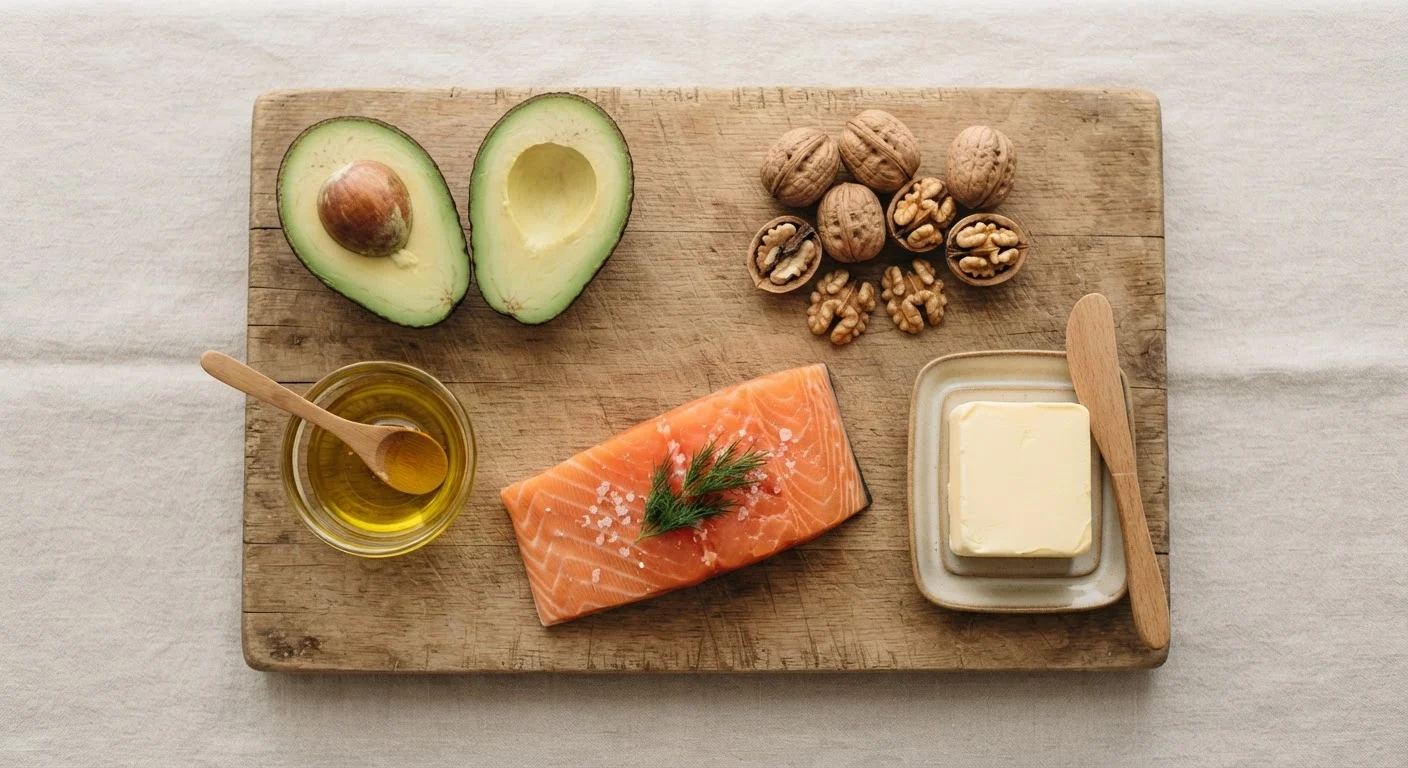
Practically, this means that avocado, olive oil, nuts, seeds, and fatty fish are foods that nutrition science consistently supports including in a balanced diet. It also means that the presence of fat on a nutrition label is not, by itself, a red flag. Context matters: how much, what kind, and what you're eating it with all factor into the bigger picture.
For those managing specific conditions such as cardiovascular disease or type 2 diabetes, individual needs vary — and a registered dietitian or physician is the right resource for personalized guidance. What research shows about sustainable weight loss also reinforces that no single macronutrient deserves sole credit or blame for health outcomes.
This article is for general informational and educational purposes only and does not constitute medical or dietary advice. Consult a qualified healthcare professional for guidance specific to your health situation.