
Why Travel Vaccination Planning Is Different
Routine adult vaccines protect against common diseases circulating in your home community. Travel vaccination goes a step further: it accounts for pathogens that are rare or absent in the United States but prevalent — or even endemic — in other parts of the world. The risks you face depend on your destination, the activities you plan, your accommodation type, trip duration, and your existing health status.
If you are new to navigating adult immunizations in general, our complete starter guide to adult vaccines covers the fundamentals of how vaccines work and which ones most adults already need. Travel vaccines build on that baseline rather than replace it.
The CDC's Travelers' Health program maintains destination-specific vaccine recommendations that are updated as disease conditions change globally. These recommendations fall into two broad categories:
- Recommended vaccines: Strongly advised based on destination risks, but not legally required for entry.
- Required vaccines: Mandated by the destination country or a transit country for legal entry — yellow fever vaccination is the most common example.
Start Planning at Least 4–6 Weeks Early
Many travel vaccines require a series of doses spread over several weeks to reach full effectiveness. Waiting until a week before departure may mean you cannot complete a full course in time. Ideally, consult a travel health provider at least four to six weeks before your departure date — and for some destinations, even earlier is advisable.
Common Destination-Triggered Vaccines
Not every international trip requires the same set of vaccines. Below are some of the vaccines most commonly recommended based on destination risk — this is not an exhaustive list, and your individual needs may differ:
- Hepatitis A: Recommended for most international travel, particularly to regions with lower sanitation standards. Two doses, given six months apart, provide long-term protection.
- Typhoid: Recommended for travel to South Asia, parts of Africa, and Latin America. Available as an injectable or oral vaccine.
- Yellow Fever: Required for entry into certain countries in sub-Saharan Africa and tropical South America. Must be administered at a certified Yellow Fever vaccination center.
- Japanese Encephalitis: Considered for travelers spending extended time in rural areas of Asia during transmission season.
- Rabies (pre-exposure): Recommended for travelers who will be in remote areas where animal contact is likely and medical care may be distant. A three-dose pre-exposure series is given over several weeks.
- Meningococcal vaccines: Required for travel to Mecca for Hajj or Umrah; also recommended for travel to the African meningitis belt.
Many adults are also surprised to discover they are overdue on routine vaccines that travel health providers routinely check. Our article on vaccines commonly missed in adulthood explains why this happens and how to catch up.
Step-by-Step: How to Plan Your Travel Vaccinations
Follow these steps to build a complete and timely travel immunization plan before your trip.
Compile Your Current Vaccination Records
Before your travel health appointment, locate your immunization history. This may be in a paper shot record, your primary care provider's patient portal, or your state's immunization registry. Knowing which vaccines you have already received — and when — helps the provider identify gaps and avoid unnecessary duplicate doses.
Research Your Destination's Health Risks
Use the CDC's Travelers' Health website (wwwnc.cdc.gov/travel) to look up your destination country or region. Review the destination page for vaccine recommendations, disease outbreaks, food and water safety advisories, and any entry requirements. Note whether your itinerary includes rural areas, which often carry higher exposure risk than urban centers.
Schedule a Travel Health Consultation
Book an appointment with a travel medicine specialist or your primary care provider as early as possible — ideally four to eight weeks before departure. Travel health clinics are listed through the International Society of Travel Medicine (ISTM) directory. At this visit, the provider will assess your destination risks, existing immunity, health conditions, and planned activities to recommend a personalized vaccine schedule.
Complete Multi-Dose Vaccine Series on Schedule
Several travel vaccines — including hepatitis A, hepatitis B, rabies pre-exposure prophylaxis, and the oral typhoid vaccine — require multiple doses spaced days or weeks apart. Adhere to the recommended intervals; altering spacing can affect the effectiveness of your protection. Set calendar reminders for each follow-up dose.
Obtain and Carry Your International Certificate of Vaccination
If you receive the yellow fever vaccine — or any vaccine that may be required for entry — your administering clinic will issue an International Certificate of Vaccination or Prophylaxis (ICVP), commonly known as the yellow card. Keep this document with your travel passport. Border health officials at some destinations will inspect it before allowing entry.
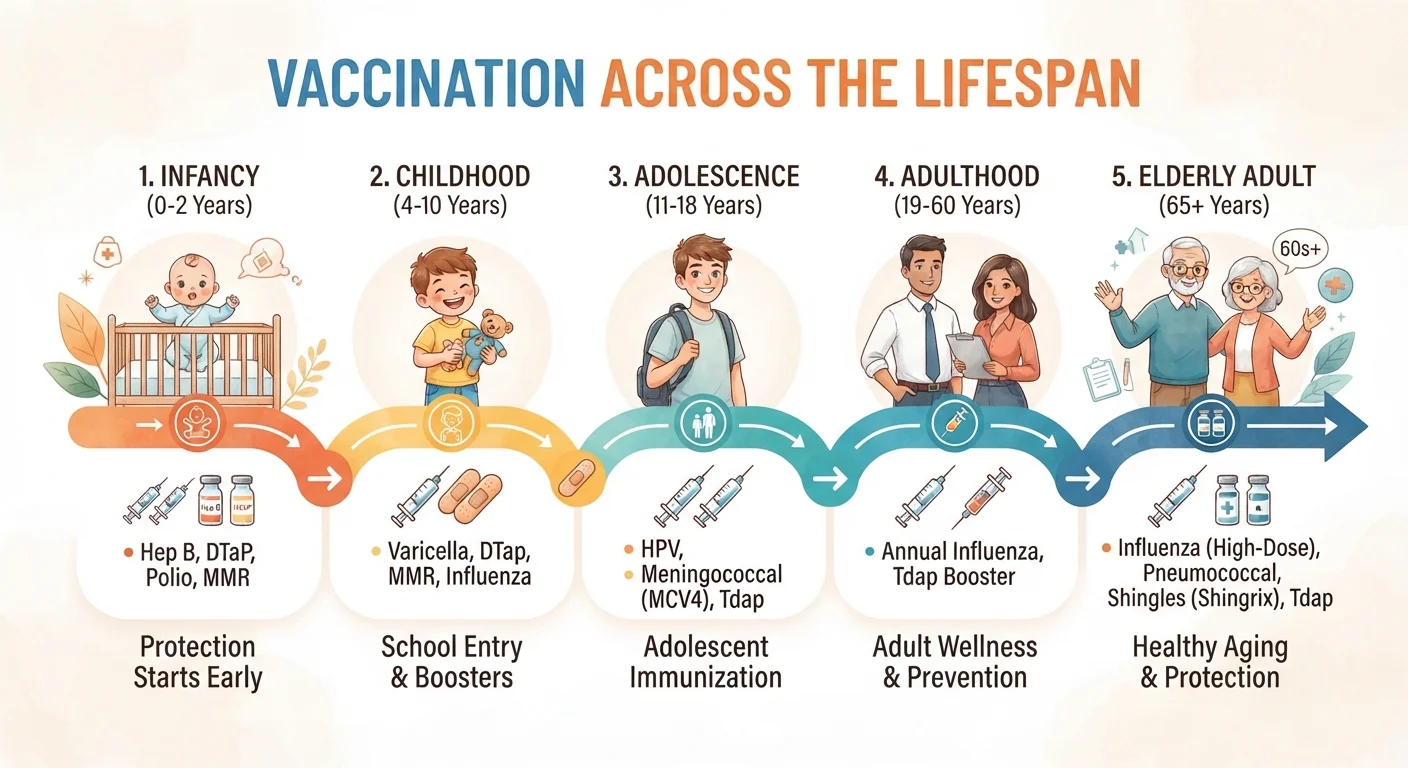
This article is for informational purposes only and is not a substitute for personalized medical advice. Consult a qualified healthcare provider or travel health specialist before making any vaccination decisions. For vaccine needs across all life stages, see our overview of the immunization timeline across a lifetime.