How Your Brain Uses Light as a Clock Signal
Your body runs on a roughly 24-hour internal clock known as the circadian rhythm. This system governs when you feel alert, when you feel sleepy, and when your body temperature, hormones, and metabolism shift to support each state. Light is the primary external signal — called a zeitgeber (German for "time giver") — that keeps this internal clock synchronized with the actual time of day.
Specialized cells in the retina called intrinsically photosensitive retinal ganglion cells (ipRGCs) are particularly sensitive to short-wavelength blue light. These cells transmit signals directly to the suprachiasmatic nucleus (SCN), a small region in the hypothalamus that functions as the brain's master clock. The SCN then coordinates the release of melatonin — often called the "darkness hormone" — by the pineal gland. When light hits the retina, melatonin production is suppressed. When darkness falls, melatonin rises, signaling the body that sleep time is approaching.
Understanding this mechanism is the foundation for understanding why when you encounter light matters just as much as how bright it is. For a deeper look at how your body clock orchestrates sleep and wakefulness, see Your Circadian Rhythm Explained.
Morning Light: Anchoring Your Sleep-Wake Cycle
Exposure to bright light in the morning — ideally within an hour of waking — sends a strong synchronizing signal to the SCN. This advances your circadian phase, essentially telling your body clock what time it is and resetting the countdown to your next sleep window. Research published in sleep science literature consistently shows that morning light exposure is associated with earlier and more stable sleep timing, faster sleep onset at night, and improved mood and alertness during the day.
Outdoor light is substantially more effective than most indoor lighting. Even on a cloudy day, outdoor light typically measures 10,000 lux or more, while standard indoor environments rarely exceed 500 lux. This intensity gap is significant: the circadian system appears to require meaningful light intensity to trigger a robust resetting response.
| Criterion | Morning Light | Evening Light |
|---|---|---|
| Primary effect on sleep | Advances circadian phase; earlier sleep onset | Delays melatonin onset; later sleep onset |
| Melatonin impact | Resets timing; no suppression at night | Suppresses melatonin production |
| Ideal intensity | 1,000–10,000+ lux (outdoor preferred) | As low as possible (dim, warm tones) |
| Key light wavelength | Short-wave blue light for resetting | Blue-spectrum light most disruptive |
| Practical source | Outdoor sunlight, bright window | Screens, overhead LEDs, bright lamps |
| Research support | Well-established for circadian anchoring | Well-established for sleep delay and disruption |
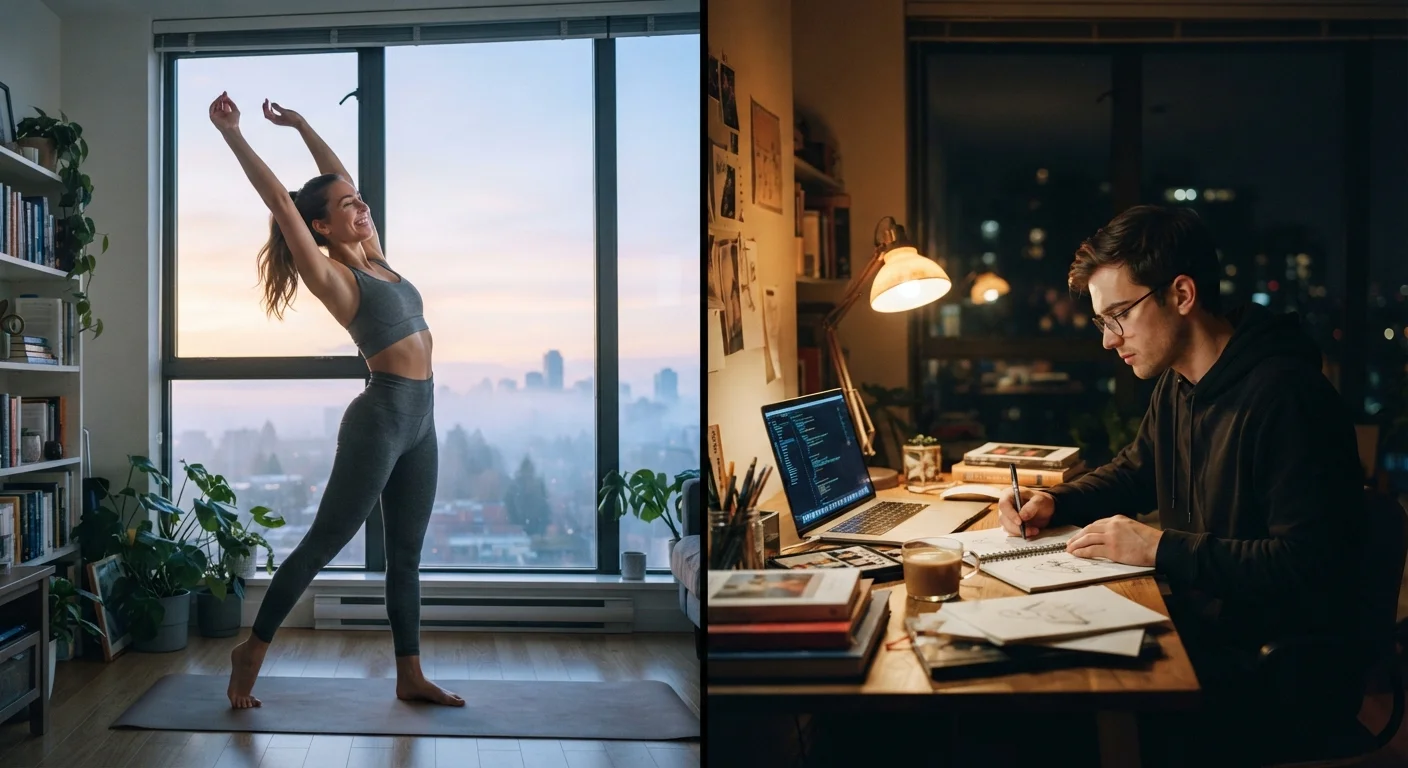
Practical morning light habits don't need to be complicated. A 20–30 minute walk outside shortly after waking, sitting near a bright window during breakfast, or spending time outdoors before 10 a.m. are all evidence-aligned approaches. Your individual sensitivity also depends in part on your chronotype — natural night owls may need more consistent morning light exposure to shift their sleep timing earlier.
Evening Light: The Modern Sleep Disruptor
In the hours before bed, your brain expects a gradual reduction in light intensity — a cue that evolved over millions of years when firelight and moonlight were the only nighttime illumination. Modern electric lighting, smartphones, tablets, and televisions have fundamentally changed this environment.
Evening exposure to bright or blue-spectrum light suppresses melatonin production and delays its natural onset. Studies have found that two hours of tablet or smartphone use in the evening can shift melatonin onset by 1.5 hours or more, delay sleep onset, and reduce REM sleep duration. The effects are especially pronounced in adolescents and people who are already sensitive to circadian disruption. To understand how melatonin itself works — and common misconceptions about it — this overview of melatonin science is worth reading.
Dimming household lights in the two hours before bed, switching screens to a warmer color temperature (higher red-to-blue ratio), and avoiding bright overhead lighting in the evening are all approaches supported by circadian research. These aren't rigid prescriptions — they're adjustments that work with your biology rather than against it. How you structure your evening routine overall can meaningfully affect sleep quality, as explored in this comparison of morning and evening routines.
Putting It Together: A Light-Aware Daily Framework
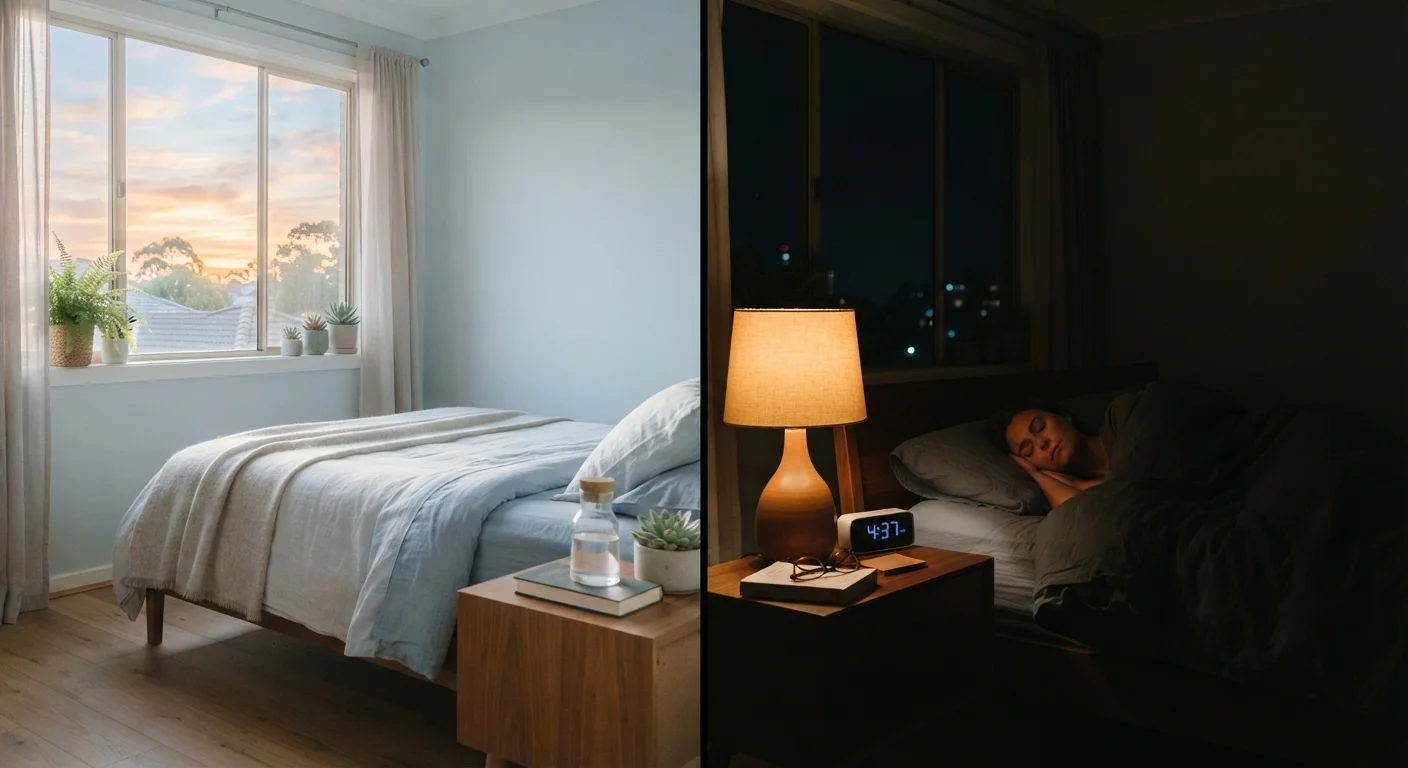
Light management across the full day is most effective when treated as a continuum rather than two isolated events. Bright morning light sets your rhythm; reduced evening light allows it to unfold naturally. The goal is to create a meaningful contrast between your daytime light environment and your nighttime one.
~1.5 hrs
Melatonin delay from evening screen use
Research has found that two hours of blue-light-emitting device use before bed can delay melatonin onset by approximately 1.5 hours.
10,000 lux
Typical outdoor light on a cloudy day
Outdoor daylight far exceeds standard indoor environments, which rarely exceed 500 lux — highlighting the value of getting outside in the morning.
20–30 min
Morning outdoor light for circadian benefit
Sleep researchers generally consider 20–30 minutes of outdoor morning light exposure a practical and effective target for supporting circadian anchoring.
A few principles drawn from the research:
- Morning: Prioritize outdoor light within 60–90 minutes of waking. Duration matters more than exact timing — 20 to 30 minutes is a realistic and effective target for most people.
- Daytime: Maximize light exposure during working hours. Well-lit environments support alertness and reinforce the daytime phase of your circadian cycle.
- Evening: Begin dimming lights roughly two hours before your target sleep time. If screen use is unavoidable, warmer display settings can reduce blue-light burden, though they don't eliminate it entirely.
It's worth noting that light is one important factor among several. Exercise timing and intensity also interact with circadian rhythms, as do temperature, meal timing, and stress. A light-aware routine complements these other habits rather than replacing them.
If you have concerns about persistent sleep difficulties, a healthcare provider or sleep specialist can help evaluate whether circadian factors — or other underlying causes — are contributing. This article is for general informational purposes and is not a substitute for personalized medical guidance.
This article is for informational purposes only and is not medical advice. Always consult a qualified healthcare professional for personal health concerns.