
What Your Body Clock Actually Does
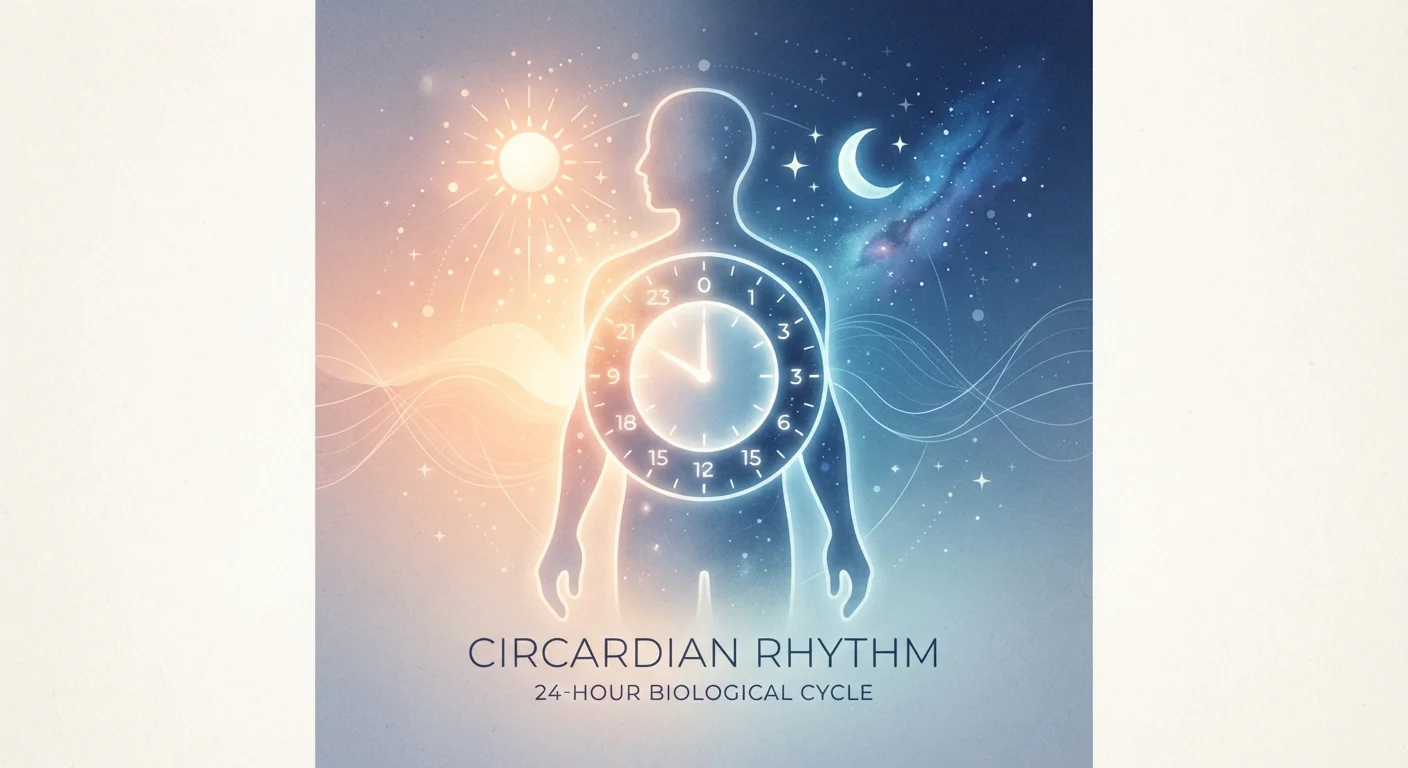
The phrase "body clock" is more than a metaphor. Your circadian rhythm is a genuinely time-keeping biological system, driven by interlocking molecular loops inside your cells that cycle with remarkable consistency over roughly 24 hours. These internal oscillators govern when cortisol rises to prepare you for the day, when core body temperature dips to encourage sleep onset, and when melatonin — the hormone most closely associated with sleepiness — begins to flood your bloodstream in the evening.
Understanding this system matters practically. When your behavior aligns with your rhythm, falling asleep feels natural and waking feels refreshing. When the two pull in opposite directions — late-night bright light, irregular schedules, crossing time zones — the system gets desynchronized, and sleep suffers. For a broader look at how this clock shapes health beyond sleep, see how circadian rhythms govern daily health.
Light: The Master Synchronizer
Of all the signals that set your body clock, light is by far the most powerful. Specialized cells in the retina — called intrinsically photosensitive retinal ganglion cells — detect light and relay timing information directly to the SCN. Morning sunlight signals "day has begun," prompting cortisol release and suppressing melatonin. As darkness arrives, melatonin production ramps up and core temperature falls, preparing the body for sleep.
This is why the timing and quality of your light exposure matters so much. Bright light in the morning anchors your rhythm earlier; bright light late at night delays it. Even indoor light levels that feel comfortable to the eye can be sufficient to suppress melatonin if experienced close to bedtime.
Start With Morning Light, Not Evening Supplements
Before turning to melatonin supplements or sleep aids, consider addressing your light environment first. Getting 10–20 minutes of natural daylight shortly after waking is one of the most evidence-supported ways to anchor your circadian rhythm. Speak with a healthcare provider before adding any supplement to your routine.
Artificial light after dark is one of the most common — and most correctable — sources of circadian disruption in modern life. Evening habits that quietly undermine sleep covers several patterns worth examining.
How Circadian Disruption Affects Sleep and Health
Misalignment between your internal clock and your actual schedule doesn't just make you feel groggy. Research in sleep medicine has linked chronic circadian disruption — the kind experienced by rotating shift workers or frequent long-haul travelers — to impaired glucose metabolism, elevated cardiovascular risk markers, and reduced immune efficiency. Even social jet lag, the informal term for the gap between weekday and weekend sleep schedules, is associated with poorer sleep quality and daytime fatigue in studies of general populations.
~1 hr/day
Maximum circadian rhythm shift rate
Sleep researchers estimate the human circadian clock can adjust by approximately one hour per day, explaining why recovery from jet lag or schedule changes takes several days.
~2°C
Core body temperature drop at sleep onset
Studies in sleep physiology show core body temperature falls roughly 1–2°C in the hours surrounding sleep onset, a process regulated by the circadian system.
30–40%
Of adults with significant social jet lag
Research published in sleep epidemiology literature suggests a substantial minority of adults experience a meaningful gap between their biological and social sleep schedules on a regular basis.
For most people, the culprits are subtler: inconsistent bedtimes, late-night screen use, and working or socializing well past when the body expects darkness. These habits accumulate and nudge the circadian phase later and later, making early wake times feel genuinely difficult rather than simply unpleasant.
Working With Your Rhythm: Evidence-Backed Principles
Sleep science offers several durable, well-supported strategies for supporting circadian alignment. None require expensive equipment or dramatic lifestyle overhauls.
- Anchor your schedule. Waking at a consistent time — even on weekends — is among the most effective ways to stabilize your rhythm. The wake time acts as a daily anchor point for the entire 24-hour cycle.
- Seek morning light. Spending time outdoors in the morning, or near a bright window, provides the strongest natural signal for keeping your clock on track.
- Dim your environment at night. Lowering indoor light levels in the two hours before bed supports melatonin onset and earlier sleep timing.
- Be consistent with meals. Emerging research suggests that meal timing sends secondary signals to peripheral clocks in the liver, gut, and other organs. Eating late at night may partially counteract good sleep-timing habits.
These principles are explored in greater depth as part of the full picture on sleep habits and biology. Your circadian rhythm also interacts closely with the sleep stages your brain cycles through each night — for more on that, see the architecture of a night's sleep.
This article is for general informational purposes only and does not constitute medical advice. If you are experiencing persistent sleep difficulties or symptoms you believe may relate to a sleep disorder, please consult a qualified healthcare professional.