
Why Protein Matters for Lean Mass
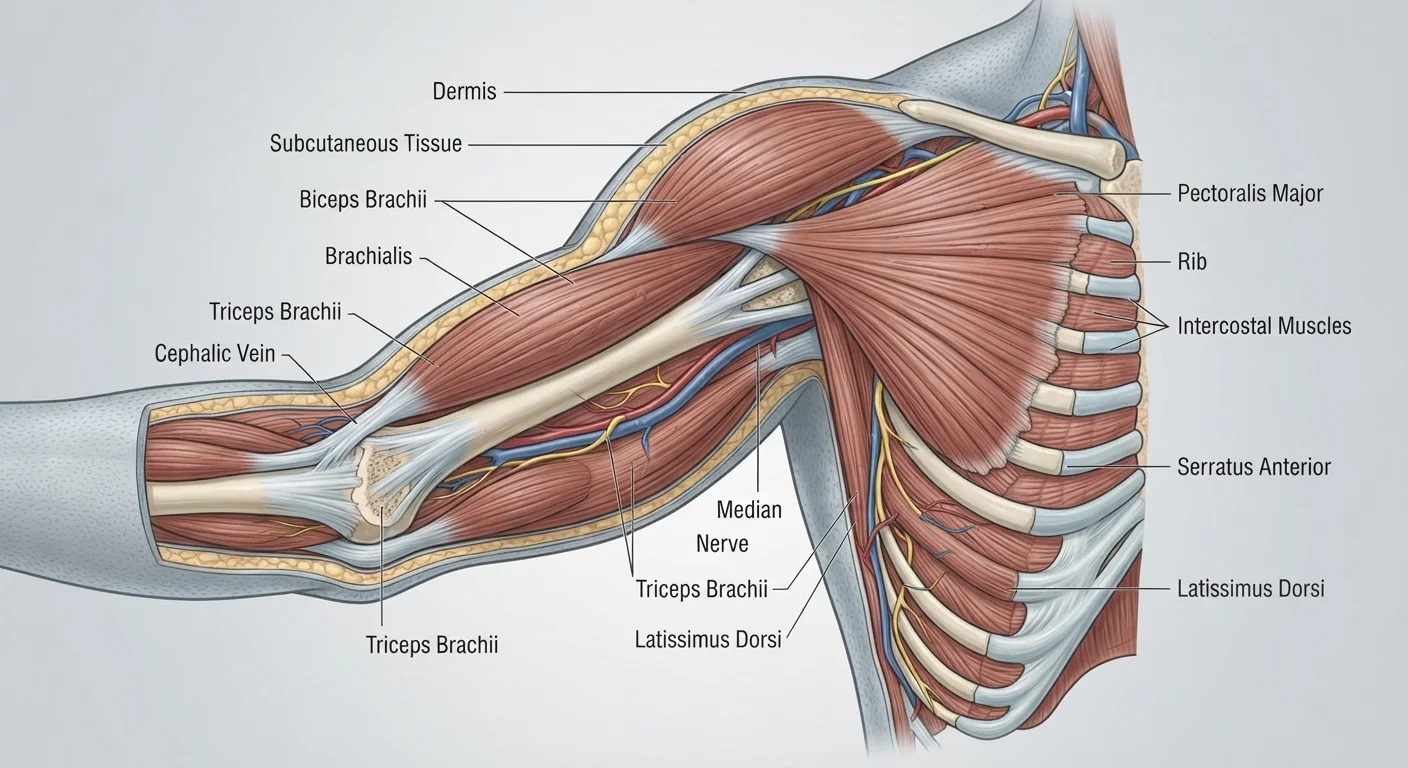
Muscle tissue is metabolically active and physiologically costly to maintain. Your body continuously breaks down and rebuilds muscle proteins — a process called protein turnover — and dietary protein supplies the amino acids needed to tip that balance toward preservation or growth. When protein intake falls short, the body may draw amino acids from muscle itself to meet other critical functions.
Understanding protein's structural role is foundational. If you'd like a plain-language overview of what each macronutrient does, see our guide to macronutrients. For a broader look at everything protein does beyond building muscle — including immune support and enzyme production — visit Protein's Job Description.
Research consistently shows that protein is the primary dietary lever for maintaining lean mass, but its effectiveness depends heavily on context: how much you eat, when you eat it, your activity level, and your age all play meaningful roles.
What the Research Generally Shows
The current Recommended Dietary Allowance (RDA) for protein in healthy adults is 0.8 grams per kilogram of body weight per day. However, nutrition researchers and sports medicine bodies widely note that this figure represents a minimum to prevent deficiency — not an optimal target for muscle maintenance, particularly in active individuals or older adults.
1.2–1.6 g/kg
Protein range associated with muscle preservation
Research published in nutrition and sports science journals consistently suggests intakes in this range support lean mass maintenance in physically active adults — above the basic RDA of 0.8 g/kg.
~3–8%
Muscle mass lost per decade after age 30 (approximate)
Estimates from geriatric and physiological research suggest adults begin losing muscle mass at this general rate without deliberate countermeasures such as resistance training and adequate protein.
Studies examining protein intake during caloric restriction consistently find that higher protein intakes help preserve lean mass even as total body weight declines. This has practical implications: two people losing the same amount of weight on different protein intakes may end up with meaningfully different body compositions. Muscle mass also influences how the body uses energy at rest — a topic explored in depth in our article on muscle mass and resting energy use.
Sleep is another underappreciated factor. Chronic sleep deprivation has been linked to impaired muscle protein synthesis and unfavorable changes in body composition. Our companion piece on sleep and body composition covers what the evidence currently indicates.
Best Practices for Protein and Muscle Maintenance
The following practices reflect general nutrition science and are intended as educational guidance, not personal medical advice. Individual needs vary — consult a registered dietitian or physician before making significant changes to your diet, especially if you have an existing health condition.
Aim for protein distribution across all meals rather than concentrating it in one sitting
Muscle protein synthesis appears to respond more robustly to multiple moderate protein doses throughout the day than to a single large dose. Research suggests each meal providing roughly 20–40 grams of high-quality protein may more effectively stimulate the muscle-building response than the same total amount consumed at once.
Prioritize complete protein sources that supply all essential amino acids
Not all dietary proteins are equivalent. Complete proteins — found in animal products and a few plant sources like soy and quinoa — provide all nine essential amino acids the body cannot synthesize on its own. Leucine, in particular, plays a key role in triggering muscle protein synthesis.
Pair adequate protein intake with regular resistance exercise
Protein and resistance training operate synergistically. Exercise creates the stimulus for muscle adaptation; protein supplies the building materials. Neither alone produces the same result as the combination, and the benefit of protein intake on muscle is substantially greater in the context of regular physical activity.
Increase protein intake thoughtfully as you age
Older adults experience a reduced anabolic response to protein — often called 'anabolic resistance' — meaning more dietary protein may be needed to achieve the same muscle protein synthesis stimulus as in younger adults. This contributes to age-related muscle loss, or sarcopenia, which is associated with functional decline.
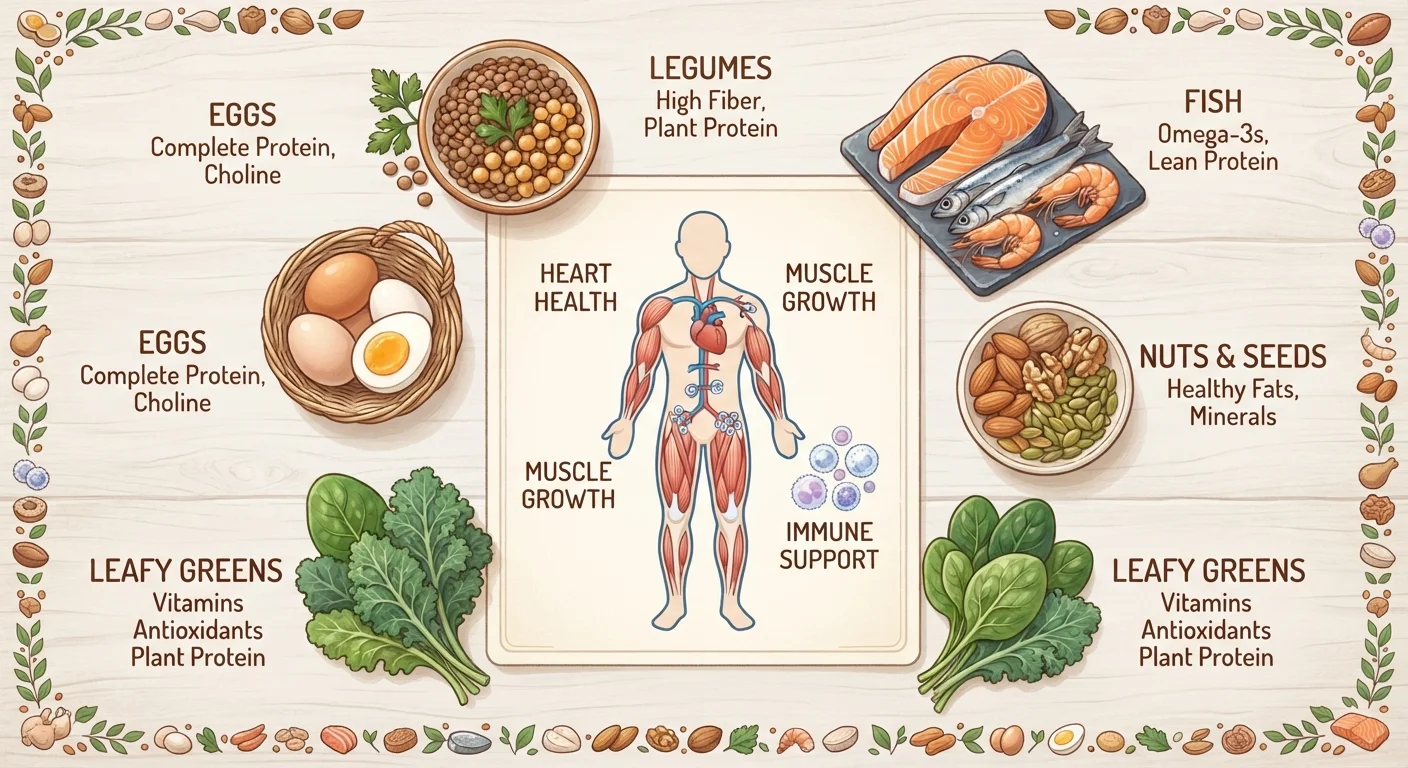
Choose minimally processed whole-food protein sources as your primary foundation
Whole-food protein sources come packaged with additional nutrients — iron, zinc, B vitamins, fiber in plant sources — that support overall metabolic health. Relying heavily on protein supplements displaces these co-nutrients and may not replicate the broader health benefits observed in research on whole-food dietary patterns.
Getting Started: Practical Actions
Knowing the science is one thing; translating it into daily habits is another. The following quick actions are designed to be immediately implementable for most healthy adults. For a closer look at where protein thinking commonly goes wrong, see our article on common protein intake misunderstandings.
This article is for general informational and educational purposes only and does not constitute medical or dietary advice. Always consult a qualified healthcare professional before making changes to your diet or exercise routine, particularly if you have a chronic health condition, are pregnant, elderly, or are managing a specific medical concern.