What Metabolism Actually Means
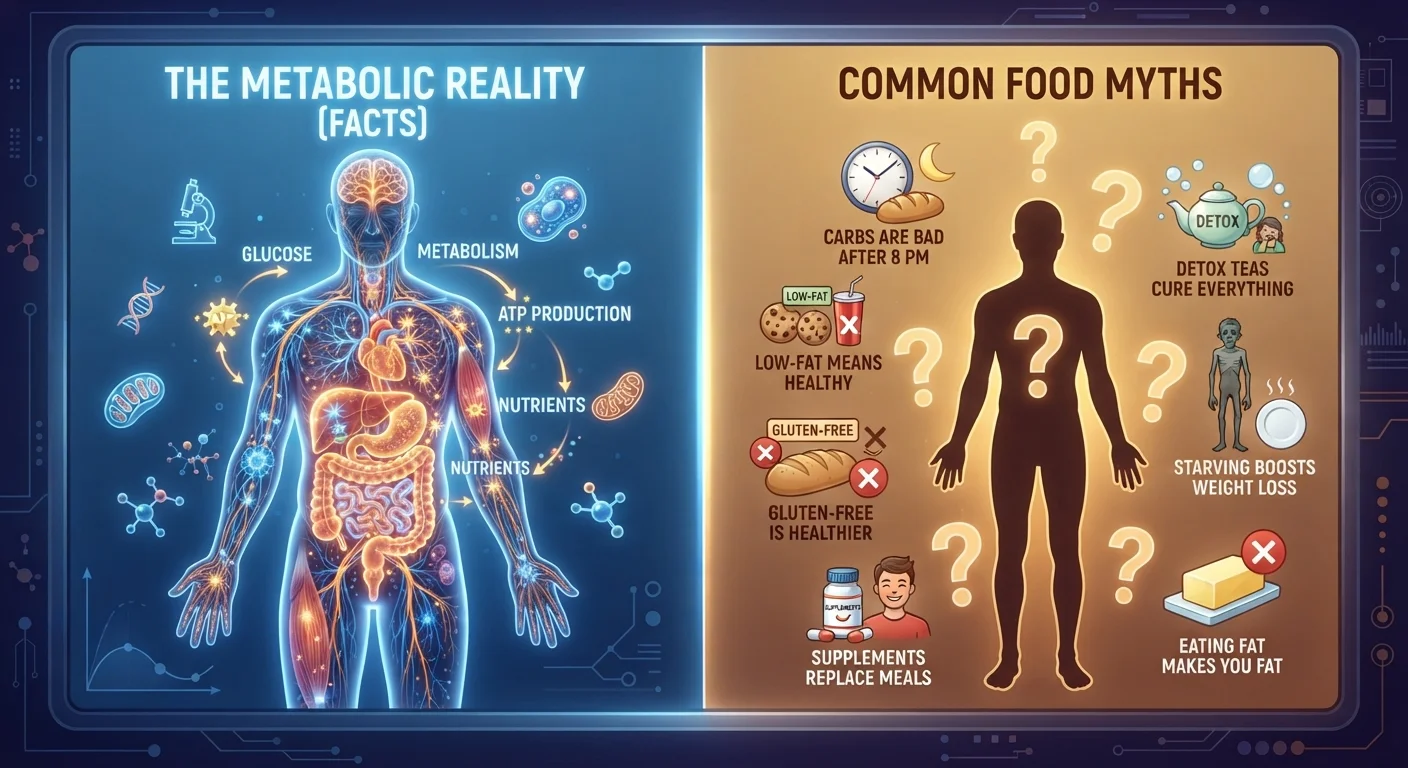
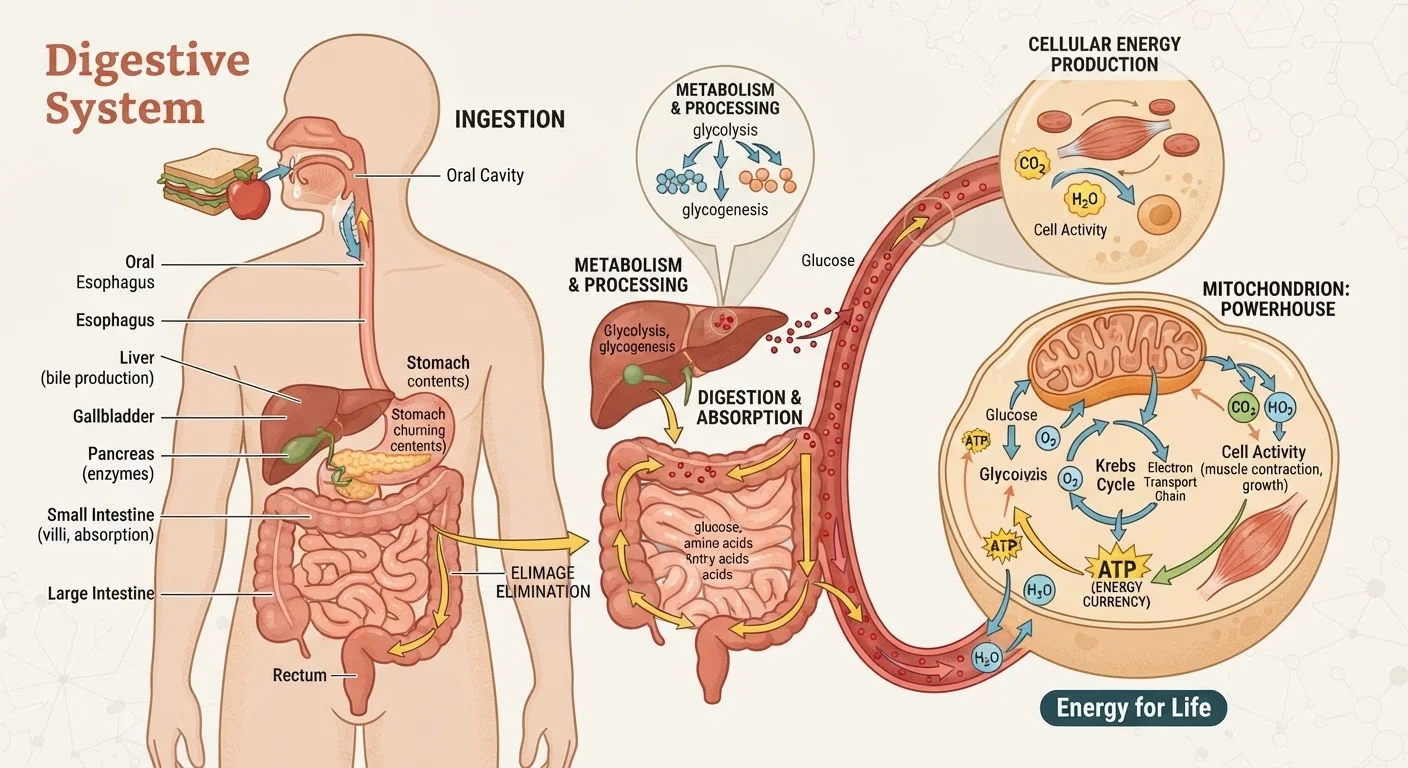
The word metabolism gets used loosely in everyday conversation — often as a catch-all explanation for why bodies look or behave differently. Scientifically, metabolism refers to the totality of chemical reactions occurring in your cells that keep you alive: breaking down nutrients for energy, building and repairing tissue, regulating hormones, and disposing of waste products.
Two broad categories define these reactions. Catabolism breaks large molecules — like carbohydrates, fats, and proteins — down into smaller units, releasing energy in the process. Anabolism uses that energy to build complex molecules, such as proteins and DNA. These two processes run simultaneously and are tightly regulated by hormones including insulin, thyroid hormones, and cortisol.
For a fuller scientific grounding, explore what metabolism truly means beyond its common shorthand definition.
Metabolism
The complete set of chemical reactions in your body's cells that convert food and stored energy into the fuel needed to sustain life.
Basal Metabolic Rate (BMR)
The minimum amount of energy your body needs to maintain basic functions — like breathing and circulation — while at complete rest.
Catabolism
The breakdown of complex molecules such as carbohydrates and fats into smaller units, releasing energy the body can use.
Anabolism
The set of reactions that use released energy to build and repair complex molecules, including proteins and genetic material.
NEAT
Non-Exercise Activity Thermogenesis — the calories burned through everyday, non-structured movement like walking, fidgeting, and standing.
Thermic Effect of Food (TEF)
The energy your body expends to digest, absorb, and process the nutrients in food — typically around 10% of total calorie intake.
The Components of Energy Expenditure
Total daily energy expenditure (TDEE) — the calories your body uses in a day — has four measurable components:
- Basal Metabolic Rate (BMR): The energy your body needs at complete rest to maintain core functions like breathing, circulation, and cell repair. BMR typically accounts for 60–70% of TDEE.
- Thermic Effect of Food (TEF): The calories burned digesting and processing what you eat, representing roughly 10% of intake.
- Exercise Activity Thermogenesis (EAT): Energy used during intentional physical activity, which varies widely between individuals.
- Non-Exercise Activity Thermogenesis (NEAT): Calories burned through everyday movement — fidgeting, walking, standing, and similar activities. NEAT can differ by up to 2,000 calories per day between individuals, making it a surprisingly significant driver of total expenditure.
Understanding this breakdown helps explain why two people with similar workouts may expend very different amounts of energy overall. NEAT, in particular, is often underestimated. To connect this with how specific nutrients fit into the picture, see how macronutrients are processed from digestion to daily energy.
What Really Influences Your Metabolic Rate
Several factors influence how much energy your body uses at rest and in motion — some modifiable, some not:
- Body composition: Muscle tissue is metabolically more active than fat tissue, meaning people with more lean mass burn more calories at rest. This is one reason resistance training is consistently recommended in weight management contexts.
- Age: A landmark study published in Science (2021) found metabolic rate stays relatively stable from age 20 to 60, challenging older assumptions. Declines later in life are real but partly reflect changes in muscle mass and activity rather than age alone.
- Genetics: Inherited factors influence BMR by roughly 40–70%, according to twin studies. Genetics sets a range, not a fixed destiny.
- Hormones: Thyroid hormones are primary regulators of metabolic rate. Conditions like hypothyroidism can reduce BMR measurably, which is why persistent fatigue or unexplained weight changes warrant a clinical evaluation.
- Sleep: Sleep deprivation disrupts hunger-regulating hormones and reduces NEAT the following day, creating indirect but meaningful effects on energy balance.
Body composition — the ratio of muscle to fat — is one of the most actionable levers available for influencing how your body expends energy over time.
Common Myths Worth Setting Aside
Metabolism myths are remarkably durable. A few of the most persistent are worth addressing directly:
- "Eating spicy food or green tea meaningfully boosts metabolism."
- Evidence shows compounds like capsaicin and caffeine produce small, transient increases in metabolic rate — effects too modest to produce meaningful outcomes outside a tightly controlled lab setting.
- "Eating more frequently stokes your metabolic fire."
- The "grazing" theory lacks robust clinical support. Studies comparing meal frequency generally find that total daily intake is the primary driver of metabolic outcomes, not how often meals occur.
- "A slow metabolism is why most people gain weight."
- Measured metabolic rate differences between people of similar size are generally small. Behavioral, environmental, and psychological factors carry far more explanatory weight in most cases.
For a deeper look at how these misconceptions can steer health choices in the wrong direction, see how metabolism myths can lead people astray.
Skepticism Is a Useful Tool Here
When a product or plan claims to "rev up" or "reset" your metabolism, look for peer-reviewed evidence before assuming it works. Most such claims are based on small, short-term studies or have not been replicated in larger populations. Asking "what does the broader evidence say?" is a reliable first filter.
Practical Takeaways for Everyday Decisions
Metabolism is not a dial you can simply turn up — but it is a system you can support through well-established habits:
- Prioritize resistance training. Building and maintaining muscle mass is the most reliable way to support a higher resting metabolic rate over time.
- Eat adequate protein. Beyond its higher thermic effect, protein supports muscle preservation during periods of calorie reduction. For context on how protein and other macronutrients function, explore the macronutrients hub.
- Protect your sleep. Consistent, quality sleep supports hormonal regulation and preserves NEAT the following day.
- Stay generally active. Accumulating movement throughout the day — not just structured exercise — contributes meaningfully to total energy expenditure.
If you're connecting these ideas to weight goals, a practical starting point for weight management offers foundational context without the noise of diet culture.
This article is for general informational and educational purposes only and does not constitute medical advice. If you have concerns about your metabolism, weight, or overall health, please consult a qualified healthcare professional.