
The Scientific Definition Most People Never Hear
Ask someone to define metabolism and you'll typically hear something like: "It's how fast your body burns calories." That definition isn't entirely wrong — but it's incomplete in a way that leads to serious misunderstandings about body weight, energy, and health.
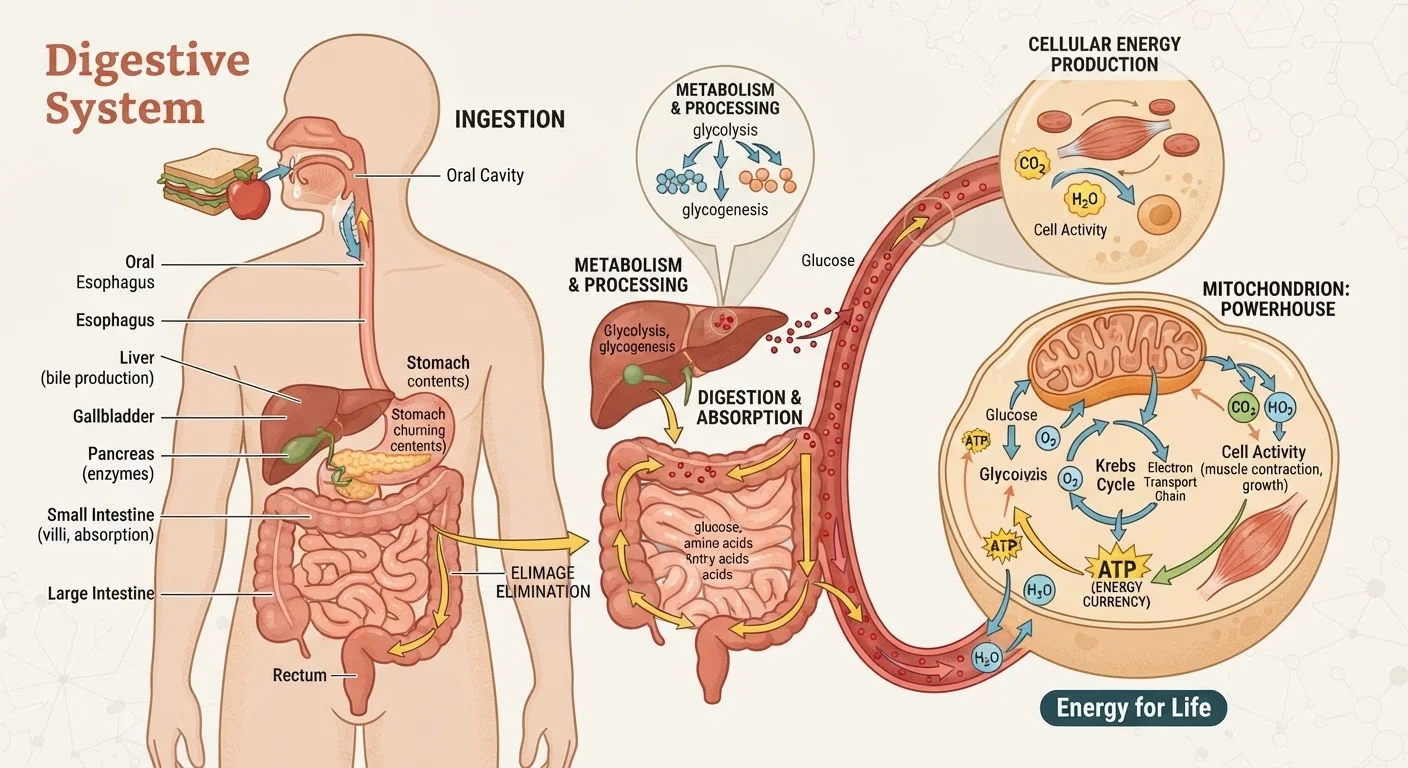
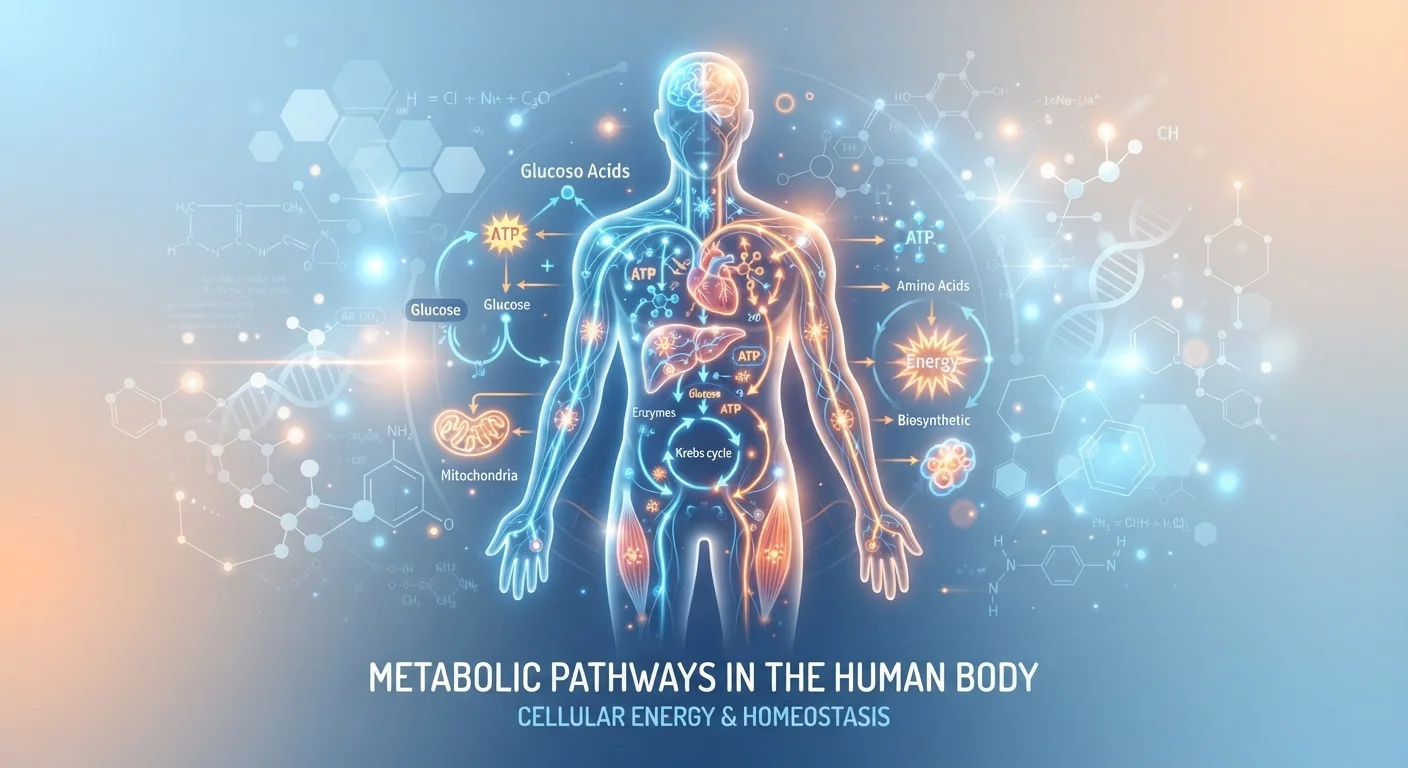
In biology, metabolism refers to the totality of chemical reactions occurring in living organisms to maintain life. Every time a cell converts glucose into ATP (the molecule cells actually use for fuel), synthesizes a protein, repairs DNA, or signals a hormone — that is metabolism. It's not a speed. It's not a gear. It's an entire system running simultaneously across trillions of cells.
For a broader introduction to these concepts, see how the body converts food into energy.
Catabolism and Anabolism: The Two Sides of Every Metabolic Process
Metabolism operates through two complementary and overlapping pathways:
- Catabolism breaks complex molecules — fats, carbohydrates, proteins — into smaller units, releasing energy in the process. Digestion is the most familiar example.
- Anabolism uses that released energy to construct molecules the body needs: muscle proteins, hormones, structural cell components, and more.
These two processes run concurrently, not sequentially. Right now, your body is simultaneously breaking down glycogen for fuel and synthesizing collagen to maintain connective tissue. This balance shifts depending on your nutritional status, activity level, sleep, and hormonal state — which is why metabolism is best understood as a dynamic equilibrium, not a fixed setting.
60–70%
Daily energy from basal metabolic rate
Most adults expend the majority of their daily calories just sustaining resting physiological functions, according to established metabolic physiology research.
~2,000 kcal
Possible NEAT variation between individuals
Research published in peer-reviewed journals on non-exercise activity thermogenesis suggests daily calorie burn from non-intentional movement can vary dramatically between people.
8–15%
Thermic effect of food (TEF)
Digesting and absorbing nutrients accounts for a modest but real portion of daily energy expenditure, with protein requiring the most energy to process.
The Four Components of Total Daily Energy Expenditure
When scientists measure how much energy a person's metabolism uses in a day, they look at four distinct components:
- Basal Metabolic Rate (BMR): The energy required to maintain basic physiological functions at rest — heartbeat, breathing, temperature regulation, cell repair. For most adults, BMR represents 60–70% of total daily energy expenditure.
- Thermic Effect of Food (TEF): The energy cost of digesting and absorbing nutrients. It accounts for roughly 8–15% of daily expenditure and varies by macronutrient — protein has the highest thermic effect.
- Exercise Activity Thermogenesis (EAT): Calories burned during intentional physical activity such as walking, running, or lifting weights.
- Non-Exercise Activity Thermogenesis (NEAT): Energy used in all movement that isn't deliberate exercise — fidgeting, posture adjustment, household tasks. Research suggests NEAT can vary by up to 2,000 calories per day between individuals, making it a surprisingly significant variable.
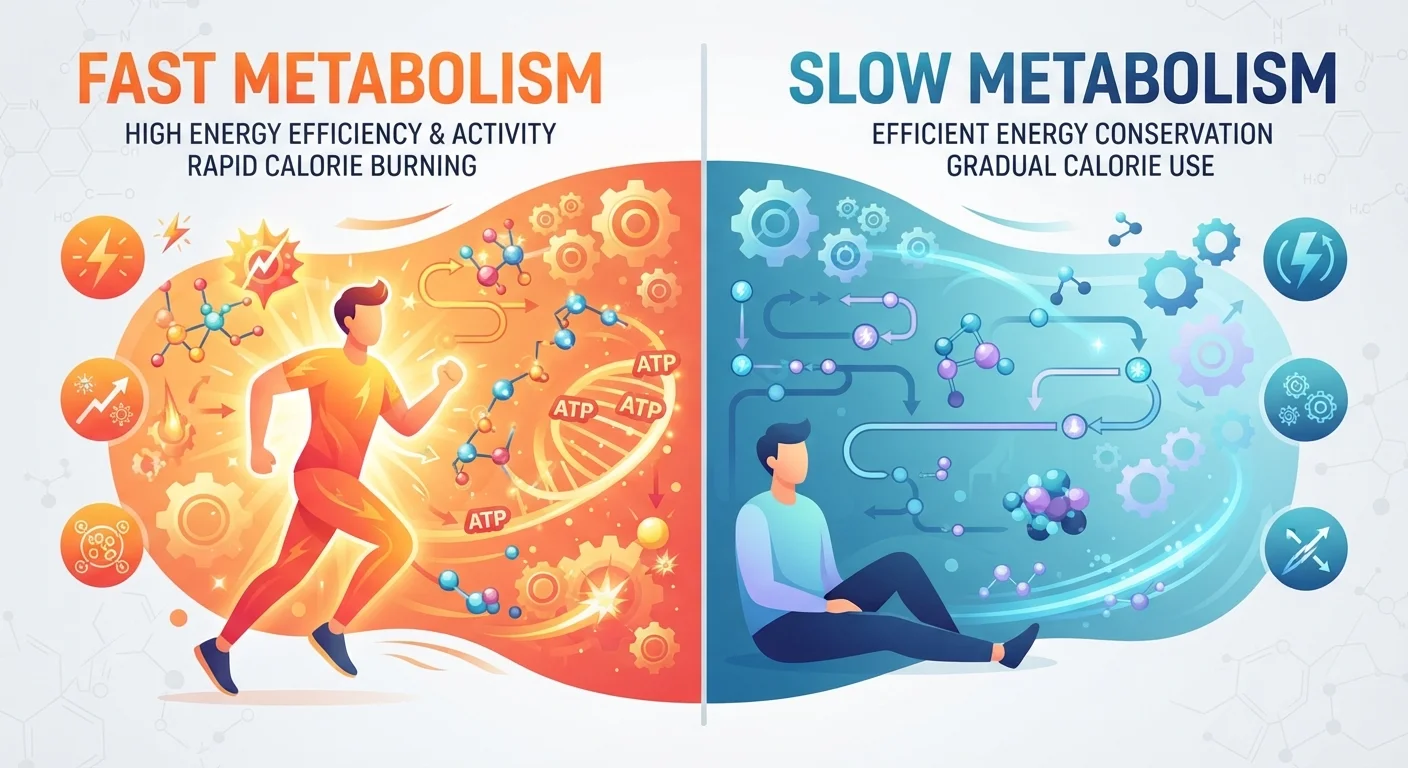
Understanding this framework helps explain why the distinction between "fast" and "slow" metabolism is far less straightforward than popular culture implies.
What Metabolism Is Not
Correcting the common misconceptions is as important as defining the term accurately:
- Metabolism is not just calorie burning. Calorie expenditure is one measurable output of metabolic activity, but the system also governs immune response, detoxification, tissue growth, and neurological function.
- Metabolism is not a fixed trait. While genetics and age set certain boundaries, factors like muscle mass, physical activity, sleep quality, and hormonal health meaningfully influence metabolic rate across a person's lifetime.
- "Boosting" metabolism is not a precise or reliable intervention. Claims that specific foods, supplements, or habits will dramatically accelerate your metabolism are generally not supported by robust clinical evidence. Modest influences exist — but they are modest.
For a closer look at how these myths persist and mislead, science corrects the most persistent metabolism misconceptions. And if you're concerned about how these misunderstandings affect real-world choices, learn what can go wrong when the science gets misapplied.
Metabolism also has direct implications for body composition — the ratio of muscle to fat that shapes long-term health outcomes.
This article is for general informational and educational purposes only and does not constitute medical advice. Consult a qualified healthcare professional before making any changes to your diet, exercise routine, or health plan — particularly if you have a medical condition or take medications.