Why Metabolism Myths Are So Hard to Shake
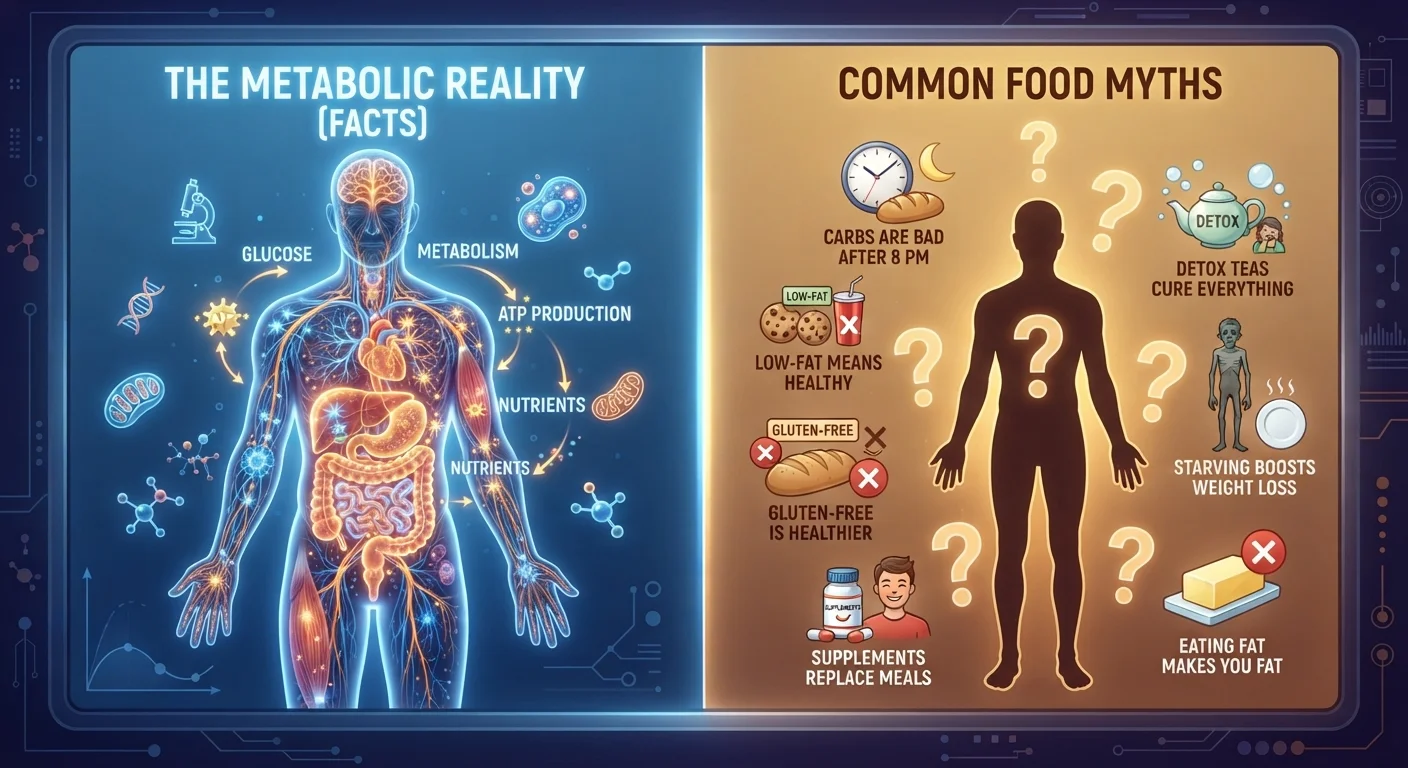
Metabolism sits at the intersection of biology, behavior, and marketing — a combination that breeds persistent misunderstanding. Wellness trends, supplement advertising, and gym folklore all borrow metabolic terminology, then strip it of its scientific nuance. The result is a landscape where confident-sounding claims crowd out more accurate but less dramatic explanations.
If you're new to understanding how metabolism actually works, the core concept is straightforward: it refers to all the chemical processes your body uses to convert food into energy and sustain life. What's not simple is how many factors — genetics, hormones, body composition, sleep, stress, and activity — interact to influence that process in real time.
Misconceptions matter because they lead to real decisions: skipping meals, avoiding resistance training, or buying products that promise to 'rev up' metabolic rate. Understanding where the myths diverge from evidence helps you make better choices without chasing the wrong targets. For related misbeliefs that affect daily health decisions, see common healthy eating misconceptions.
The Most Common Metabolism Mistakes — and the Science Behind Them
The following mistakes represent the errors most likely to derail well-intentioned efforts to support metabolic health. Each is grounded in a partial truth, which is precisely what makes it so sticky.
Believing metabolism is either 'fast' or 'slow' as a fixed personal trait.
Why it happens: Phrases like 'fast metabolism' are deeply embedded in everyday language, encouraging people to think of metabolic rate as a static, inherited characteristic they can't influence.
Assuming eating very little is the most effective way to speed up fat loss.
Why it happens: The logic seems straightforward: fewer calories in means more weight lost. People underestimate the body's adaptive response to severe restriction.
Overestimating how dramatically muscle mass boosts resting calorie burn.
Why it happens: The claim that 'muscle burns far more calories than fat at rest' is often exaggerated in fitness circles, leading people to expect outsized metabolic gains from strength training alone.
Thinking that eating more frequently automatically raises metabolic rate.
Why it happens: The idea of 'stoking the metabolic fire' with frequent small meals became popular in fitness culture, but it misinterprets how the thermic effect of food actually works.
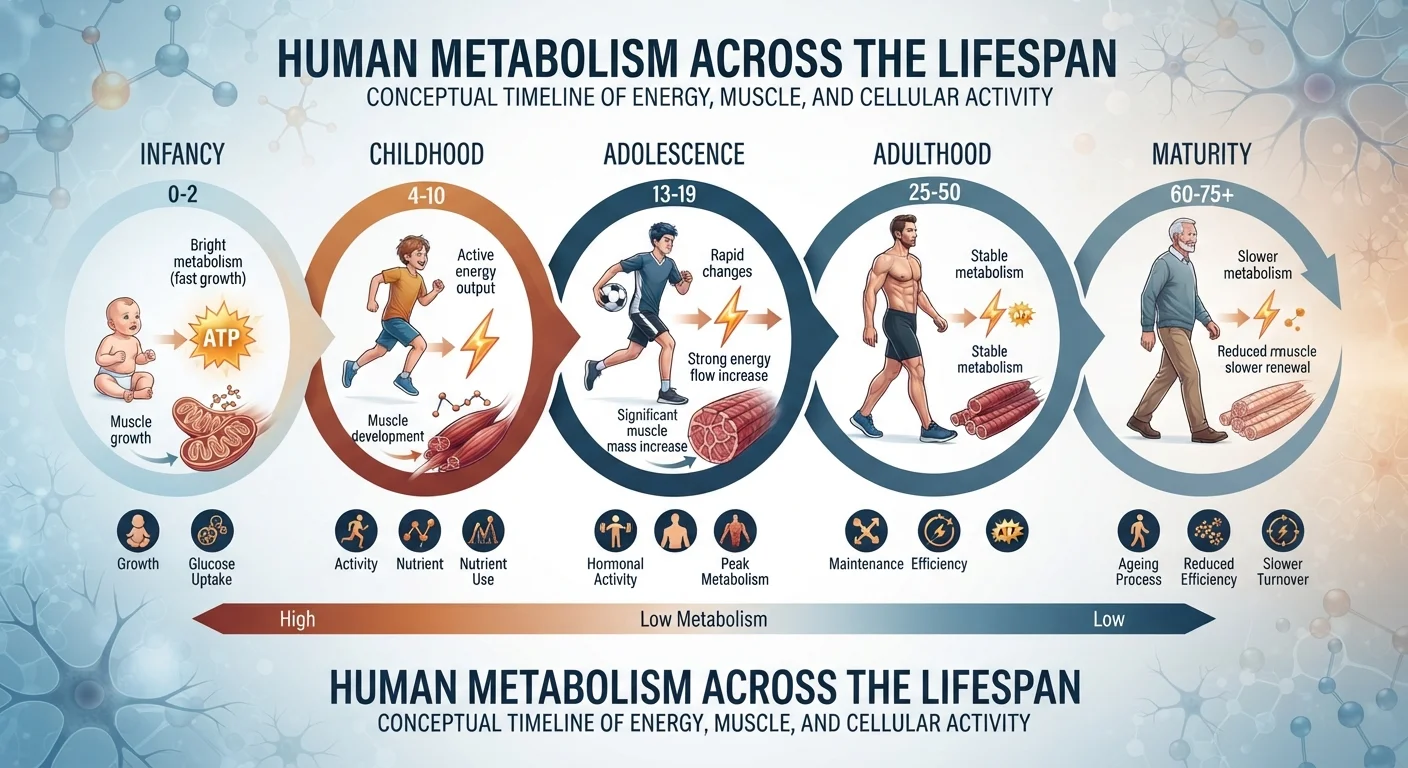
Attributing all age-related metabolic slowdown to biology alone.
Why it happens: It's easy to conflate inevitable biological aging with the lifestyle-driven changes that actually drive much of the decline — most notably decreasing physical activity and muscle loss over decades.
This Is General Information, Not Medical Advice
The content in this article is intended for educational purposes only and does not constitute personal medical advice. Individual metabolic health varies considerably based on genetics, medical history, and other factors. Always consult a qualified healthcare provider before making significant changes to your diet, exercise routine, or health strategy.
Understanding where these misconceptions originate is the first step to moving past them. Metabolism responds to consistent, evidence-based inputs — not hacks or dramatic interventions. For a parallel look at how movement-related myths can similarly mislead, see exercise myths that keep people from moving more.
This article is for informational purposes only and is not a substitute for personalized medical advice. Consult a qualified healthcare professional regarding any health concerns or before making significant changes to your diet or exercise habits.