Where Did 10,000 Steps Come From?
The 10,000-step daily goal is one of the most widely repeated numbers in consumer health. It appears on fitness trackers, app defaults, and workplace wellness challenges — but it did not originate from clinical research. The figure traces back to a Japanese marketing campaign in the 1960s tied to a pedometer called the manpo-kei, which loosely translates to "10,000 steps meter." It was a commercial slogan, not a scientific threshold.
That does not mean 10,000 steps is a bad goal. For many adults, reaching it requires meaningful increases in daily movement, and more movement generally supports better cardiovascular health, mood, and energy levels. The problem is treating it as a universal prescription rather than a useful benchmark.
| Origin of the 10,000-step goal | 1960s Japanese marketing campaign, not clinical research |
| Steps where meaningful health benefit begins | Approximately 4,000–7,500 steps/day (Multiple peer-reviewed studies, including JAMA Internal Medicine) |
| Tracker accuracy type | Estimate, not exact measurement |
| Recommended goal-setting approach | Add 1,000–2,000 steps above your personal baseline |
| Additional useful metric | Walking cadence (steps per minute) |
What Research Actually Says About Step Counts
Studies published in journals including JAMA Internal Medicine and The Lancet suggest that health benefits from walking appear at step counts well below 10,000. One widely cited analysis found that mortality risk decreased notably up to roughly 7,500 steps per day in older women, with diminishing returns beyond that. Other research points to benefits starting around 4,000–5,000 steps per day compared with very low activity levels.
Importantly, more steps generally continue to offer benefit for people who can manage them — but the steepest health gains often occur in the transition from sedentary to moderately active. Going from 2,000 steps to 6,000 steps likely produces more measurable health improvement than going from 9,000 to 13,000.
Walking pace also matters. Research suggests that faster walking — even briefly throughout the day — is associated with greater cardiovascular benefit than slow shuffling to hit a step number. Cadence (steps per minute) is a useful additional signal that most modern trackers capture.
How to Read Your Tracker's Numbers Intelligently
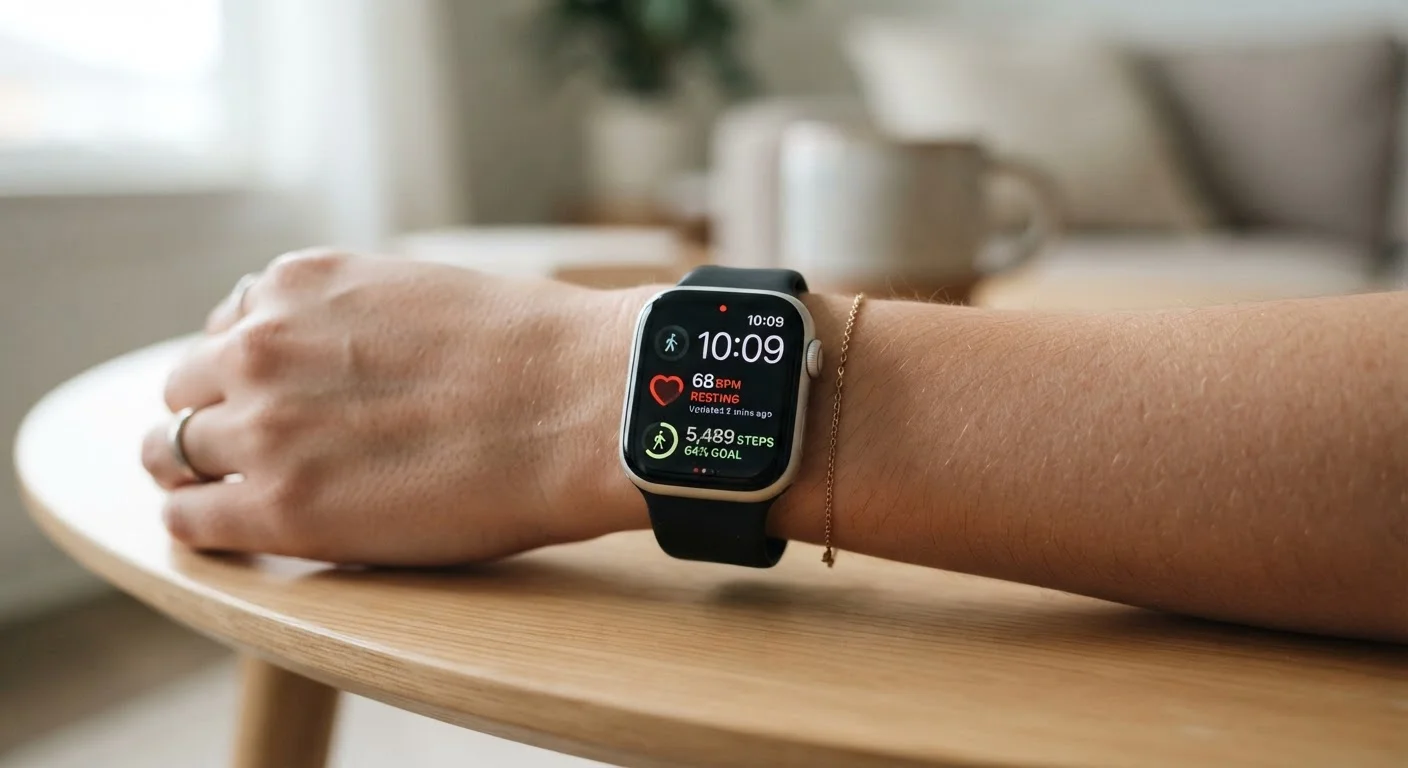
Consumer fitness trackers vary in accuracy depending on placement, activity type, and the algorithms each device uses. Wrist-based trackers tend to be less precise than hip or shoe-based pedometers, particularly during activities like cycling or strength training where arm movement does not mirror steps taken. As a result, step counts are best understood as estimates, not exact measurements.
Here are the key terms your tracker may display and what they actually reflect:
Step count
The total number of steps recorded by a device over a given period, typically a day. Counts are estimated using an accelerometer that detects motion, not an exact mechanical tally.
Cadence
The number of steps taken per minute. Higher cadence during walking is generally associated with greater cardiovascular intensity and is considered a more nuanced activity signal than raw step count alone.
Active minutes
Time spent in movement intense enough to elevate heart rate above a resting baseline, as estimated by the device. Active minutes capture exercise intensity in a way that step count cannot.
Sedentary time
Periods of prolonged inactivity detected by the tracker, usually defined as sitting or lying still for 30 minutes or more. High sedentary time is associated with health risks independent of total step count.
Baseline activity
Your typical average daily movement before any deliberate change. Establishing a baseline over several normal days provides a realistic starting point for setting incremental step goals.
For a balanced view of what trackers do and do not reliably measure, see our look at the trade-offs of daily health tracking.
Setting a Step Goal That Works for You
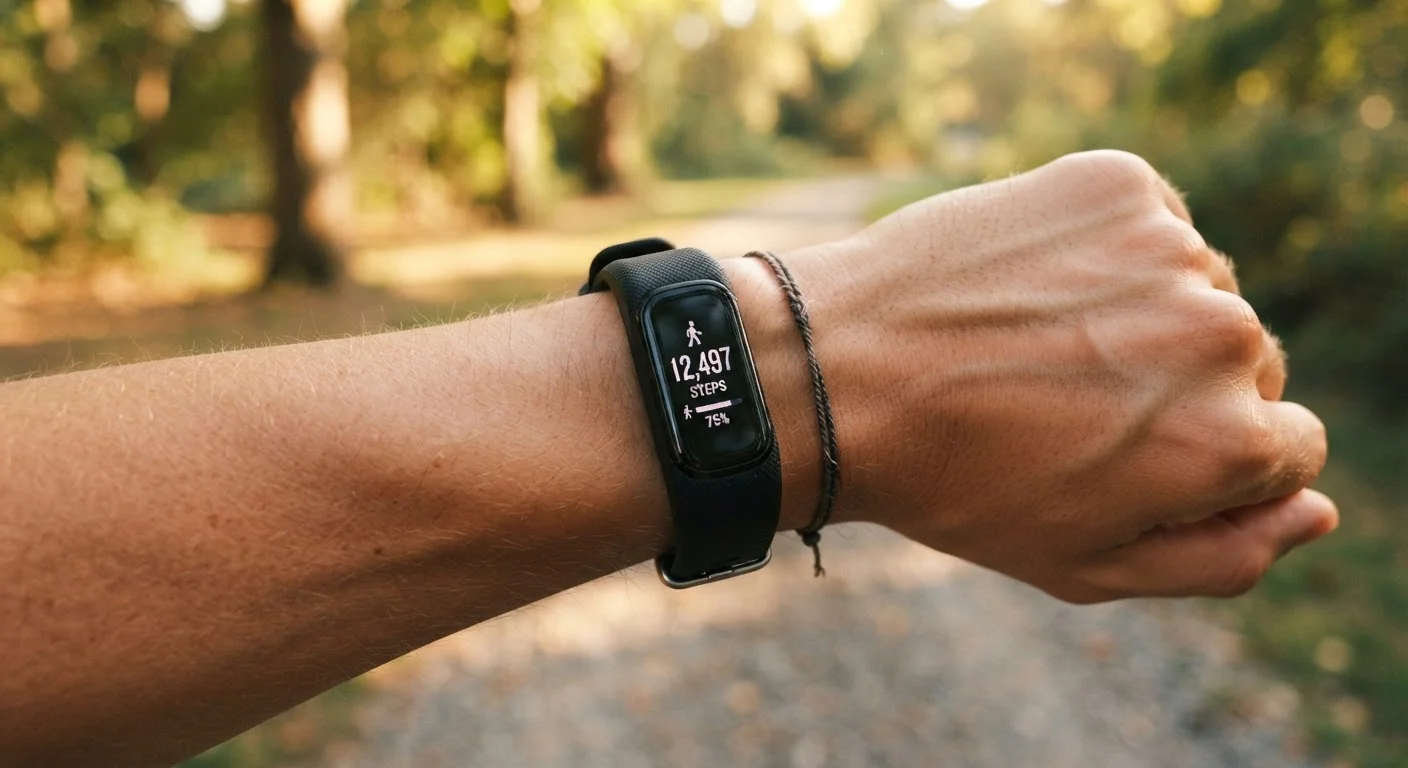
Rather than defaulting to 10,000, consider building your goal from your current baseline. Track your average steps over a normal week without changing behavior, then aim to add roughly 1,000–2,000 steps above that baseline. Gradual increases are more sustainable and reduce the risk of overuse injury from abrupt activity spikes.
People with chronic conditions, joint concerns, or other health factors should consult a qualified healthcare professional before setting or significantly changing an exercise goal. General population research does not account for individual circumstances.
Numbers can be powerful motivators — but they can also distort your sense of progress. If you find yourself anxious when you miss a target or obsessing over closing rings, that is worth noticing. Our guide to tracking progress without fixating on numbers explores how to keep metrics in perspective.
The most meaningful step count is the one that reflects consistent, sustainable movement — not the number a 1960s marketing team thought sounded round and achievable.
This article is for general informational purposes only and does not constitute medical advice. Consult a qualified healthcare professional before making significant changes to your physical activity routine.