Why Three Pillars, Not One
Most beginners start by picking a single type of exercise — usually running or weight lifting — and sticking with it. That's a reasonable first step, but over time, training only one dimension of fitness leaves real gaps in your health. Exercise science consistently points to three foundational categories: cardiovascular endurance, muscular strength, and flexibility and mobility. Each one does something the others can't. Together, they support the full range of what your body needs to function well day to day.
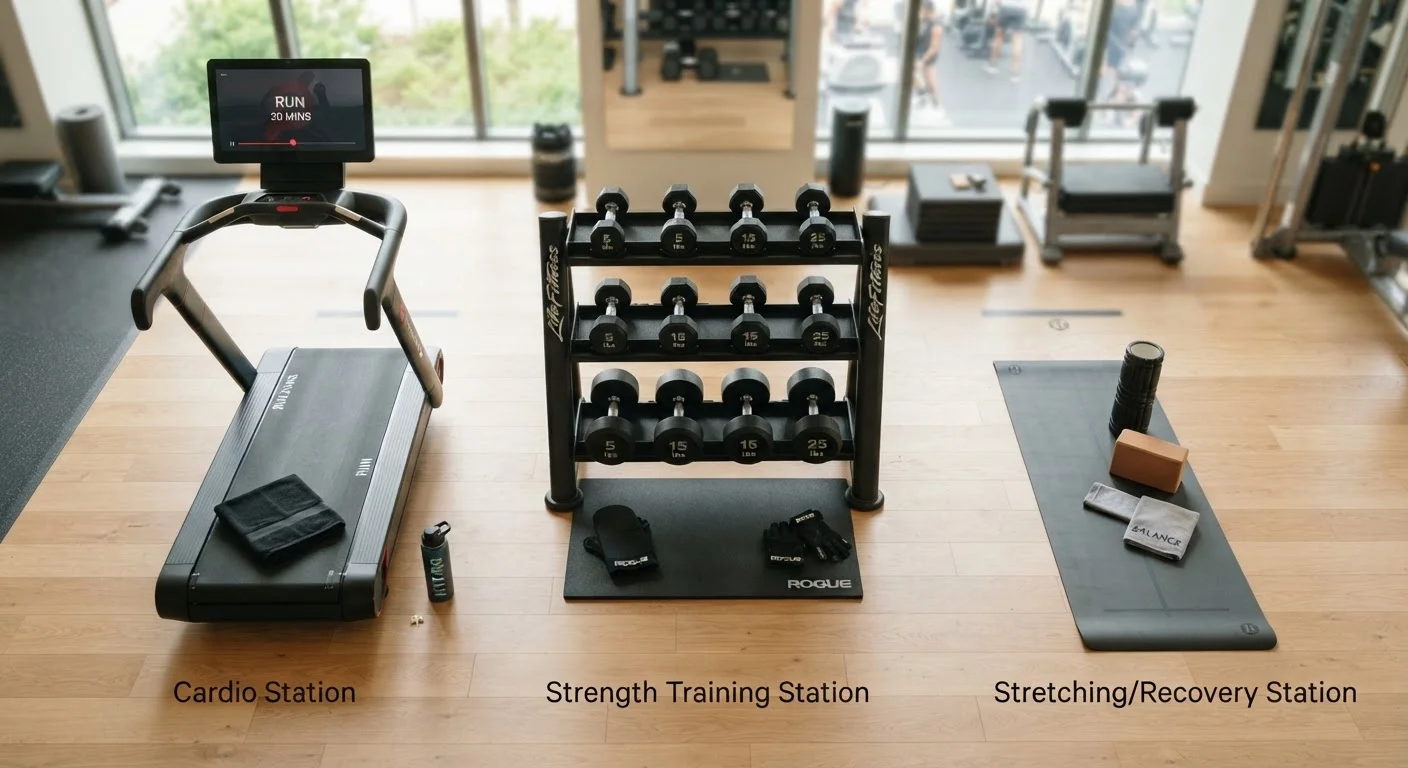
Think of these three pillars not as separate programs to complete, but as complementary systems that reinforce one another. A stronger body moves more safely. A more mobile body lifts with better form. A conditioned cardiovascular system recovers faster between strength sets. Understanding what each pillar does — and why it matters — gives you a clearer reason to include all three in your routine. See how these categories fit into the broader picture at our Workout Types hub.
| Cardio recommendation (adults) | 150 min/week moderate-intensity or 75 min vigorous (U.S. Dept. of Health & Human Services Physical Activity Guidelines) |
| Strength training frequency | At least 2 days per week targeting major muscle groups (U.S. Dept. of Health & Human Services Physical Activity Guidelines) |
| Flexibility training | Most guidelines suggest stretching major muscle groups 2–3x per week (American College of Sports Medicine) |
| Who benefits from all three pillars | Adults of all fitness levels, including complete beginners |
| Minimum effective cardio session | Even 10-minute bouts of moderate activity count toward weekly totals (U.S. Dept. of Health & Human Services Physical Activity Guidelines) |
Pillar 1: Cardiovascular Endurance
Cardiovascular endurance (also called aerobic fitness) refers to your heart, lungs, and blood vessels' ability to deliver oxygen to working muscles over a sustained period. Activities like walking, jogging, cycling, and swimming all train this system. The U.S. Department of Health and Human Services' Physical Activity Guidelines for Americans recommends that adults aim for at least 150 minutes of moderate-intensity aerobic activity per week, or 75 minutes of vigorous-intensity activity — though any amount is better than none.
The benefits extend well beyond burning calories. Regular cardio lowers resting heart rate, improves blood pressure, reduces risk of cardiovascular disease, and supports mental health by influencing mood-regulating brain chemistry. For beginners, even brisk walking counts. You don't need to run a 5K to see meaningful improvements in your aerobic fitness. For a side-by-side look at how cardio compares to strength work, see Cardio vs. Strength Training: What Each One Actually Does for Your Body.
Pillar 2: Muscular Strength
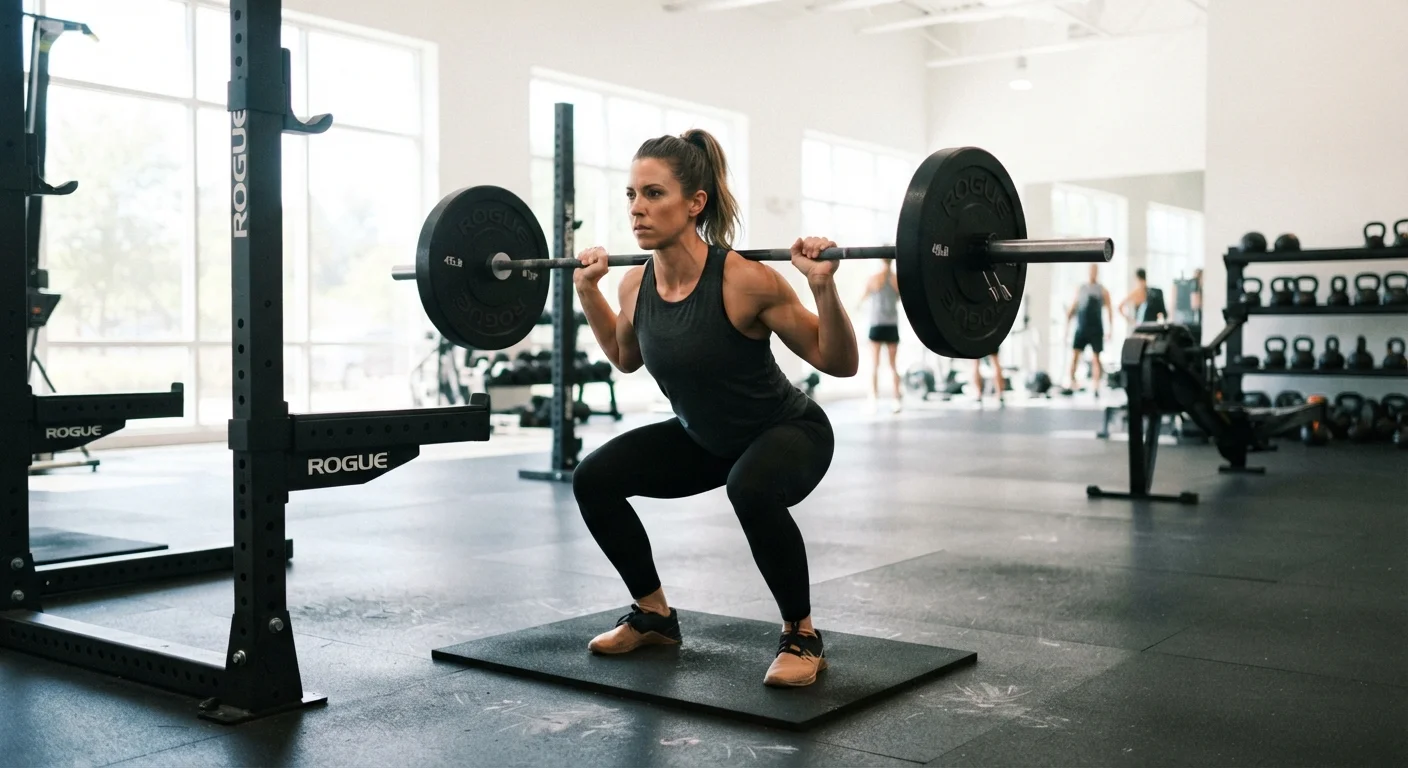
Muscular strength is your muscles' capacity to exert force — whether you're lifting a bag of groceries, climbing stairs, or doing a formal workout. Strength training (also called resistance training) involves applying progressive resistance to muscles, which causes them to adapt and grow stronger over time. This can happen with free weights, resistance bands, bodyweight movements, or gym machines.
Beyond aesthetics, stronger muscles protect joints, improve posture, and support bone density — which becomes increasingly important as we age. Strength training also influences metabolism and body composition by preserving or building lean muscle mass. Beginners often worry about getting it wrong, but the fundamentals are straightforward. Getting Started with Strength Training walks through the key concepts — sets, reps, and progressive overload — without the jargon.
Pillar 3: Flexibility and Mobility
Flexibility refers to how far a muscle can lengthen; mobility refers to how freely a joint moves through its full range of motion. These two concepts are closely related and often trained together through stretching routines, yoga, and targeted mobility exercises. While flexibility and mobility are frequently overlooked in favor of cardio and strength, they play a critical role in injury prevention, posture, and everyday movement quality.
Tight hips limit your squat depth and increase low-back strain. Poor shoulder mobility affects how safely you press overhead. Regular stretching and mobility work help your body maintain the range of motion it needs to perform other exercises effectively — and to move comfortably through daily life. Even 10 minutes of dedicated flexibility work several times a week can produce noticeable improvements over time. This pillar connects directly to functional health outcomes explored in Beyond Aesthetics: Why Functional Fitness Depends on Body Composition.
Bringing All Three Together
You don't need to overhaul your entire schedule to include all three pillars. A well-structured weekly routine can cover cardio, strength, and flexibility with as few as three to four sessions, especially for beginners. The goal isn't perfection — it's balance over time. Some weeks will lean more heavily on one area; that's normal. What matters is that you're not permanently neglecting any of the three.
Building a Weekly Exercise Routine That Covers All Your Bases offers practical principles for structuring your week without overcomplicating it. And as you build consistency across all three pillars, you'll likely notice the benefits compound: better endurance makes strength sessions more manageable, and improved flexibility makes cardio feel smoother. That's the point of training all three — they make each other work better.
This article is for general informational purposes only and is not a substitute for professional medical or fitness advice. If you have any health conditions or concerns, consult a qualified healthcare provider before beginning a new exercise program.