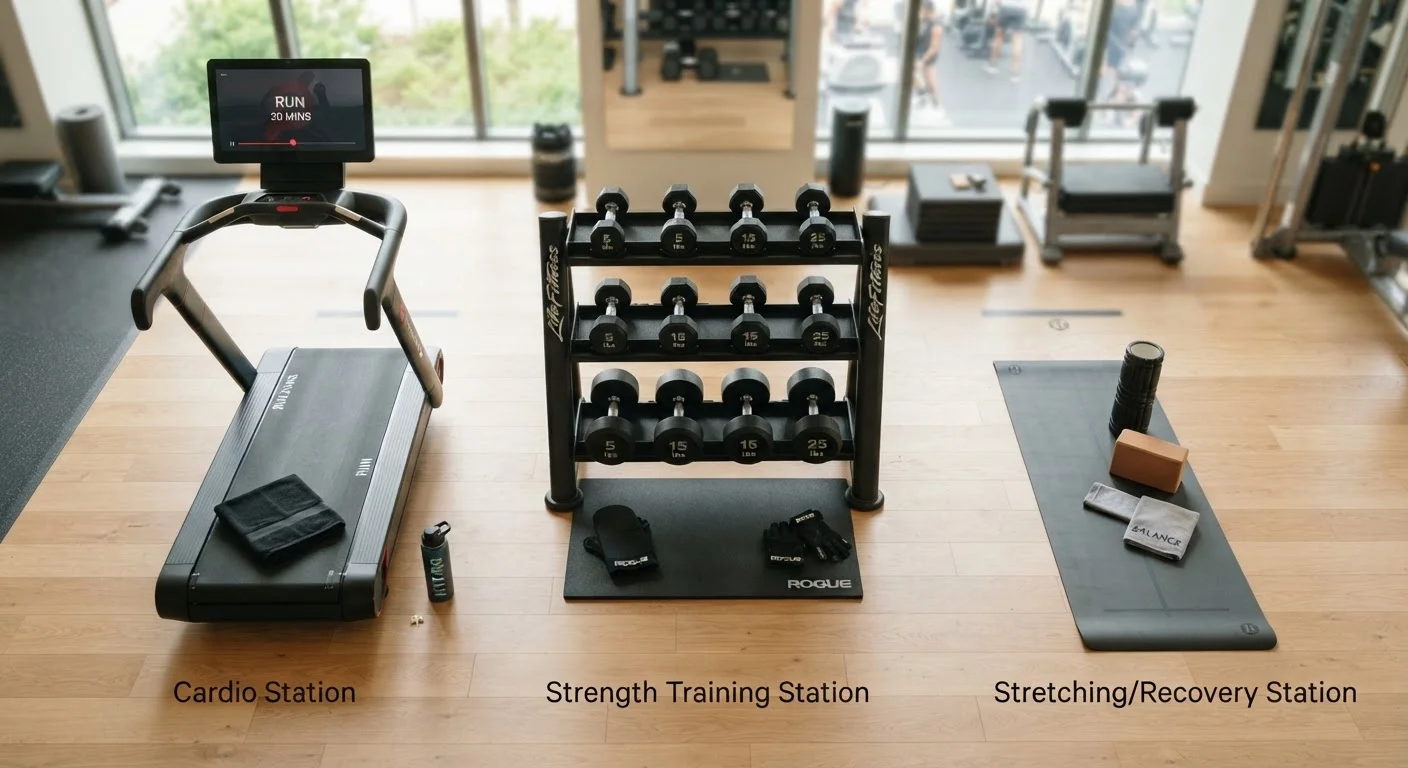

Cardio: Training Your Heart and Lungs
Cardiovascular exercise — often called cardio or aerobic exercise — is any sustained activity that raises your heart rate and keeps it elevated for an extended period. Walking, running, cycling, swimming, and rowing all qualify. The defining feature is that your body is using oxygen continuously to produce energy.
When you do cardio regularly, your heart becomes more efficient at pumping blood, your lungs improve their capacity to deliver oxygen to working muscles, and your blood vessels adapt to handle increased flow. Over time, this lowers resting heart rate, reduces blood pressure, and improves what exercise scientists call VO2 max — a measure of cardiovascular fitness. Cardio is also the category most directly linked to reduced risk of heart disease, type 2 diabetes, and metabolic syndrome.
For a deeper look at how cardio compares to other approaches, see how cardio and strength training differ.
150 min
Weekly moderate cardio recommended for adults
According to the U.S. Department of Health and Human Services Physical Activity Guidelines for Americans.
2x/week
Minimum recommended strength training frequency
The same federal guidelines recommend muscle-strengthening activities on at least two days per week for adults.
~1% per year
Rate of muscle mass decline without resistance training after age 30
Research on sarcopenia — age-related muscle loss — estimates this gradual decline begins in the third decade of life.
Strength Training: Building Muscle and Bones
Strength training — also called resistance training — involves challenging your muscles against an opposing force, whether that's free weights, machines, resistance bands, or your own bodyweight. The goal is to create enough muscular stress that your body rebuilds the tissue stronger than before.
Regular resistance training increases muscle mass and improves muscular endurance. It also plays a critical role in bone health: the mechanical stress of lifting stimulates bone remodeling, which can help maintain or improve bone density. This makes strength work particularly important for adults concerned about osteoporosis risk. Beyond that, more muscle mass raises your resting metabolic rate — meaning you burn slightly more energy at rest — which has implications for body composition over time.
Strength training also connects directly to functional capacity — your ability to carry groceries, climb stairs, and get up off the floor. See why functional fitness matters for daily movement for how this translates into real-life ability.
Flexibility: Maintaining Your Range of Motion
Flexibility training targets the ability of your muscles, tendons, and joints to move through their full intended range of motion. Static stretching (holding a position), dynamic stretching (moving through a range), and practices like yoga and Pilates all fall under this category.
Without regular flexibility work, muscles and connective tissue tend to shorten and stiffen over time — especially in people who sit for long periods. This can alter posture, create movement compensations that lead to injury, and reduce performance in other exercise types. Consistent flexibility training counters these effects by improving tissue extensibility and joint mobility.
It's worth noting that flexibility training is the category most often skipped in gym-focused routines. But its benefits extend well beyond feeling limber — adequate range of motion in the hips, shoulders, and thoracic spine directly affects how safely and effectively you can lift, run, and move. The three pillars of fitness framework explains why flexibility belongs alongside cardio and strength from the very start.
Balance: Training Your Nervous System
Balance training is the least familiar of the four categories, but it addresses something the other three don't directly target: the coordination between your nervous system, inner ear, and muscles that keeps you upright and stable. Single-leg stands, stability ball exercises, and movements that challenge your center of gravity all train balance.
This type of training works by improving proprioception — your body's sense of where it is in space — and strengthening the small stabilizing muscles around your joints. The result is better coordination, quicker reactive responses, and reduced fall risk. Balance declines gradually with age, which is why it becomes an especially high-priority component for adults over 50, though people of all ages benefit from including it.
Easy Ways to Add Balance Practice
You don't need special equipment to train balance. Try standing on one foot while brushing your teeth, or doing a single-leg stand while waiting for coffee to brew. These brief, low-effort moments add meaningful stimulus to your neuromuscular system over time without requiring extra gym time.
Because balance training doesn't look like traditional exercise, it often gets overlooked. But its protective value — particularly for knees, ankles, and hips — makes it worth including even in short, simple sessions.
Why Most Routines Benefit From All Four
Each workout type creates different adaptations, and the adaptations don't fully substitute for one another. A runner who never strength trains may struggle with muscle imbalances. A regular weightlifter who skips flexibility work may develop tightness that limits performance or leads to injury. Someone who does everything else but ignores balance may be at higher risk of falls or ankle sprains.
The good news is that you don't need four separate daily workouts. Many activities naturally combine categories — a yoga session covers flexibility and balance; a kettlebell circuit blends strength and cardio. The aim is to make sure each category gets meaningful attention across your week. See how to structure a balanced weekly routine for practical guidance on putting it together.
For those curious about what happens when you specialize too narrowly, single-modality training research offers a useful perspective. And if you want a quick reference for specific formats within each category, exercise formats across the fitness spectrum breaks them all down in plain language.
This article is for general informational purposes only and is not a substitute for professional medical or fitness advice. Consult a qualified healthcare provider before beginning any new exercise program, especially if you have existing health conditions.