Why the Breath Is the Perfect Starting Point
Of all the tools in the mindfulness toolkit, the breath is uniquely reliable. It's always with you, it costs nothing, and it responds to your attention almost immediately. If you're new to mindfulness — or skeptical it's even for you — our beginner's mindfulness guide offers helpful context before you dive in here.
When you consciously slow and deepen your breathing, you engage the parasympathetic nervous system — the branch responsible for rest and recovery. Research published in clinical literature on stress physiology shows that slow, diaphragmatic breathing (breathing from the belly rather than the chest) can reduce physiological markers of stress, including heart rate and cortisol levels. That said, individual responses vary, and breathing exercises are a supportive wellness practice, not a medical treatment.
Breath awareness also builds a foundational skill: noticing. Each time you check in with your breath, you're practicing the same present-moment attention that underlies all mindfulness work. For a plain-language overview of the core concepts you'll encounter, the mindfulness glossary for beginners is a useful companion.
Short Sessions Count Just as Much
Research on habit formation suggests that frequency — not duration — is what builds a lasting routine. Even a consistent two-minute daily breathing practice creates a stronger foundation than an occasional twenty-minute session. Start where you can, and let the practice grow naturally over time.
What You'll Need Before You Begin
The requirements are minimal, but a little preparation helps the habit stick. Review the list below, then read through the steps fully before starting your first session.
What you will need
If you want a broader checklist for setting yourself up before a regular meditation routine, see our guide on preparing for your first meditation practice.
How to Practice: Step-by-Step
Follow these steps at your own pace. There is no perfect performance here — the goal is simply to practice returning your attention to your breath, again and again.
Find a Comfortable, Upright Position
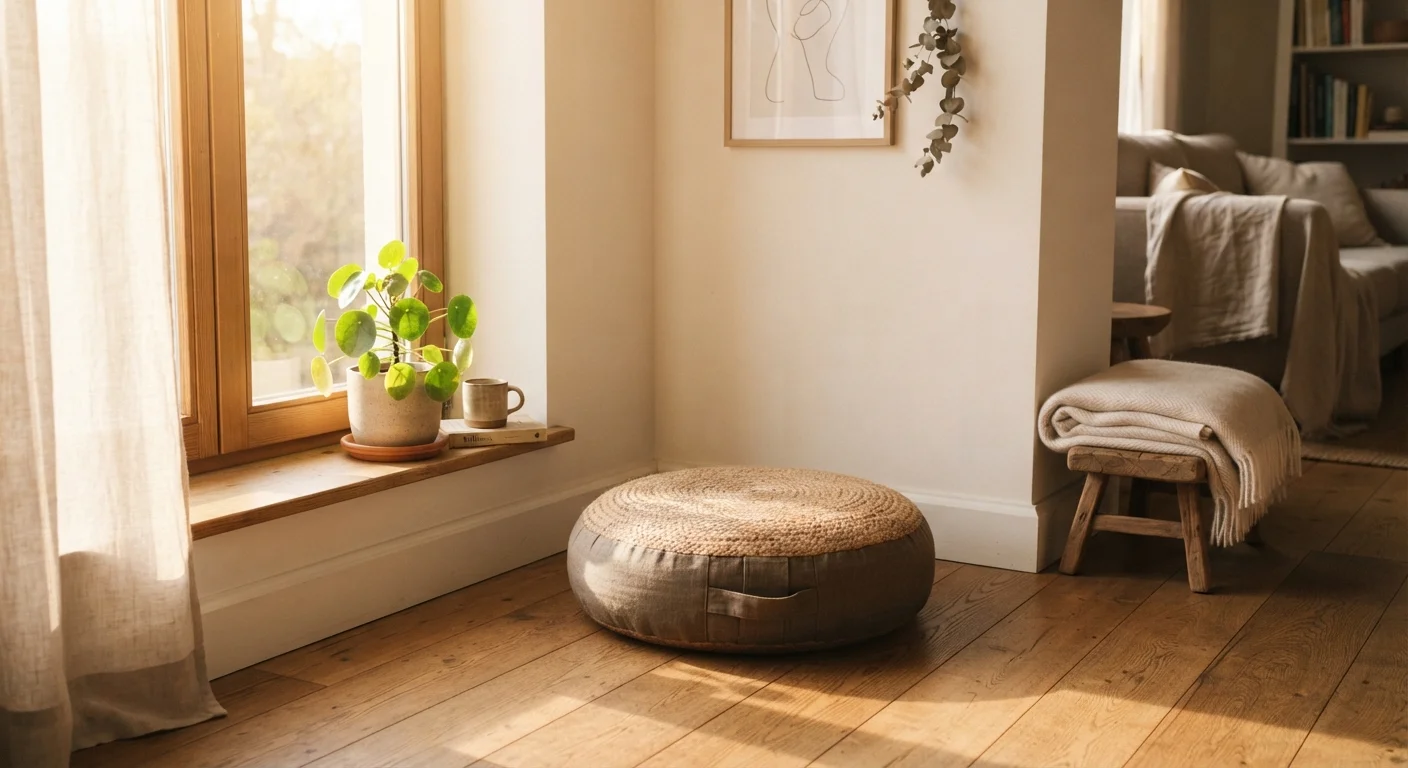
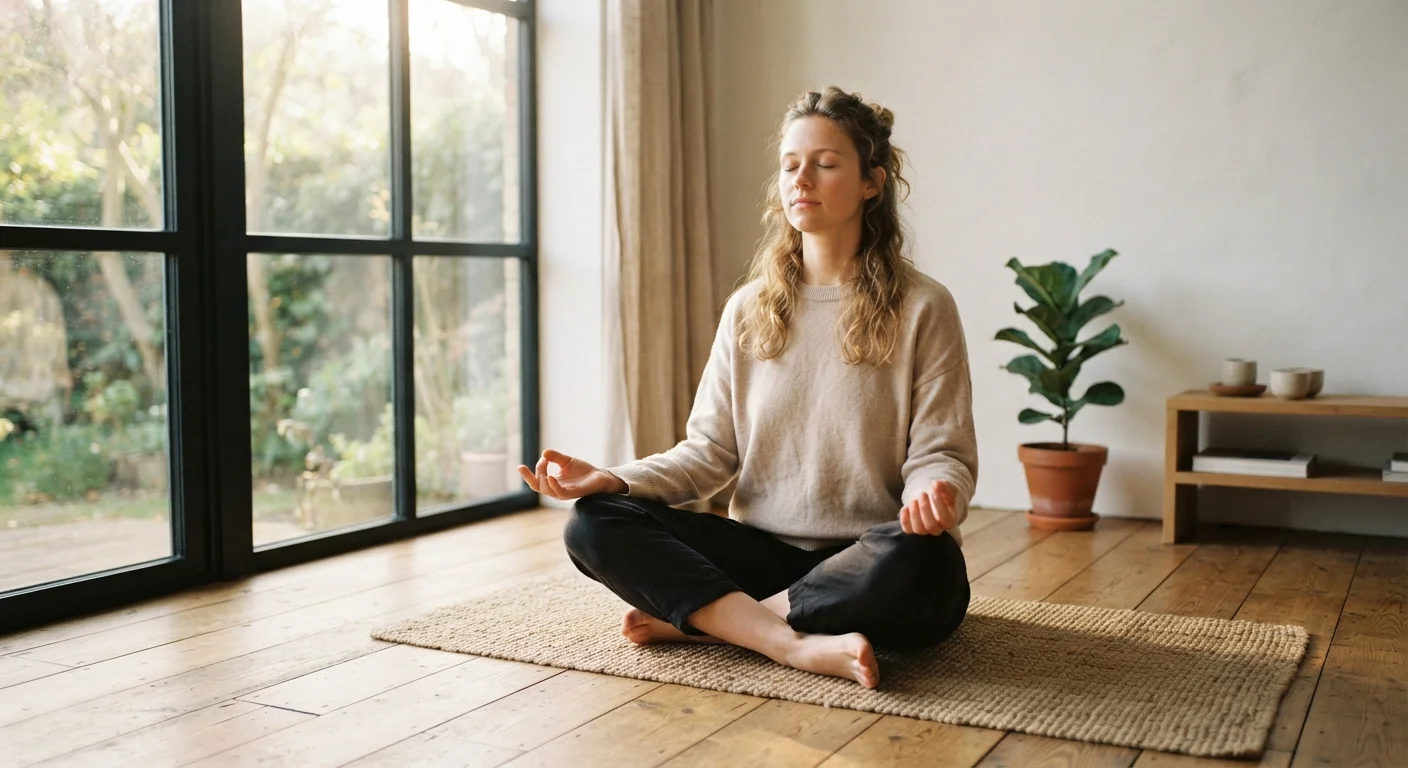
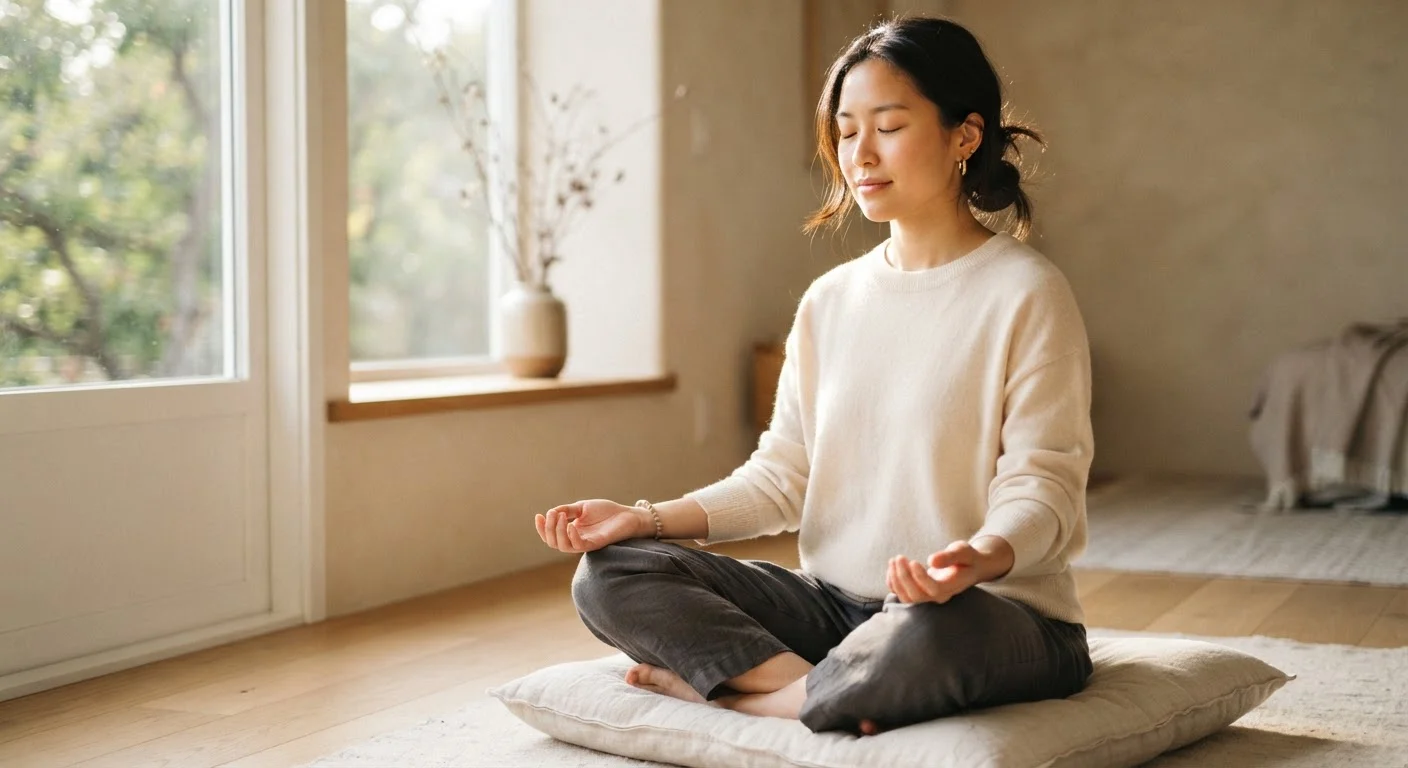
Sit in a chair with your feet flat on the floor, or cross-legged on a cushion — whichever feels stable. Rest your hands lightly on your thighs. Sit upright but not rigid; imagine a gentle lift through the crown of your head. A relaxed, alert posture keeps you engaged without causing tension.
Set a Gentle Time Intention
Decide on a duration before you start — two minutes for a first attempt, five minutes once you're comfortable. Use a silent timer on your phone so you're not tempted to check the clock. Starting small removes pressure and makes it easier to return tomorrow.
Close Your Eyes and Notice Your Natural Breath
Gently close your eyes, or soften your gaze downward. Don't try to change your breathing yet — simply observe it. Notice where you feel it most clearly: the rise and fall of your chest, the expansion of your belly, or the sensation of air passing through your nostrils. There is no wrong answer.
Shift to Slow, Diaphragmatic Breathing
Place one hand on your belly. Inhale slowly through your nose, allowing your belly to expand outward — your hand should rise. Exhale slowly through your nose or mouth, letting the belly fall. Aim for a smooth, unhurried rhythm. A common starting point is a four-count inhale and a four- to six-count exhale, but follow what feels natural rather than forcing a count.
Notice When Your Mind Wanders — and Return
Your attention will drift to thoughts, sounds, or to-do lists. This is completely normal and not a sign of failure. The moment you notice your mind has wandered, gently redirect your attention back to the sensation of breathing. That act of noticing and returning is the practice — it's the mental equivalent of a rep at the gym.
Close the Session Intentionally
When your timer ends, resist the urge to jump up immediately. Take one or two natural breaths, then gently open your eyes and allow your gaze to rest softly on the space in front of you for a moment. Notice how you feel compared to when you began. This brief transition anchors the experience and signals to your mind that the session is complete.
For a deeper look at how this kind of practice connects to stress relief, the science of mindfulness for stress explains the research in plain language.
Carrying the Practice Into Daily Life
A formal breathing session is valuable, but the real benefit comes when you weave brief check-ins throughout your day. Try pausing for three slow breaths before opening your email in the morning, after a tense meeting, or while waiting in line. These micro-practices reinforce the neural pathways you're building during longer sessions.
If you miss a day — or several — simply begin again without judgment. Consistency over time matters far more than perfection in any single session. Many people find it helpful to tie a breathing pause to an existing routine: morning coffee, the commute, or transitioning between work tasks.
This article is for general informational and educational purposes only and is not a substitute for professional medical advice, diagnosis, or treatment. If you experience significant anxiety, shortness of breath, or other health concerns, please consult a qualified healthcare provider.