Why Background Anxiety Lingers Into the Evening
Background anxiety — that low-level hum of tension that persists even when nothing specific is wrong — is partly a nervous system regulation problem. Throughout the day, your brain's threat-detection machinery (the sympathetic nervous system) accumulates activation. Without a clear, consistent transition signal, it simply stays elevated into the night.
Behavioral science calls this hyperarousal: a state in which the brain remains vigilant even when vigilance is no longer needed. Sleep researchers have linked chronic evening hyperarousal to both difficulty falling asleep and poor sleep quality — which then feeds next-day anxiety in a reinforcing cycle.
A structured wind-down routine works by creating reliable, repeated cues that the brain learns to associate with safety. Over time, those cues don't just relax you — they actually begin to down-regulate stress hormones like cortisol as a conditioned response. For a deeper look at the physiology behind this transition, see how to signal your body that the day is done.
This Is General Information, Not Medical Advice
The strategies in this article are general wellness practices supported by behavioral research. They are not a substitute for professional mental health care. If anxiety is significantly disrupting your daily life, sleep, or relationships, please speak with a qualified healthcare provider or licensed therapist.
What to Do and When: Your Wind-Down Framework
The steps below are designed to be modular — you don't need all of them on every night. What matters most is that you repeat the same general sequence at the same time consistently. Think of it less as a rigid protocol and more as a flexible template you gradually make your own.
Set a consistent wind-down start time
Choose a time — ideally 60 to 90 minutes before your target sleep time — and treat it as a non-negotiable transition point. Set a phone reminder if needed. Your nervous system responds powerfully to temporal cues (predictable, time-based signals), so consistent timing alone begins to lower arousal over days and weeks.
Dim the lights and reduce screen brightness
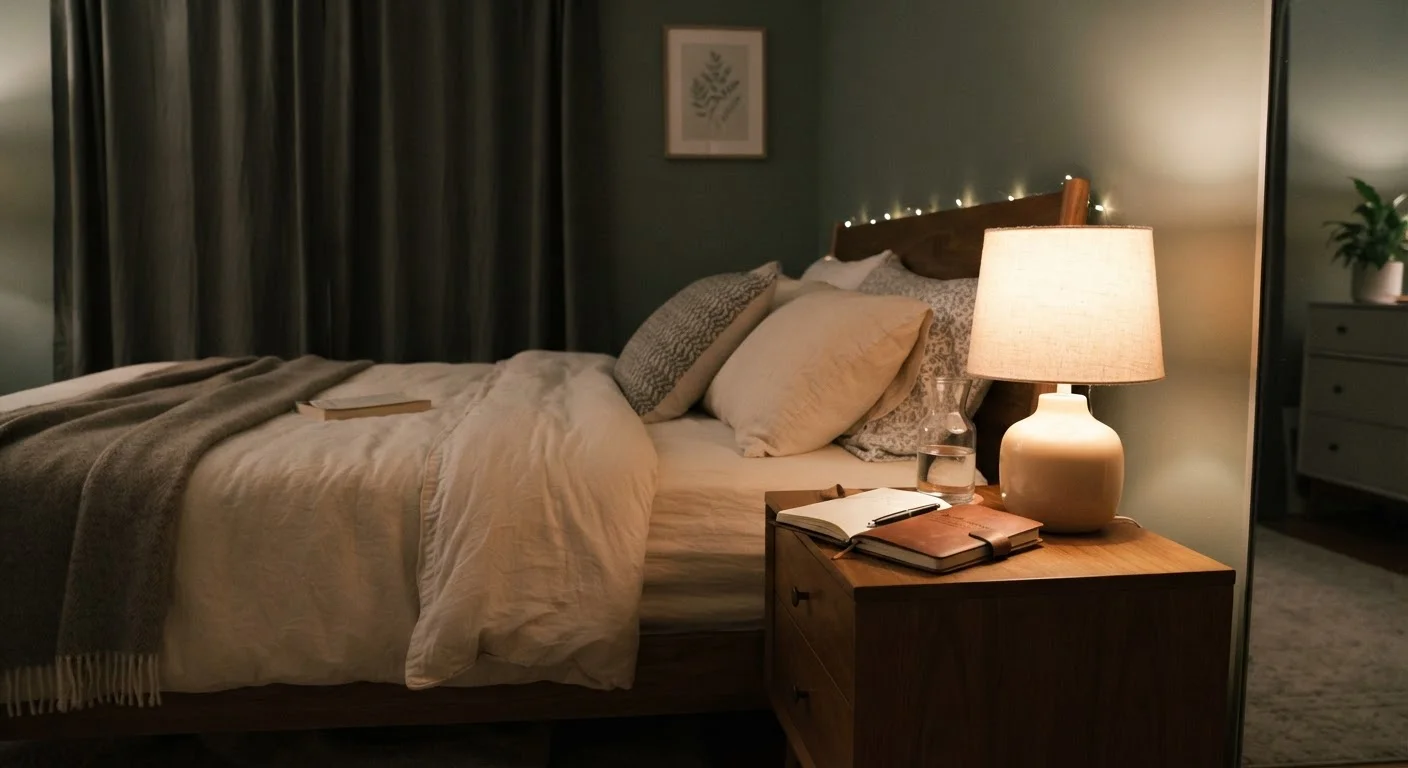
Bright overhead lighting and blue-spectrum screens suppress melatonin and keep the brain in a high-alert state. Around your wind-down start time, switch to lamps, warm-toned bulbs, or candlelight. Enable night mode on devices or, better still, put screens away entirely. This single environmental shift measurably reduces physiological arousal for most people.
Do a brief 'worry offload' in writing
Spend five minutes writing down any unresolved concerns, tomorrow's tasks, or lingering mental loops. Research on cognitive offloading — the process of externalizing thoughts onto paper — suggests this frees working memory and reduces the rumination that keeps background anxiety active at night. Keep a dedicated notebook by your bed for this purpose.
Engage in a calming body-based practice
Choose one gentle, low-stimulation physical activity: slow stretching, a brief walk, progressive muscle relaxation (tensing and releasing muscle groups sequentially), or a structured breathing exercise. These practices activate the parasympathetic nervous system — the body's rest-and-digest mode — and counteract the cortisol (a stress hormone) elevated by a long day. Even five to ten minutes produces a measurable shift. See evidence-supported breathing techniques for specific methods.
Close with a sensory comfort ritual
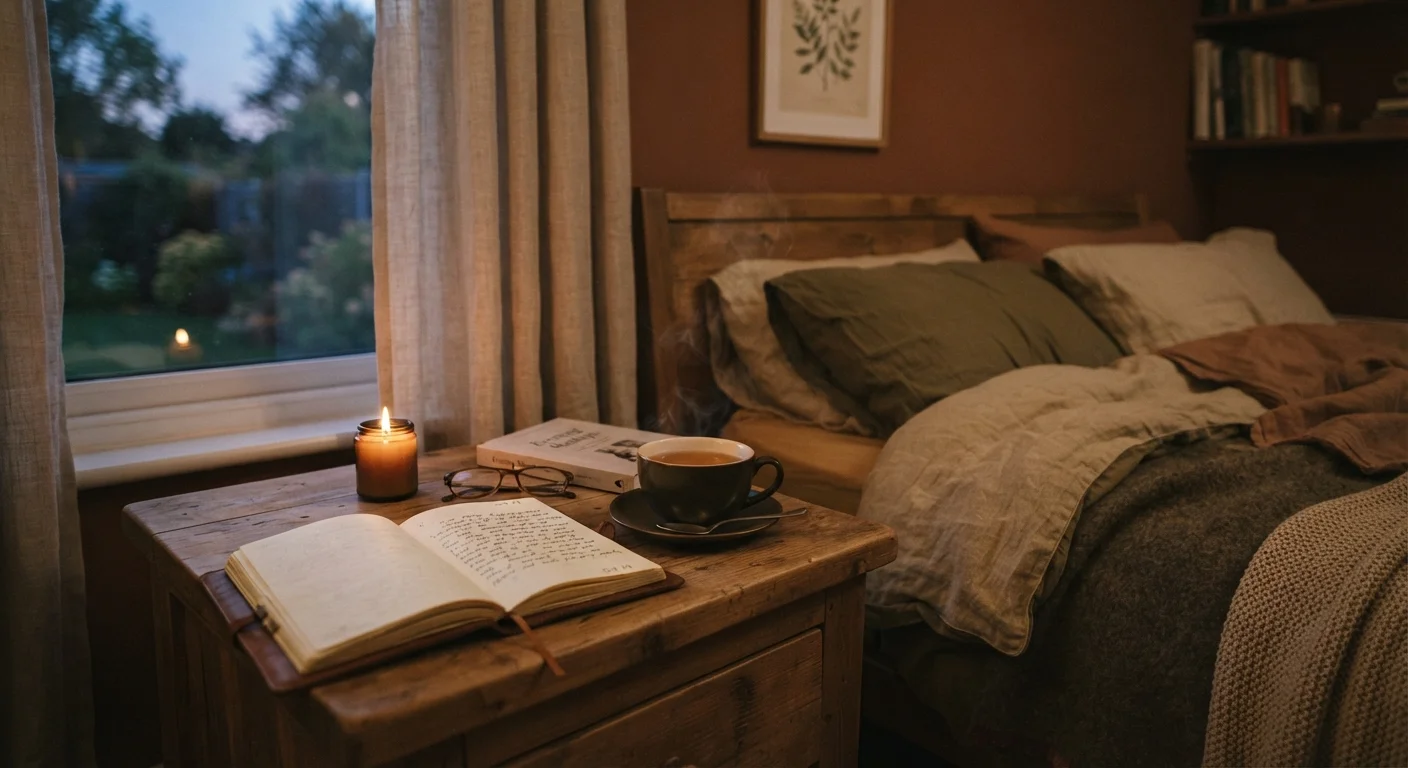
End your routine with something that engages the senses pleasantly and requires no decisions: a warm shower, herbal tea, reading a physical book, or quiet music. The goal is to create a reliable anchor cue — a stimulus your brain pairs with safety and impending sleep. Over time, this cue alone can trigger a relaxation response before you've even gotten into bed.
Start With Just One New Habit
Trying to overhaul your entire evening at once often backfires. Research on habit formation suggests anchoring one new behavior to something you already do every night — like brushing your teeth — before adding another. Give each addition at least a week before layering on the next.
Once you've established this routine, you may want to pair it with a broader look at your evening habits. The pre-bed routine audit is a useful companion checklist for identifying other factors — room temperature, caffeine timing, and more — that may be keeping your nervous system activated. For additional relaxation techniques to weave into step four, evidence-informed relaxation techniques for the hour before bed offers a curated overview of methods with solid research behind them.
If you're also working on managing anxiety during the day, consider how your evening routine fits within a larger structure. A daily stress management routine can help make both daytime and evening practices mutually reinforcing rather than isolated efforts.
This article is for general informational purposes only and does not constitute medical or psychological advice. If you are experiencing persistent or severe anxiety, please consult a licensed mental health professional.