What Mindfulness Actually Means
Mindfulness gets thrown around a lot — in wellness apps, corporate newsletters, and therapy offices alike. But the core idea is straightforward: mindfulness means paying attention to what is happening right now, on purpose, without judging it.
That definition comes largely from the work of Jon Kabat-Zinn, the researcher who adapted contemplative Buddhist practices into a clinical framework in the late 1970s. His MBSR program put mindfulness on the research map and established the vocabulary still used today.
Crucially, mindfulness is not about emptying your mind, achieving relaxation, or stopping thoughts. It is about changing your relationship to thoughts — observing them as passing events rather than facts you must act on. For a deeper look at the terminology you'll encounter, see our plain-language glossary of mindfulness terms.
Mindfulness
The practice of intentionally paying attention to the present moment — thoughts, feelings, and sensations — with openness and without judgment.
Stress Response
The body's automatic reaction to a perceived threat, releasing hormones like cortisol and adrenaline that prepare you to act — commonly called 'fight or flight.'
Body Scan
A mindfulness exercise where you slowly move your attention through different parts of the body, noticing any sensations without trying to change them.
Breath Awareness
The practice of using the breath as an anchor for attention, noticing the physical sensations of each inhale and exhale without controlling them.
Non-judgment
A core mindfulness attitude of observing thoughts and feelings as they are, without labeling them as good or bad or trying to push them away.
MBSR
Mindfulness-Based Stress Reduction — a structured eight-week program developed by Jon Kabat-Zinn that uses meditation and yoga to help manage stress and pain.
What the Research Says About Stress
The evidence base for mindfulness and stress is substantial — and growing. A landmark meta-analysis published in JAMA Internal Medicine found that mindfulness meditation programs produced moderate improvements in anxiety, depression, and pain. More specifically related to stress, research consistently shows that regular mindfulness practice is associated with lower levels of cortisol, the primary stress hormone.
The proposed mechanism: mindfulness activates the parasympathetic nervous system — the branch responsible for rest and recovery — while dampening the amygdala's reactivity to perceived threats. Over time, practitioners appear to develop a greater capacity to pause between a stressor and their response to it, rather than reacting automatically.
It is worth being honest about the limits of the evidence too. Study quality varies, effect sizes differ across populations, and mindfulness is not a cure-all. For a clear-eyed look at what studies actually support, our article on the science behind mindfulness separates what's well-established from what's still emerging.
Core Practices for Beginners
You don't need a meditation cushion, an app, or a quiet mountain retreat to get started. Most beginner-friendly practices require nothing but a few minutes and your own attention.
Breath Awareness
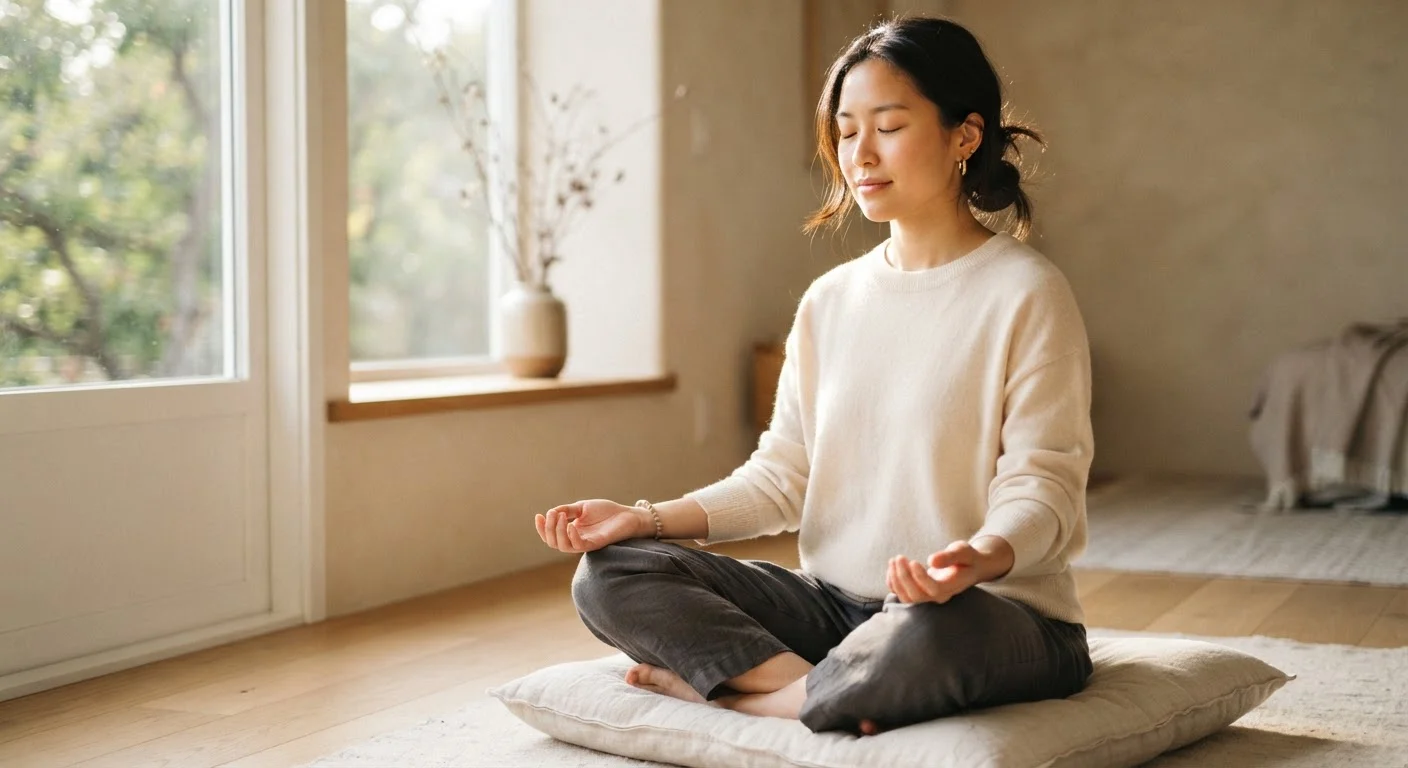
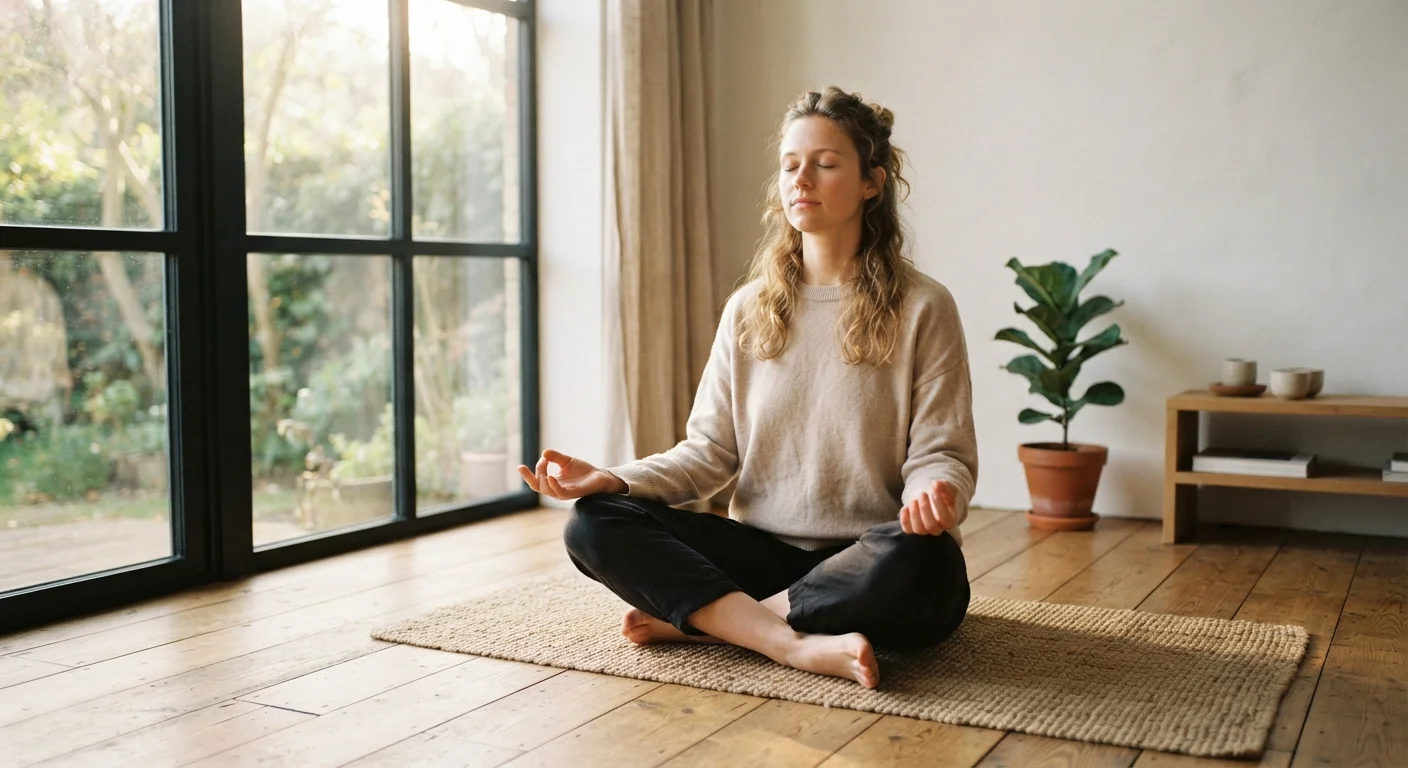
Sit comfortably, close your eyes if you'd like, and notice the physical sensations of breathing — the rise of your chest, the air entering your nostrils, the pause between inhale and exhale. When your mind wanders (and it will), simply notice that it has, and gently return your attention to the breath. That act of returning is the practice. Our starter's guide to breath awareness walks through this in more detail.
Body Scan
Lie down or sit comfortably. Slowly move your attention from your feet to the top of your head, noticing sensations in each area without trying to change anything. This practice is particularly useful for recognizing where you hold physical tension — a direct signal of accumulated stress.
Mindful Daily Activities
Brushing your teeth, washing dishes, or walking between rooms can all become informal mindfulness practice. The task: bring full, curious attention to the sensory experience of the activity, rather than running through your mental to-do list.
Start With Just Two Minutes
Research on habit formation suggests that starting smaller than you think you need to dramatically improves long-term consistency. Set a timer for two minutes, focus on your breath, and call it a win. Expand the duration only when two minutes feels effortless.
Building a Consistent Habit
Consistency matters more than session length. A small daily practice builds neural pathways and familiarity in a way that occasional longer sessions simply can't match. Research on habit formation supports anchoring new behaviors to existing routines — for example, practicing breath awareness immediately after your morning coffee or before bed.
If you want a structured path forward, our 30-day mindfulness framework provides a week-by-week progression designed specifically for beginners with no prior experience.
Pairing mindfulness with stress awareness skills creates a particularly powerful combination: you learn to recognize when stress is building, and you have a practiced tool ready to respond with.
Common Beginner Challenges
Nearly everyone finds mindfulness uncomfortable at first. Restlessness, boredom, frustration, and a mind that simply will not stay put are not signs you're doing it wrong — they are completely normal features of early practice.
The most common misconception is that a wandering mind means failure. In fact, the moment you notice your mind has wandered is a moment of mindfulness. Each return to the present is a small mental repetition, like a curl for your attention muscle.
If you feel like mindfulness just isn't clicking, our article on why mindfulness feels so hard at first explains exactly what's happening neurologically and psychologically — and why continuing is worth it. For those who prefer an even more skeptic-friendly entry point, Mindfulness From Scratch is a no-fluff alternative starting place.
This Is General Information, Not Medical Advice
The content in this article is intended for educational purposes only. Mindfulness is not a substitute for professional mental health treatment. If stress is severely impacting your daily life, please reach out to a qualified healthcare provider who can guide you based on your individual needs.
This article is for informational purposes only and does not constitute medical advice. Please consult a qualified healthcare professional for guidance specific to your health needs.