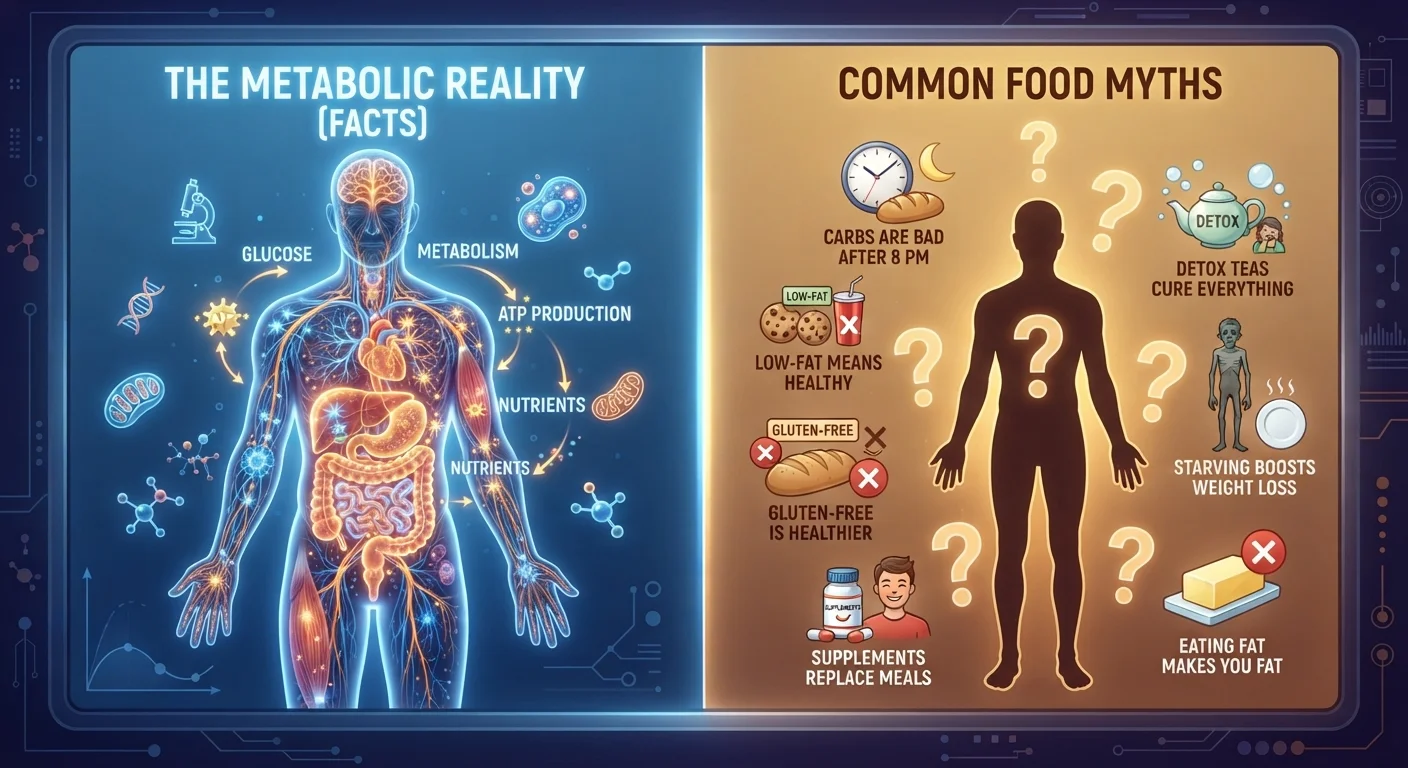

Why Nutrition Myths Stick Around
Nutrition advice travels fast — through social feeds, workplace conversations, and family dinner tables. The problem is that well-meaning guidance often gets repeated long after researchers have moved on. Many common beliefs about healthy eating are rooted in a grain of truth that got stretched, oversimplified, or taken wildly out of context.
Understanding where these ideas go wrong doesn't require a biology degree. It just takes a closer look at what the evidence actually says versus what has become accepted wisdom by repetition. The myth-and-fact pairs below address some of the most widespread misunderstandings in everyday American nutrition — and they're worth knowing if you're trying to make genuinely informed choices about what you eat.
For a related look at how misconceptions extend beyond the plate, see metabolism myths that lead people astray.
Myth
Detox cleanses flush toxins out of your body and give your system a fresh start.
Fact
The body has a built-in detoxification system — primarily the liver and kidneys — that operates continuously and does not require juice cleanses or fasting protocols to function.
The word "detox" in commercial wellness products is largely a marketing term. There is no peer-reviewed clinical evidence that short-term juice fasts or herbal cleanses remove harmful substances more effectively than the body's own organs already do. The liver filters blood and neutralizes metabolic waste; the kidneys excrete water-soluble waste through urine. Supporting these organs means staying adequately hydrated, limiting alcohol, and eating a varied diet — not purchasing a multi-day cleanse program. If you're curious about hydration's role, common hydration mistakes is a useful companion read.
Myth
Eating after 8 p.m. causes weight gain regardless of what or how much you eat.
Fact
Weight change is driven by total calorie balance over time, not by the clock on the wall. The body does not store extra fat simply because food is consumed in the evening.
This myth likely persists because late-night eating is often associated with high-calorie, low-nutrient snack foods consumed while watching television or scrolling through a phone — behaviors that do correlate with excess intake. But the issue is the extra calories and food quality, not the hour. Research on circadian biology does suggest that very late eating may affect metabolic efficiency in some individuals, but this is distinct from the blanket claim that evening eating causes fat gain. weight management myths examines this and related timing claims in more detail.
Myth
Fat-free or low-fat products are always the healthier choice.
Fact
Removing fat from a food often requires adding sugar, starch, or artificial thickeners to restore palatability — meaning the reduced-fat version is not automatically more nutritious.
The low-fat movement of the 1980s and 1990s led to a widespread belief that dietary fat itself was the primary driver of poor health outcomes. Decades of subsequent research have complicated that picture considerably. Unsaturated fats found in olive oil, nuts, avocados, and fatty fish are associated with cardiovascular benefits in large observational studies. Meanwhile, many fat-free yogurts, dressings, and snack foods contain significantly more added sugar per serving than their full-fat counterparts. Reading the full nutrition label — not just the front-of-package claim — gives a more accurate picture of what you're actually eating.
Myth
Organic produce is significantly more nutritious than conventionally grown fruits and vegetables.
Fact
Most large-scale reviews find no consistent, meaningful difference in the vitamin and mineral content of organic versus conventional produce.
Organic farming standards primarily govern pesticide use, land management, and agricultural practices — not nutritional output. A widely cited systematic review published in the Annals of Internal Medicine found limited evidence that organic foods are significantly more nutritious. Pesticide residue levels on conventional produce sold in the U.S. are regulated by the Environmental Protection Agency, and most residues fall well below levels considered harmful. Choosing organic for environmental or personal preference reasons is entirely reasonable, but expecting a nutritional advantage over conventional produce is not well-supported by the current body of evidence.
Myth
Skipping meals is an effective and straightforward way to lose weight.
Fact
Regularly skipping meals can trigger increased hunger, alter appetite-regulating hormones, and often leads to compensatory overeating later in the day.
The logic seems simple: eat less by skipping a meal, consume fewer calories. In practice, the body responds to perceived food scarcity by increasing levels of ghrelin, sometimes called the hunger hormone, which can intensify cravings and reduce the ability to make deliberate food choices. Studies examining meal frequency and weight outcomes have produced mixed results, but sustained skipping of meals is not broadly supported as an effective weight-management strategy for most people. Structured approaches to eating — whether three meals, two meals, or a consistent intermittent eating window — tend to work best when they're deliberate and well-planned rather than reactive. For additional context on body composition myths, see body composition myths.
Putting Accurate Nutrition Knowledge to Work
Correcting these beliefs isn't about being perfect — it's about freeing yourself from rules that don't actually improve health. Once you understand that late-night eating is about calories and food quality rather than a magic cutoff hour, meal planning becomes more flexible. When you know fat-free doesn't mean nutrient-dense, label reading gets more useful. For a deeper dive into how meal timing specifically plays into health, nutrition timing research offers a thorough, evidence-based breakdown.
80%
Americans who believe some nutrition myths
The International Food Information Council's Food and Health Survey has consistently found that a large majority of Americans report confusion about conflicting nutrition information.
~10%
Difference in added sugar in fat-free vs. full-fat products
Nutrition label comparisons frequently show fat-free versions of dairy and dressing products contain notably more added sugars per serving to compensate for removed fat.
No significant difference
Nutrient content: organic vs. conventional produce
A systematic review in the Annals of Internal Medicine found insufficient evidence to conclude that organic foods are meaningfully more nutritious than conventional alternatives.
Sustainable healthy eating tends to share a few consistent traits: an emphasis on minimally processed whole foods, adequate protein, fiber from vegetables and legumes, and flexibility that fits real schedules and budgets. No single food is the enemy, and no single meal makes or breaks your health. If you're curious how macronutrient myths overlap with these themes, common macro myths in fitness culture is worth reading alongside this piece.
As always, individual needs vary widely. Anyone managing a chronic condition, navigating a significant dietary change, or caring for a child, an older adult, or during pregnancy should consult a qualified healthcare professional or registered dietitian for guidance tailored to their situation.
This article is for general informational and educational purposes only and does not constitute medical or dietary advice. Always consult a qualified healthcare provider before making significant changes to your diet or health routine.