
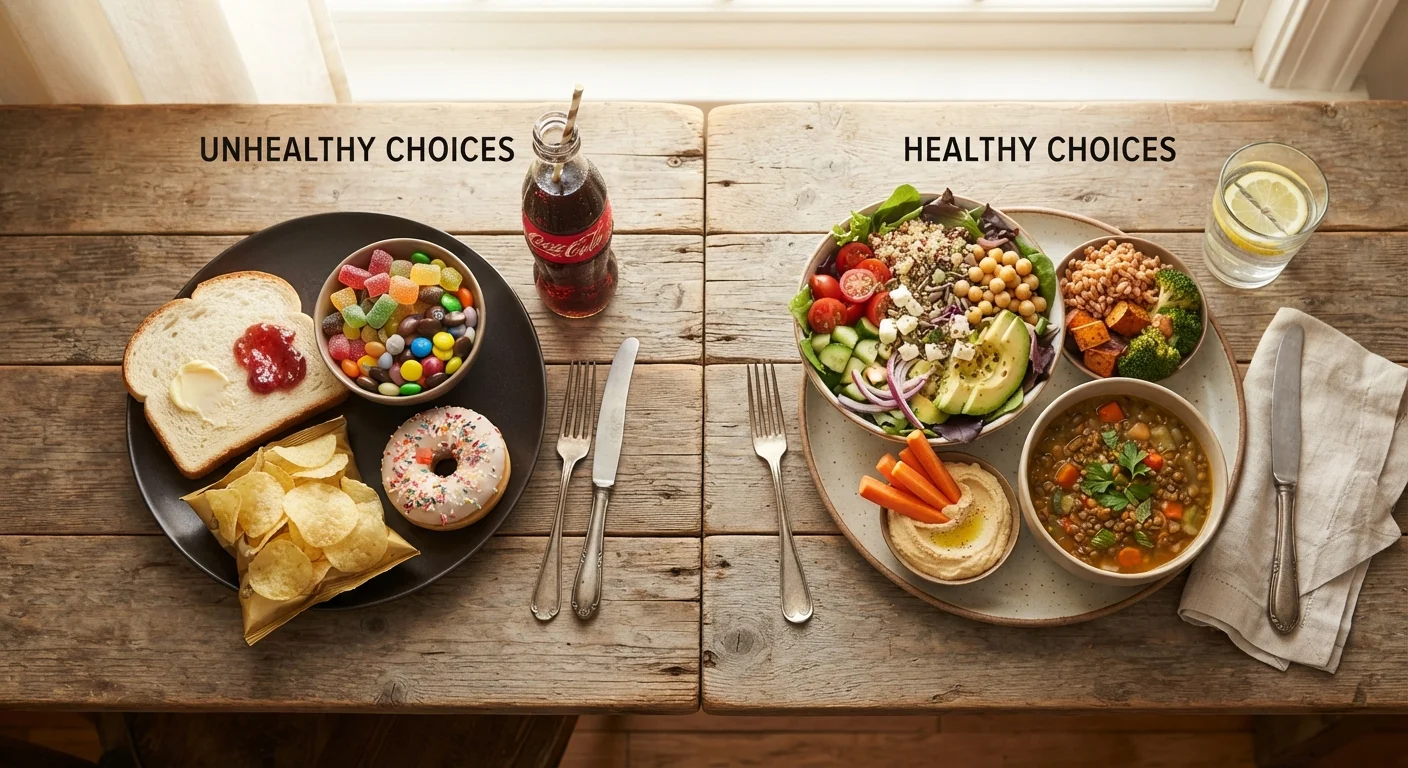
What Makes a Carb Simple or Complex?
All carbohydrates are built from sugar molecules, but their structure determines how fast your body processes them. Simple carbohydrates are made up of just one or two sugar units — glucose, fructose, or sucrose — which means digestion requires very little effort. Complex carbohydrates, by contrast, are long chains of sugar molecules linked together. Your digestive system has to work through that chain step by step, which takes considerably more time.
Think of it like untangling a short piece of string versus a tightly coiled rope. The short string is resolved in seconds; the rope takes real effort. That difference in digestion speed is the central reason these two carb types affect your body so differently. For a broader look at how carbohydrates fit alongside other energy sources, see how your brain and muscles run on carbs.
Where You Find Each Type at Mealtime
Simple carbs appear in table sugar, honey, fruit juice, white bread, soda, and most candy. They also occur naturally in whole fruit and dairy — though those foods come packaged with fiber, protein, or fat that slows absorption. Refined simple carbs stripped of those buffers digest especially rapidly.
Complex carbs are the backbone of foods like oatmeal, brown rice, whole wheat pasta, lentils, beans, sweet potatoes, and most non-starchy vegetables. These foods typically arrive with fiber, which slows digestion further and contributes to fullness. Fiber behaves uniquely among carbohydrates — it resists full digestion entirely and feeds beneficial gut bacteria instead.
| Criterion | Simple Carbs | Complex Carbs |
|---|---|---|
| Molecular structure | 1–2 sugar units | Long chains of sugars |
| Digestion speed | Fast | Slow to moderate |
| Blood sugar impact | Rapid rise and fall | Gradual, steadier rise |
| Satiety (fullness) | Short-lasting | Longer-lasting |
| Typical fiber content | Low (especially refined) | Higher |
| Common food sources | White bread, soda, candy, juice | Oats, beans, whole grains, sweet potato |
| Best timing | Post-exercise recovery | Most main meals and snacks |
How Each Type Affects Your Energy and Hunger
When you eat a simple carb — say, a glass of juice or a handful of gummy candies — blood glucose rises quickly. Your pancreas responds by releasing insulin to shuttle that glucose into cells. The rapid spike is typically followed by an equally rapid drop, which can leave you feeling tired or hungry again sooner than expected.
Complex carbs produce a more gradual glucose response. Because the digestive process is slower, glucose enters the bloodstream at a steadier rate. Insulin still does its job, but without the sharp peaks and valleys. Many people find this translates to feeling more satisfied between meals. Understanding hunger versus appetite can help you recognize whether that between-meal urge is a true physiological signal or something else.
Building Smarter Carb Choices Into Your Day
Swapping refined simple carbs for complex alternatives does not require a complete dietary overhaul. Choosing whole grain bread over white bread, adding lentils or beans to a salad, or swapping white rice for brown rice or quinoa are incremental changes that shift the carbohydrate profile of a meal meaningfully.
It is also worth noting that not every simple carb is problematic in context. Fruit contains simple sugars but delivers fiber, vitamins, and antioxidants. The goal is not to eliminate a category but to understand what each food brings to the table. For a wider look at carbs within your overall eating pattern, see how carbs work alongside protein and fat.
Not All Processed Foods Are Equal
Some foods labeled "whole grain" still contain significant amounts of added sugar or refined flour. Reading the ingredient list — not just the front-of-package claim — gives you a clearer picture of what you are actually eating. Understanding what food labels really mean can help you navigate the grocery aisle with more confidence.
This article is for general informational and educational purposes only and is not a substitute for professional medical or dietary advice. If you have specific health concerns related to blood sugar, weight management, or chronic conditions, please consult a qualified healthcare provider or registered dietitian before making significant dietary changes.