How These Two Minerals Actually Compete
Iron and calcium are both classified as essential minerals — meaning your body cannot produce them and must obtain them through food or supplements. As explained in our overview of how vitamins and minerals function, these micronutrients drive everything from oxygen transport to structural tissue maintenance.
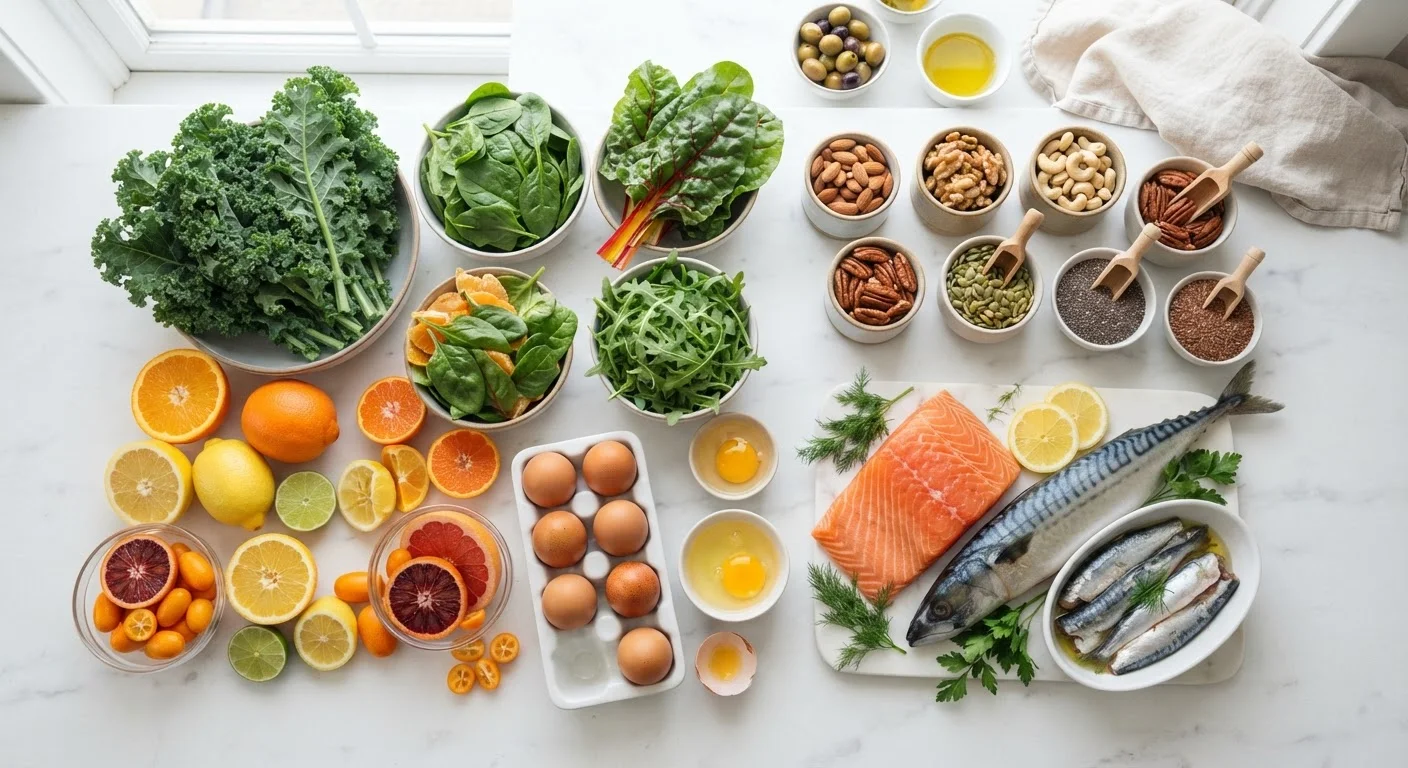
The problem arises in your small intestine, where both minerals are absorbed. Research has shown that calcium interferes with iron uptake at the intestinal wall, likely by competing for shared transport proteins. This effect applies whether the calcium comes from food — dairy, fortified products, leafy greens — or from a supplement.
Studies suggest that a single high-dose calcium intake (around 300–600 mg) consumed at the same time as an iron source can reduce iron absorption by as much as 60% in some conditions. Lower calcium amounts cause less interference, but the effect is still measurable. Importantly, the reverse is generally not true: iron does not significantly impair calcium absorption to the same degree.
| Criterion | Iron | Calcium |
|---|---|---|
| Primary role | Oxygen transport, energy metabolism | Bone structure, muscle and nerve function |
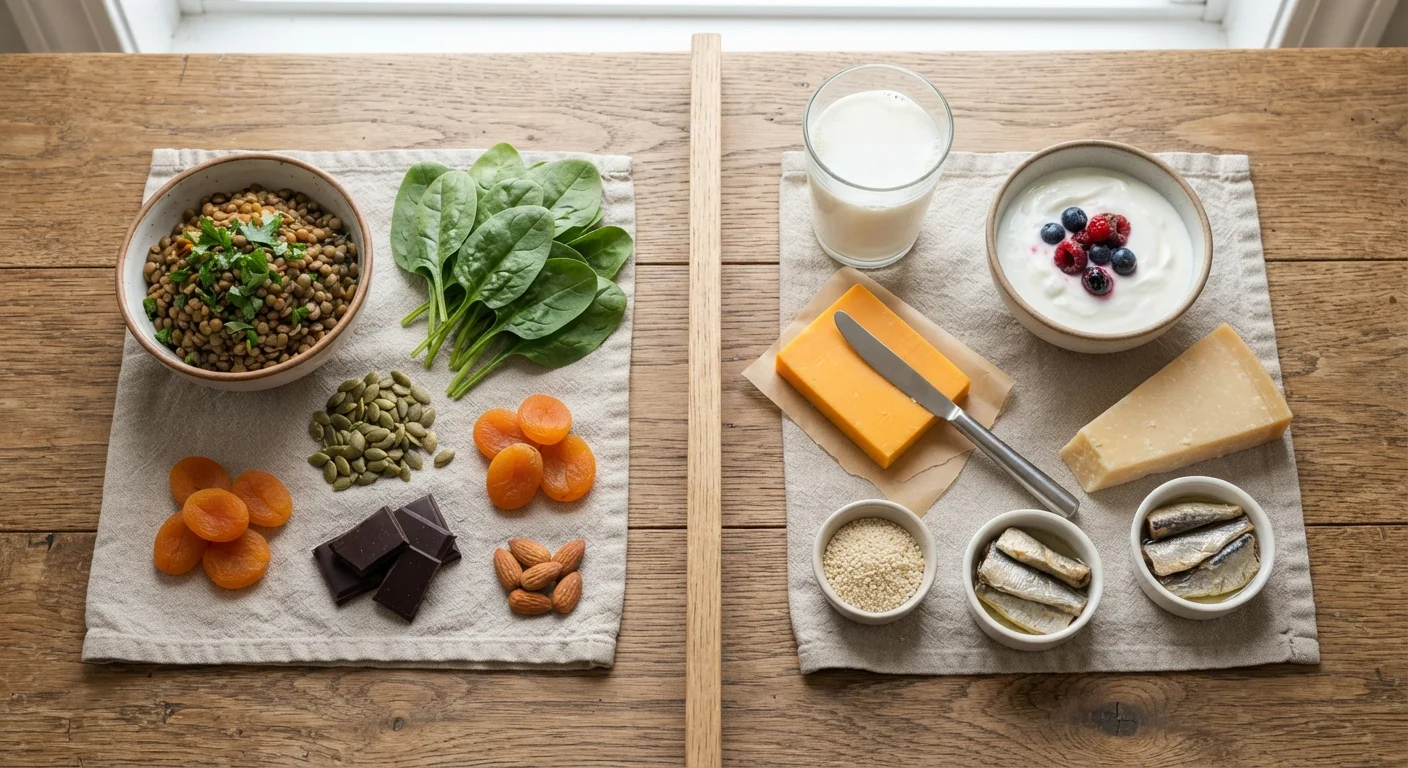
| Main food sources | Red meat, legumes, leafy greens, fortified foods | Dairy, leafy greens, fortified plant milks |
| Absorption site | Small intestine (duodenum) | Small intestine (duodenum) |
| Effect on the other mineral | Minimal effect on calcium absorption | Can reduce iron absorption significantly |
| Most vulnerable form | Non-heme iron (plant-based) | N/A — calcium is not notably inhibited |
| Enhancers | Vitamin C boosts non-heme iron uptake | Vitamin D aids calcium absorption |
| Timing recommendation | Consume separately from high-calcium meals | Spread intake across day in moderate portions |
Which Type of Iron Is More Vulnerable
Not all dietary iron behaves the same way. Heme iron — found in red meat, poultry, and seafood — is absorbed more efficiently by the body and is somewhat less affected by calcium's interference. Non-heme iron — the form found in legumes, spinach, fortified cereals, tofu, and seeds — is more bioavailable than many people assume, but it is also more susceptible to inhibitors like calcium.
For people following plant-based or vegetarian diets, this distinction matters a great deal. Non-heme iron already faces competition from other dietary compounds like phytates (found in whole grains and legumes) and polyphenols (found in tea and coffee). Adding large amounts of calcium to those meals can compound the challenge. Our article on micronutrients from whole food versus fortified products explores how the form of a nutrient affects how well your body can actually use it.
One practical counterweight: pairing non-heme iron sources with vitamin C significantly enhances absorption. A squeeze of lemon on lentils or a glass of orange juice with a bean-based meal can partially offset calcium-related losses.
Simple Timing Strategies That Help
The most actionable insight from the research is straightforward: space your iron and calcium intake apart. A gap of roughly two hours between consuming significant amounts of each mineral appears sufficient to allow iron absorption to proceed without major interference.
In practice, this might look like:
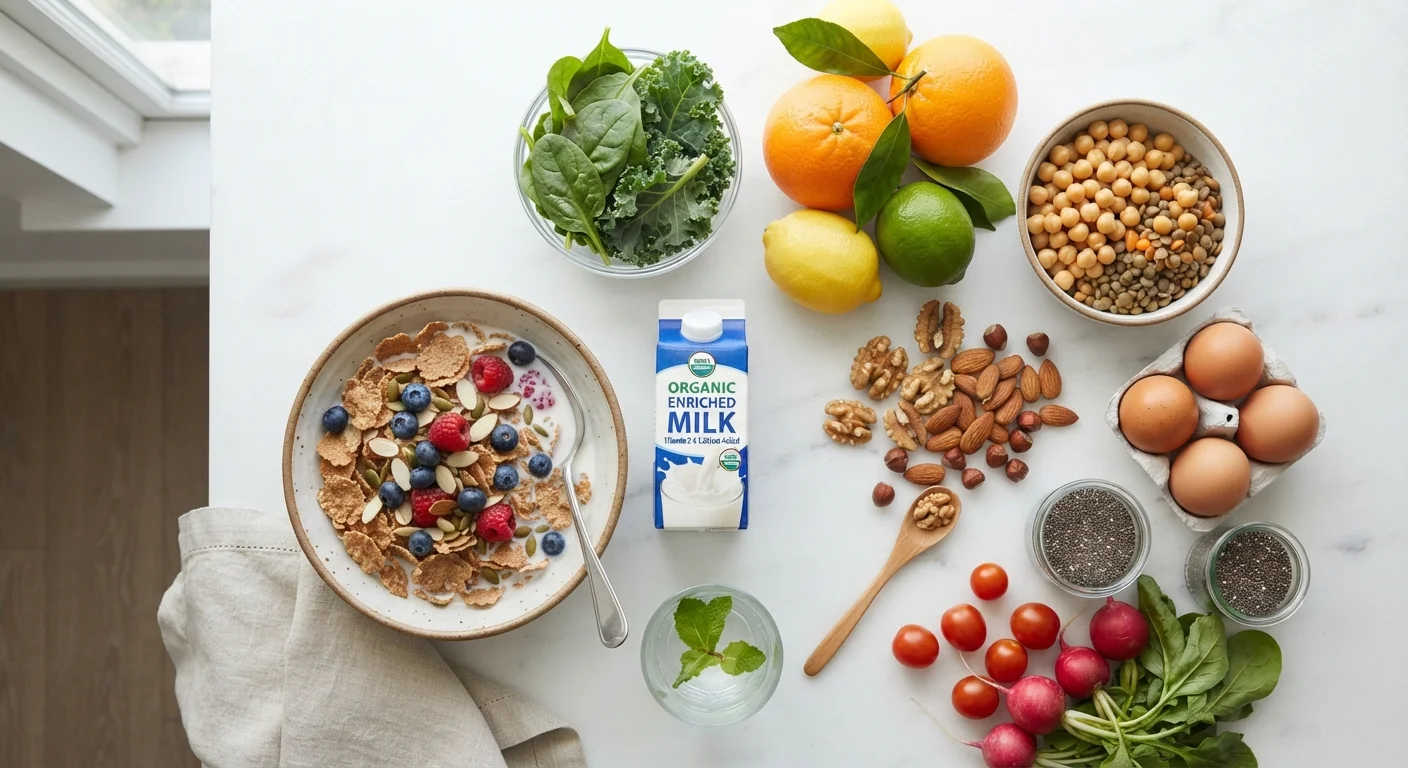
- Eating your calcium-rich breakfast (yogurt, milk, fortified cereal) and saving iron-rich foods (eggs, legumes, leafy greens with vitamin C) for lunch.
- Taking a calcium supplement in the evening if you take an iron supplement in the morning.
- Avoiding large dairy servings alongside your main iron-containing meal of the day.
If you take a multivitamin that contains both minerals, the doses involved are typically modest enough that the interaction is less pronounced — but people with diagnosed iron deficiency or those managing conditions that affect absorption should discuss supplement timing with a registered dietitian or physician.
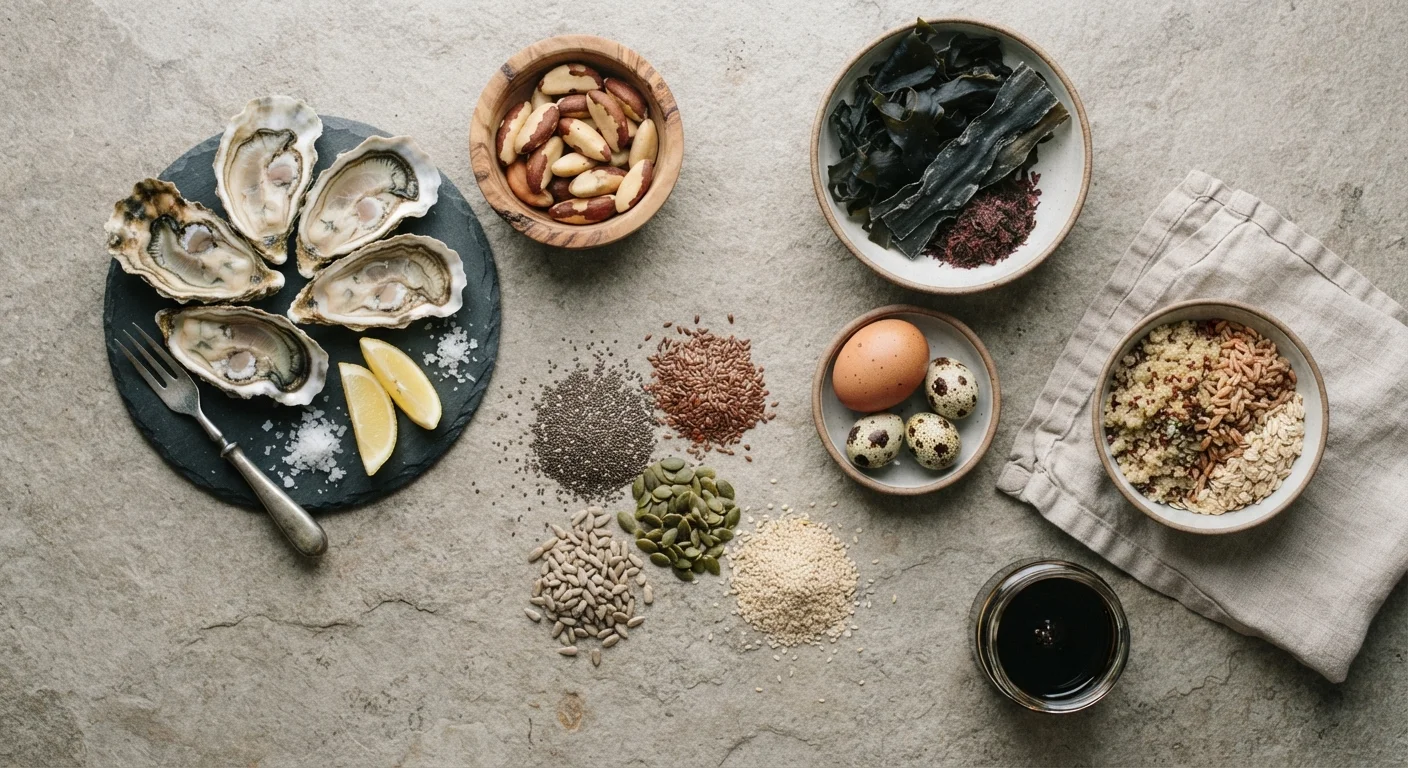
For a broader picture of other trace minerals that often fly under the radar, see our guide on zinc, selenium, and iodine.
This article is for general informational purposes only and does not constitute medical or dietary advice. If you have concerns about your iron or calcium status, please consult a qualified healthcare professional before making changes to your diet or supplement routine.