
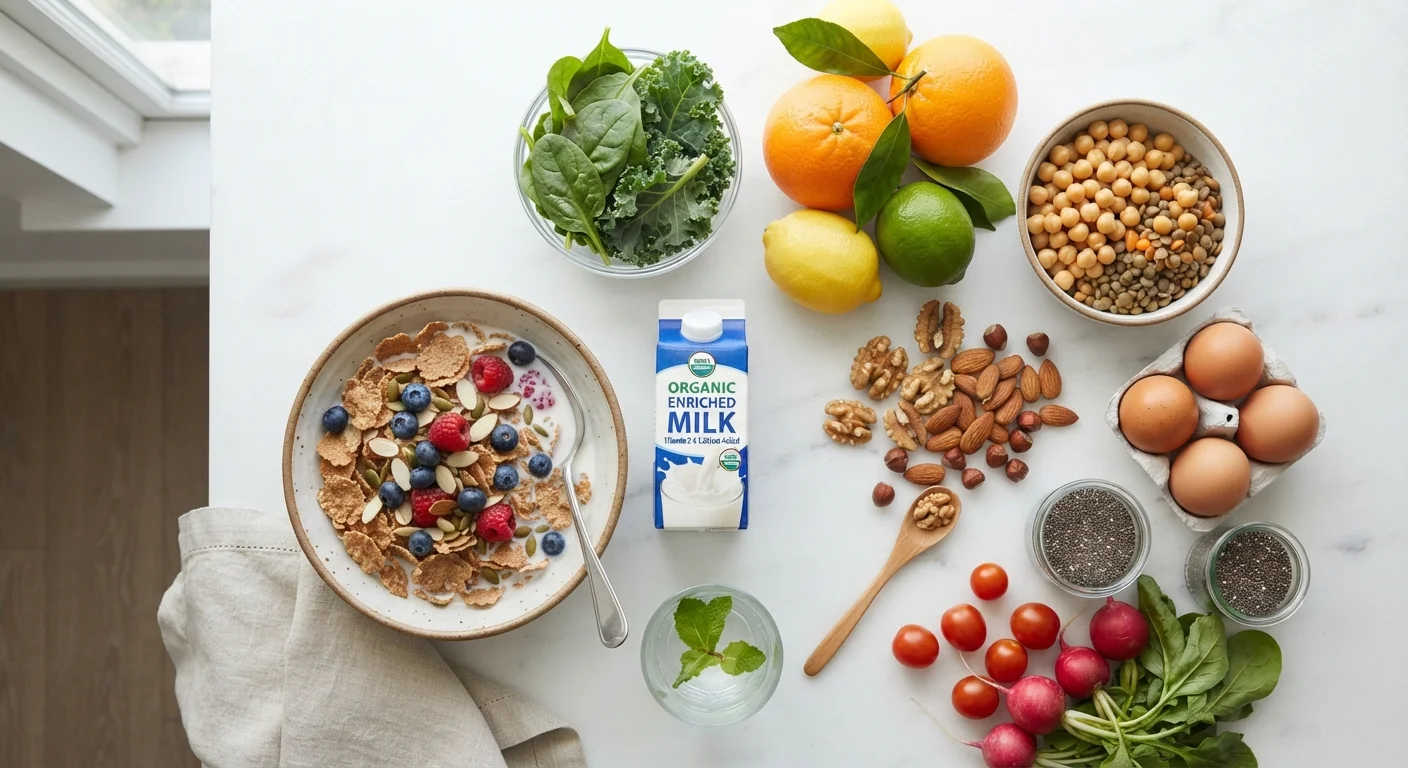
What Sets Whole Food Nutrients Apart
When you eat a piece of salmon, the vitamin D it contains doesn't arrive alone. It comes packaged with omega-3 fatty acids, selenium, and protein — compounds that interact with one another during digestion. This is sometimes called the food matrix effect: the idea that nutrients in whole foods exist within a biological structure that can enhance how your body processes them.
Consider iron. The heme iron found in red meat and poultry is absorbed at roughly 15–35% efficiency by the body. Non-heme iron from plant foods absorbs at a lower rate on its own, but eating it alongside vitamin C — as you might when squeezing lemon over a spinach salad — can significantly boost uptake. These natural synergies are built into whole food eating patterns. For a deeper look at how two common minerals compete for the same absorption pathway, see why iron and calcium can interfere with each other.
Whole foods also supply phytochemicals — plant compounds such as polyphenols and carotenoids — that, while not classified as essential nutrients, may support the body's use of vitamins and minerals. Fortification adds back specific nutrients but typically cannot replicate this entire package.
The Case for Fortification
Fortification has a strong public-health track record. Adding iodine to table salt in the 1920s effectively eliminated endemic goiter across much of the United States. Mandatory folic acid fortification of enriched grain products, introduced in 1998, contributed to a substantial reduction in neural tube defects. These are not trivial outcomes — they represent some of the most successful nutrition interventions in American history.
Today, fortified foods address real gaps. Many Americans fall short of vitamin D, calcium, and B vitamins based on national dietary surveys. A bowl of fortified breakfast cereal can deliver a meaningful portion of the daily value for iron, B12, and folate in a single sitting — nutrients that some people struggle to obtain from whole foods alone, whether due to dietary restrictions, food budgets, or simply eating patterns that have drifted far from varied whole-food diets.
| Whole Food Sources | Fortified Products | |
|---|---|---|
| Nutrient packaging | Vitamins, minerals, fiber, phytochemicals together | Isolated nutrients added back to processed base |
| Bioavailability | Generally high; enhanced by food matrix | Varies by nutrient form; sometimes comparable |
| Dietary variety required | Yes — different foods cover different nutrients | Less; single product can cover multiple nutrients |
| Accessibility and cost | Can vary; fresh produce may cost more | Often affordable; widely available |
| Public health track record | Foundation of dietary guidelines globally | Proven to reduce deficiency diseases in U.S. |
| Nutrient form | Natural forms, as found in food | Often synthetic; may differ metabolically |
| Risk of overconsumption | Low from food alone for most nutrients | Possible if multiple fortified products consumed daily |
That said, fortification has limits. Nutrients added back to processed foods are often synthetic forms that may not behave identically to their natural counterparts. Folic acid, for instance, is the synthetic version of folate; the two are metabolized differently, and some individuals have genetic variants affecting folic acid conversion. For a broader overview of vitamins and minerals and their natural food sources, see our complete everyday reference.
Bioavailability: The Number That Really Matters
Bioavailability refers to the proportion of a nutrient that your body actually absorbs and uses. A food can list 100% of the daily value for a nutrient on its label and still deliver considerably less to your bloodstream, depending on the nutrient's form, what else you ate, your digestive health, and your individual physiology.
Some synthetic forms used in fortification perform comparably to natural forms. Folic acid, for example, is actually absorbed more efficiently than the folate naturally occurring in food — though concerns about unmetabolized folic acid accumulating in the blood at high intakes are an active area of research. Vitamin D3 (cholecalciferol) used in fortification mirrors the form made by skin exposed to sunlight and is generally well absorbed.
Others show meaningful differences. Beta-carotene in supplements and fortified foods converts to vitamin A less reliably than preformed vitamin A found in liver or dairy. And the mix of tocopherols in natural vitamin E from nuts and seeds may behave differently from the single alpha-tocopherol form used in many fortified products. These distinctions matter most for people with absorption conditions or elevated needs — another reason to discuss specific concerns with a qualified healthcare provider rather than relying solely on label claims.
Trace minerals are another area worth attention. For a closer look at three that are frequently overlooked, see zinc, selenium, and iodine explained in plain language.
Building a Practical, Balanced Approach
The whole food vs. fortified food debate is less useful as a binary choice and more useful as a framework for prioritizing. For most everyday Americans, a realistic strategy looks like this: anchor your diet in varied whole foods — vegetables, fruits, legumes, whole grains, lean proteins, and dairy or dairy alternatives — and use fortified products as a complement rather than a foundation.
Fortified foods earn their place in the diet as a reliable backstop. If you rarely eat fatty fish, a fortified milk or plant-based alternative helps maintain vitamin D intake. If your diet is low in red meat and leafy greens, an iron-fortified cereal provides a reasonable bridge. The goal is coverage without over-reliance on any single source.
It's also worth remembering that no fortified product covers every micronutrient gap. Nutrients like potassium, magnesium, and many phytochemicals are rarely added to processed foods in meaningful amounts — they come primarily from whole plant foods. For practical ideas on shifting your everyday meals toward greater nutrient density without a full diet overhaul, see building a more nutrient-dense plate.
This article is for general informational and educational purposes only and is not a substitute for professional medical or dietary advice. Consult a qualified healthcare provider for guidance specific to your health needs.