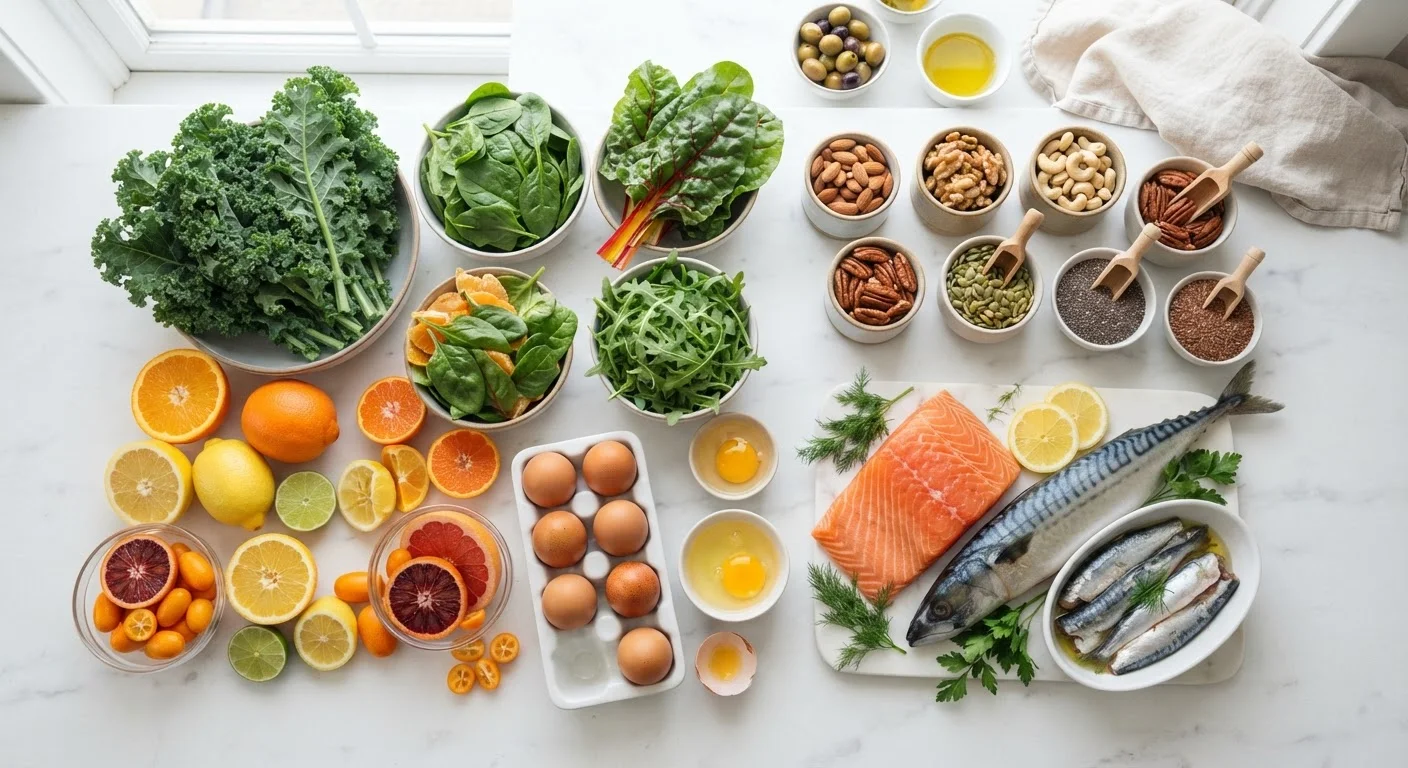
What Makes a Vitamin Fat-Soluble or Water-Soluble?
Vitamins are classified by how they dissolve and how your body handles them after absorption — and that chemistry has real consequences for your diet. As explained in our overview of vitamins and minerals, these micronutrients are compounds your body needs in small amounts but largely cannot manufacture on its own.
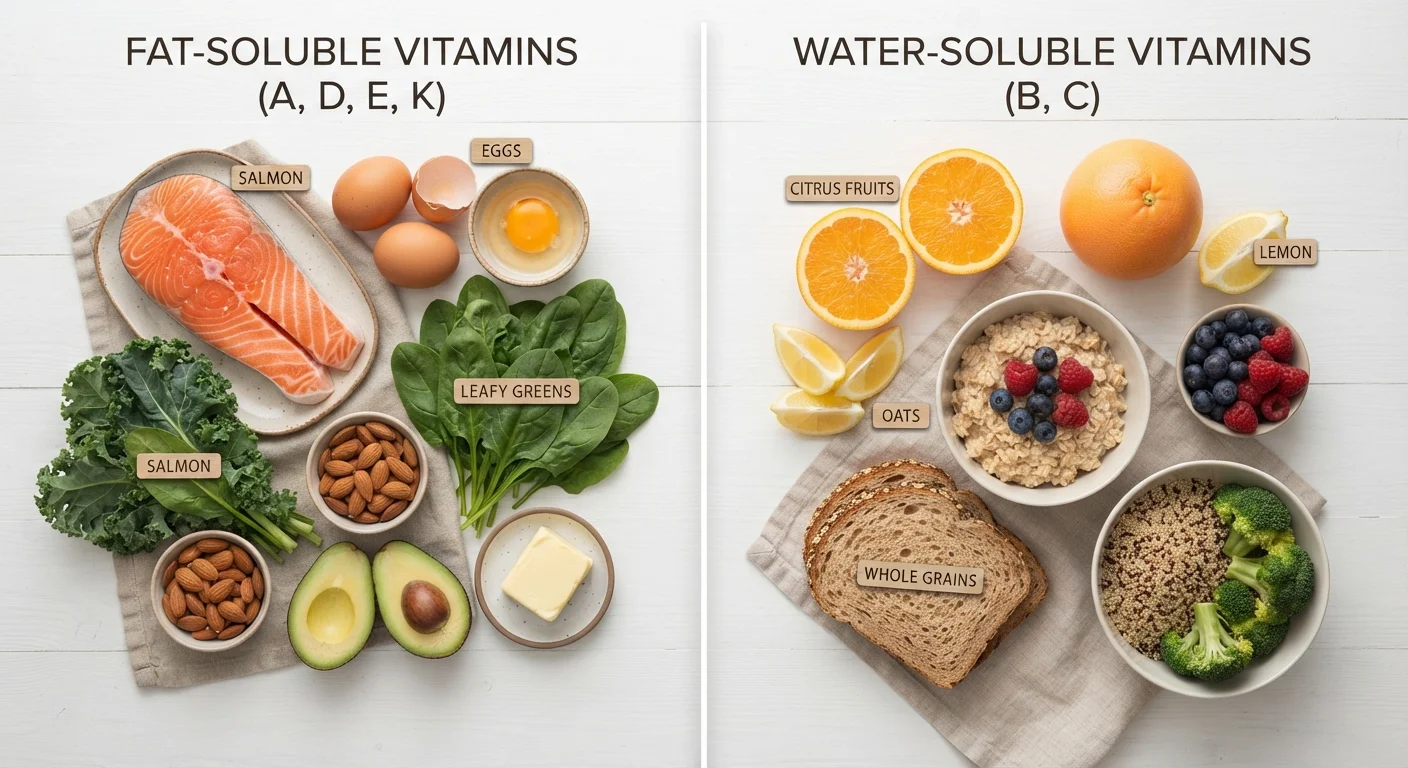
Fat-soluble vitamins — A, D, E, and K — dissolve in lipids (fats) rather than water. After absorption through the small intestine, they travel via the lymphatic system and are stored in the liver and adipose (fat) tissue. This means your body can draw on those reserves when dietary intake temporarily dips.
Water-soluble vitamins — the eight B vitamins (B1, B2, B3, B5, B6, B7, B9, and B12) and vitamin C — dissolve in water and enter the bloodstream directly. Any surplus beyond what cells need is generally filtered out by the kidneys and excreted in urine, so they accumulate far less readily.
| Criterion | Fat-Soluble (A, D, E, K) | Water-Soluble (B Complex & C) |
|---|---|---|
| Dissolves in | Dietary fats / lipids | Water |
| Storage in body | Liver and fat tissue | Minimal (B12 is an exception) |
| Toxicity risk from excess | Higher — accumulates over time | Lower — excess typically excreted |
| Deficiency speed | Slower — reserves buffer intake gaps | Faster for most (weeks to months) |
| Absorption requirement | Needs dietary fat present | No fat required |
| Sensitivity to cooking | Moderate | High (especially C, folate, B1) |
| Primary food sources | Fatty fish, liver, dairy, eggs, leafy greens | Whole grains, legumes, citrus, meat, dairy |
Why Storage Capacity Changes Everything
The storage difference between the two groups creates opposite dietary risks. With fat-soluble vitamins, the body's ability to stockpile them is an advantage when food supply is inconsistent — but it's a liability if intake is chronically excessive. High supplemental doses of vitamin A, for instance, can build to toxic levels in the liver over time. Vitamin D deserves particular attention here; to learn more about its unique role as a hormone precursor and why deficiency is widespread, see our deep dive on vitamin D.
Water-soluble vitamins present the opposite challenge: because they aren't banked for later, gaps in daily intake can lead to functional shortfalls relatively quickly. Vitamin C deficiency, for example, can impair collagen synthesis and immune defense within weeks. B12 is a notable exception — the liver stores modest amounts that can last a year or more — but most water-soluble vitamins have limited reserves.
~42%
U.S. adults with vitamin D insufficiency
According to data published in Nutrition Research, a large proportion of American adults have insufficient vitamin D blood levels, making it one of the most prevalent fat-soluble nutrient gaps.
~6%
U.S. adults deficient in vitamin B12
NHANES data suggest B12 deficiency affects a meaningful share of adults, with older adults and those limiting animal products at greatest risk due to reduced absorption or dietary exclusion.
Absorption, Food Pairings, and Everyday Diet Gaps
Because fat-soluble vitamins require dietary fat for absorption, what you eat with vitamin-rich foods matters. Drizzling olive oil on a spinach salad (a source of vitamins K and A precursors) meaningfully improves how much your body actually absorbs. A very low-fat diet may provide adequate fat-soluble vitamins on paper but deliver far less in practice.
Water-soluble vitamins generally absorb efficiently from food without special pairings, though cooking and processing can degrade them — particularly vitamin C and the B vitamins folate (B9) and thiamine (B1). Steaming vegetables rather than boiling them, for example, helps preserve these heat- and water-sensitive nutrients.
Common dietary gaps in the American diet include vitamin D (fat-soluble), vitamin B12 (especially for people who limit animal products), and folate — highlighting that deficiencies can occur in both groups depending on eating patterns. Dietary variety across vegetables, fruits, whole grains, legumes, dairy, and healthy fats remains the most reliable way to cover both categories.
This article is for general informational and educational purposes only and is not a substitute for professional medical or nutritional advice. Consult a qualified healthcare provider before making significant changes to your diet or beginning any vitamin supplementation.