
Why Preventive Screenings Matter for Men
Men in the United States are statistically less likely than women to schedule routine medical care — and that gap has real consequences. Conditions like high blood pressure, type 2 diabetes, and colorectal cancer often develop without obvious symptoms, making early detection through scheduled screenings one of the most effective tools available for protecting long-term health.
Preventive screenings are distinct from diagnostic tests. They're designed for people who feel well, with the goal of identifying risk factors or early-stage disease before they progress. If you're new to this distinction, our overview of what preventive screenings are provides helpful context.
The recommendations below are drawn from guidelines issued by organizations including the U.S. Preventive Services Task Force (USPSTF) and the Centers for Disease Control and Prevention (CDC). Individual needs vary — always discuss your personal history with a qualified healthcare provider.
This article is for general informational purposes only and is not a substitute for professional medical advice.
Screenings in Your 20s and 30s
Young adulthood is not too early to begin building a screening baseline. Many men in their 20s and 30s assume they're too healthy to need checkups — but this is precisely when certain conditions begin to take root silently.
- Blood pressure: The USPSTF recommends screening for hypertension in adults 18 and older. High blood pressure affects roughly 1 in 3 American adults and rarely causes symptoms.
- Cholesterol (lipid panel): Men should begin cholesterol screening by age 35, or earlier if they have risk factors such as obesity, smoking, or a family history of heart disease.
- Blood glucose / prediabetes: Screening for prediabetes and type 2 diabetes is recommended for adults ages 35–70 who are overweight or obese, but earlier testing may be appropriate based on risk profile.
- Sexually transmitted infections (STIs): Men who are sexually active and at increased risk should be screened for HIV and other STIs. The CDC recommends that all adults ages 15–65 be tested for HIV at least once.
- Testicular awareness: While routine testicular self-exams are no longer universally recommended as a formal screening, men should discuss any changes with their doctor promptly.
Establish a primary care relationship before you need one — scheduling a baseline visit in your late 20s gives your doctor a reference point for interpreting future test results.
Trend data over time is often more informative than a single result in isolation; having a documented baseline significantly improves clinical decision-making.
When getting a blood pressure reading, sit quietly for five minutes before the measurement and avoid caffeine or exercise in the hour prior — small preparation steps can meaningfully affect accuracy.
White-coat hypertension and transient elevations from stimulants or physical activity are common sources of misleading readings in clinical settings.
Screenings in Your 40s and 50s
Midlife marks a turning point in preventive care for men. Several high-impact screenings become newly recommended during this window, and existing ones may increase in frequency. Our midlife checkup checklist offers a practical companion to this section.
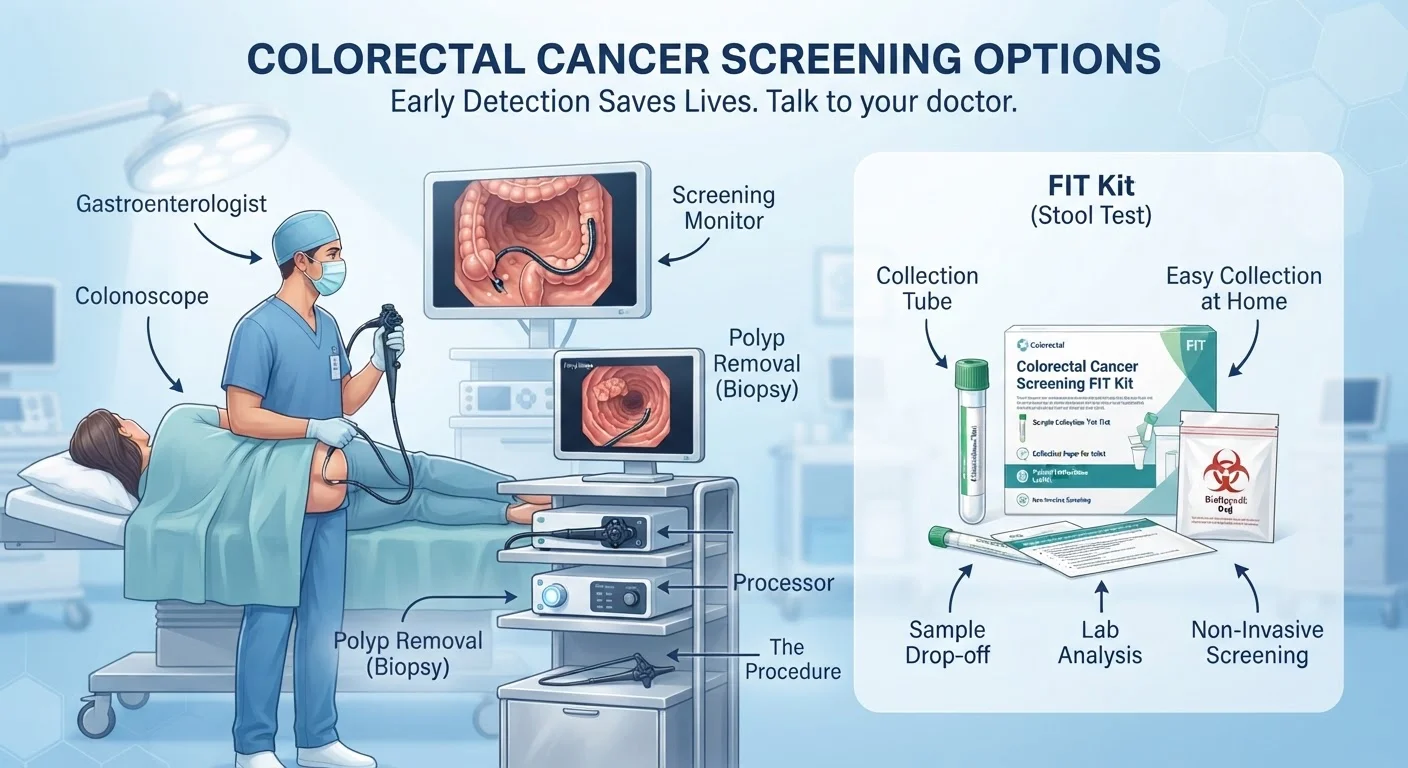
- Colorectal cancer: The USPSTF recommends colorectal cancer screening beginning at age 45 for average-risk adults. Options include stool-based tests (such as the fecal immunochemical test or FIT) and structural exams (such as colonoscopy). These methods differ in frequency and follow-up requirements — explore the comparison of colorectal screening options for detail.
- Blood pressure and cholesterol (continued): Annual blood pressure monitoring and periodic lipid panels remain important. See how these connect in our guide to core cardiovascular screenings.
- Type 2 diabetes: Formal glucose screening is recommended for overweight or obese adults beginning at 35. Results guide decisions about lifestyle intervention and medication.
- Prostate cancer (PSA): There is no universal recommendation for routine prostate-specific antigen (PSA) testing. The USPSTF advises that men ages 55–69 make individualized decisions about PSA screening in consultation with their doctor, weighing potential benefits against risks of overdiagnosis.
- Vision and hearing: Routine checks during this period can identify gradual changes that affect quality of life and safety.
Screenings in Your 60s and Beyond
As men enter their 60s and older, the cumulative benefit of decades of preventive care becomes evident — but new screenings also enter the picture.
- Abdominal aortic aneurysm (AAA): The USPSTF recommends a one-time abdominal ultrasound to screen for AAA in men ages 65–75 who have ever smoked (defined as 100 or more cigarettes in a lifetime). An undetected AAA can rupture with life-threatening consequences.
- Lung cancer: Annual low-dose CT (LDCT) scanning is recommended for adults ages 50–80 who have a 20 pack-year smoking history and currently smoke or quit within the past 15 years.
- Colorectal cancer (continued): Screening continues through age 75 for most adults; decisions between ages 76–85 are individualized.
- Osteoporosis: Though more commonly discussed for women, men over 70 — or those with significant risk factors — may benefit from bone density screening. Discuss this with your provider.
- Cognitive health: There is no universally recommended routine cognitive screening for all older adults, but changes in memory or thinking should be discussed with a physician.
Older adults, especially those managing chronic conditions, should consult a healthcare professional before making any changes to their screening schedule.
Risk-Based Screenings That Apply at Any Age
Not every screening is age-gated. A man's individual risk profile — shaped by family history, lifestyle, ethnicity, and existing conditions — can trigger earlier or more frequent testing at any stage of adulthood.
- Hepatitis C: The USPSTF recommends hepatitis C virus (HCV) screening for adults born between 1945 and 1965 and for anyone at increased risk.
- HIV: All adults ages 15–65 should be tested at least once. Annual testing is recommended for those at higher risk.
- Skin cancer: There is no universal USPSTF recommendation for routine skin cancer screening, but men with a history of significant sun exposure or prior skin lesions should discuss dermatological checks with their provider.
- Dental and vision care: Regular dental exams and vision screenings fall outside the primary medical framework but contribute meaningfully to overall health outcomes.
For a broader view of how these screenings fit across the lifespan, the decade-by-decade screening timeline provides a structured reference for men and women alike.
How to Make the Most of Every Screening Visit
Knowing which screenings to pursue is only part of the equation. Showing up prepared helps ensure results are accurate and actionable.
- Bring your history: Share your family medical history, current medications, and any symptoms — even minor ones — with your provider at each visit.
- Ask about your results: Request that your provider explain what each result means and what follow-up, if any, is needed. Normal ranges can vary by lab and individual context.
- Understand coverage: Under the Affordable Care Act (ACA), most USPSTF Grade A and B recommended screenings are covered without cost-sharing for eligible adults on compliant health plans. Confirm specifics with your insurer.
- Don't skip follow-up: A screening result that warrants further investigation should be pursued promptly. An abnormal finding is not a diagnosis — but it does require attention.
Men who are unsure where to start can ask their primary care provider to review which screenings are overdue based on their age and health profile. If you don't have a regular provider, a community health center is a good starting point.
The information in this article reflects general preventive health guidelines and is not intended as personalized medical advice. Consult a qualified healthcare professional for guidance tailored to your individual health needs.