
What the Schedule Covers — and Why It Matters
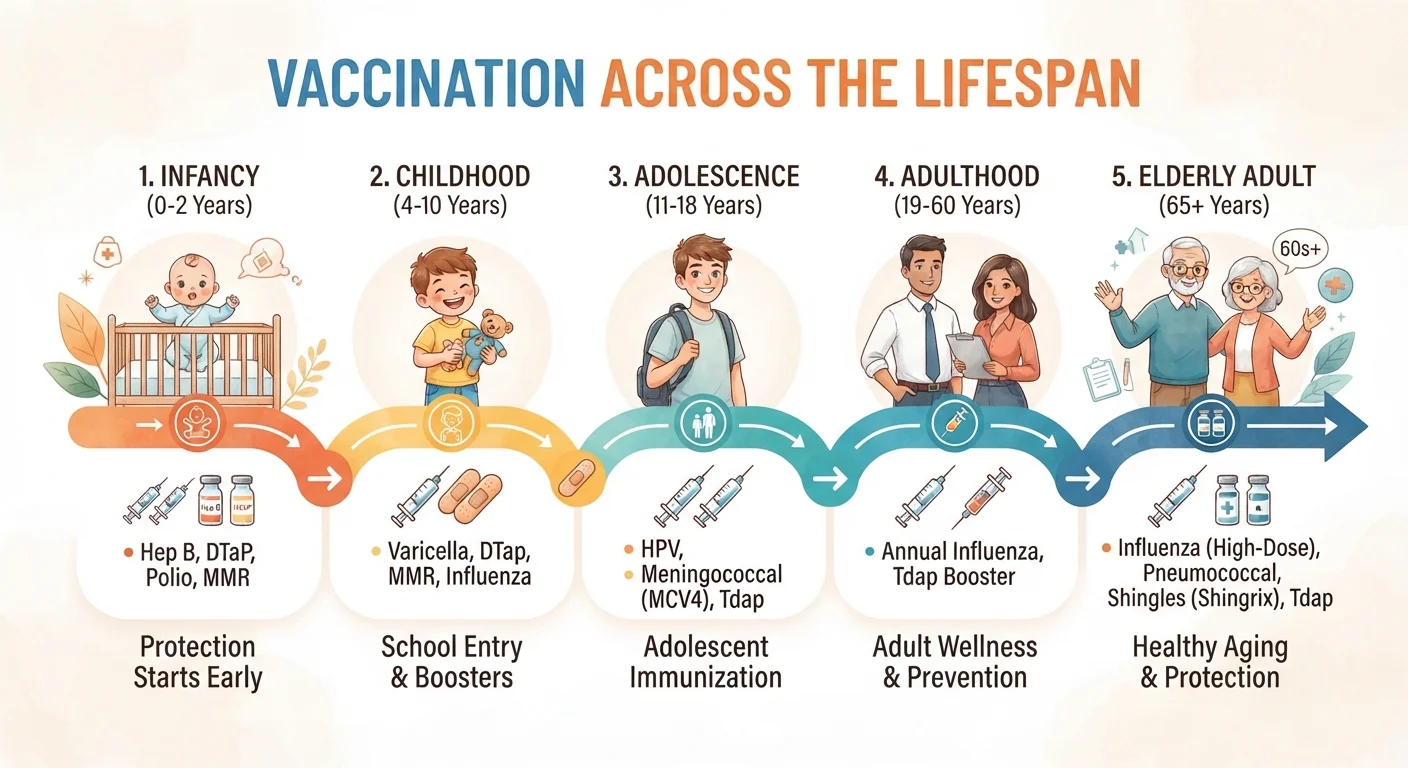
Vaccines aren't just for children. The CDC's adult immunization schedule outlines protection against more than a dozen diseases, from influenza and pneumonia to hepatitis B, shingles, and human papillomavirus (HPV). For a broader look at how vaccine needs evolve from birth onward, see The Immunization Timeline Across a Lifetime.
Adult immunity can wane over time, and some vaccines weren't available or widely administered during childhood. New risk factors — a chronic illness, a new job, international travel, or pregnancy — can also change what's recommended. Staying current isn't just personal protection; it also reduces transmission to people around you who may be more vulnerable.
Schedule vs. Personal Medical Advice
The CDC schedule represents population-level guidance developed for healthy adults with no contraindications. Individual circumstances — including allergies, immune status, and medication use — can affect which vaccines are appropriate. Your healthcare provider is the right resource for personalized recommendations based on your complete health picture.
Core Vaccines Recommended for Most Adults
Certain vaccines appear on the schedule for nearly all adults, regardless of age or health history:
- Influenza (flu): One dose every year, for all adults. High-dose and adjuvanted formulations are preferred for adults 65 and older.
- Tdap / Td: A one-time Tdap dose if not previously received as an adult, then a Td booster every 10 years. Tdap is also recommended during each pregnancy.
- COVID-19: The CDC recommends staying up to date with current COVID-19 vaccine formulations; recommendations are reviewed frequently as the virus evolves.
- Hepatitis B: A two- or three-dose series recommended for all adults through age 59, and for adults 60 and older based on individual preference or risk factors.
If you're new to navigating adult vaccines, Vaccines and Immunity: A Complete Starter Guide for Adults offers helpful foundational context.
~49%
U.S. adults current on flu vaccination
CDC data indicate fewer than half of U.S. adults receive an annual flu vaccine, despite universal recommendation.
1 in 3
Americans who will develop shingles
The CDC estimates approximately one in three people in the U.S. will develop shingles during their lifetime, underscoring the importance of the Shingrix vaccine.
14+
Diseases addressed by the adult schedule
The current CDC adult immunization schedule includes vaccines covering more than 14 distinct diseases or disease groups.
Age- and Condition-Based Recommendations
Beyond the universal vaccines, the schedule expands based on age and health status:
- Adults 50+: Shingrix (shingles vaccine), two doses, is recommended for all adults in this age group — even those who previously had shingles. Pneumococcal vaccines (PCV15 or PCV20) are also recommended starting at 65, and earlier for those with certain conditions.
- Adults with chronic conditions: Diabetes, heart disease, chronic lung disease, liver disease, and immunocompromising conditions each trigger additional recommendations. For example, adults with asplenia need meningococcal and pneumococcal vaccines.
- HPV vaccine: Recommended through age 26 for all adults; shared clinical decision-making applies for ages 27–45.
- Pregnant adults: Tdap and influenza are recommended during each pregnancy. Other live vaccines are generally deferred until after delivery.
Many adults discover they've missed recommended vaccines at a routine checkup. Vaccines Commonly Missed in Adulthood — and Why That Happens explores the most common gaps and the reasons behind them.
Keeping Track of Your Vaccination History
Knowing which vaccines you've already received is essential to following the schedule correctly. Many adults lack complete records, especially if they've moved, changed providers, or received vaccines across different health systems.
Start by contacting former healthcare providers or state immunization information programs (IIS), which many states maintain as centralized registries. Employers, schools, and military service branches also frequently hold vaccination records.
Once you've gathered your history, organize it in a secure, accessible location. For a step-by-step approach, see Keeping Your Vaccination Records in Order.
This article is for general informational purposes only and does not constitute medical advice. Vaccination needs vary by individual health history and circumstances. Always consult a qualified healthcare provider to determine which vaccines are right for you.