Why Your Vaccination Records Matter
Vaccination records are a practical health document you'll need repeatedly throughout your life — for school and college enrollment, certain jobs, international travel, and routine medical care. Yet many Americans discover their records are incomplete, scattered, or simply lost when the need arises.
Whether you're an adult catching up on missed immunizations or a parent managing a child's immunization schedule, having an organized, accessible record reduces friction at every step. If you're new to navigating adult vaccines, the complete starter guide for adults provides solid background on how vaccines work and which ones adults commonly need.
This checklist walks you through locating, verifying, consolidating, and safely storing your immunization history — so it's ready when you need it.
State Immunization Information System (IIS)
Allows adults to request an official record of vaccines logged in their state's registry, filling gaps when paper records are unavailable.
CDC Vaccine Schedules (adult and child)
Provides the current recommended immunization schedule used to verify whether your record is up to date.
Patient portal (provider EHR system)
Gives secure digital access to your immunization history recorded by your healthcare provider's office.
Secure cloud storage or encrypted health app
Stores digital scans or photos of your records in a password-protected location accessible from any device.
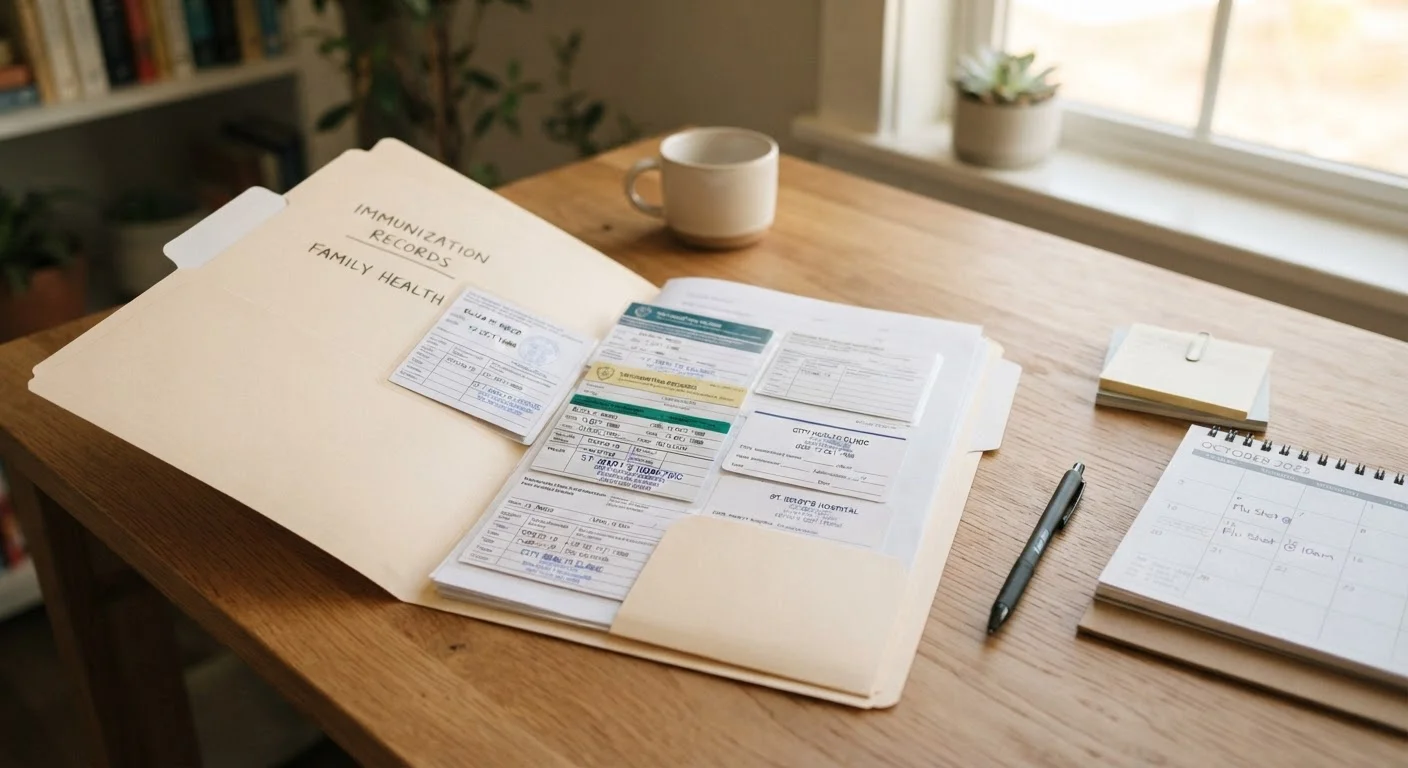
Fireproof or waterproof document folder
Protects physical copies of your immunization records and other vital documents from damage or loss at home.
The Vaccination Records Checklist
Work through these grouped steps at your own pace. Most people can complete the full process in a single sitting, though tracking down older records may require a few phone calls or online lookups over several days.
Locate Existing Records
Verify and Fill Gaps
Consolidate and Organize
Maintain and Share
Lost Records Are Not the End
If your vaccination records are completely unavailable, do not guess or reconstruct them from memory. A healthcare provider can review your history, order titer tests to check existing immunity for certain diseases, and safely re-administer vaccines where needed. Starting fresh with documented vaccines is always preferable to having an unverified record.
Once your records are consolidated, consider scheduling a visit with your healthcare provider to review them. Many adults are behind on recommended immunizations without realizing it — the article on vaccines commonly missed in adulthood explains which ones are most frequently overlooked and why.
Using Your Records Going Forward
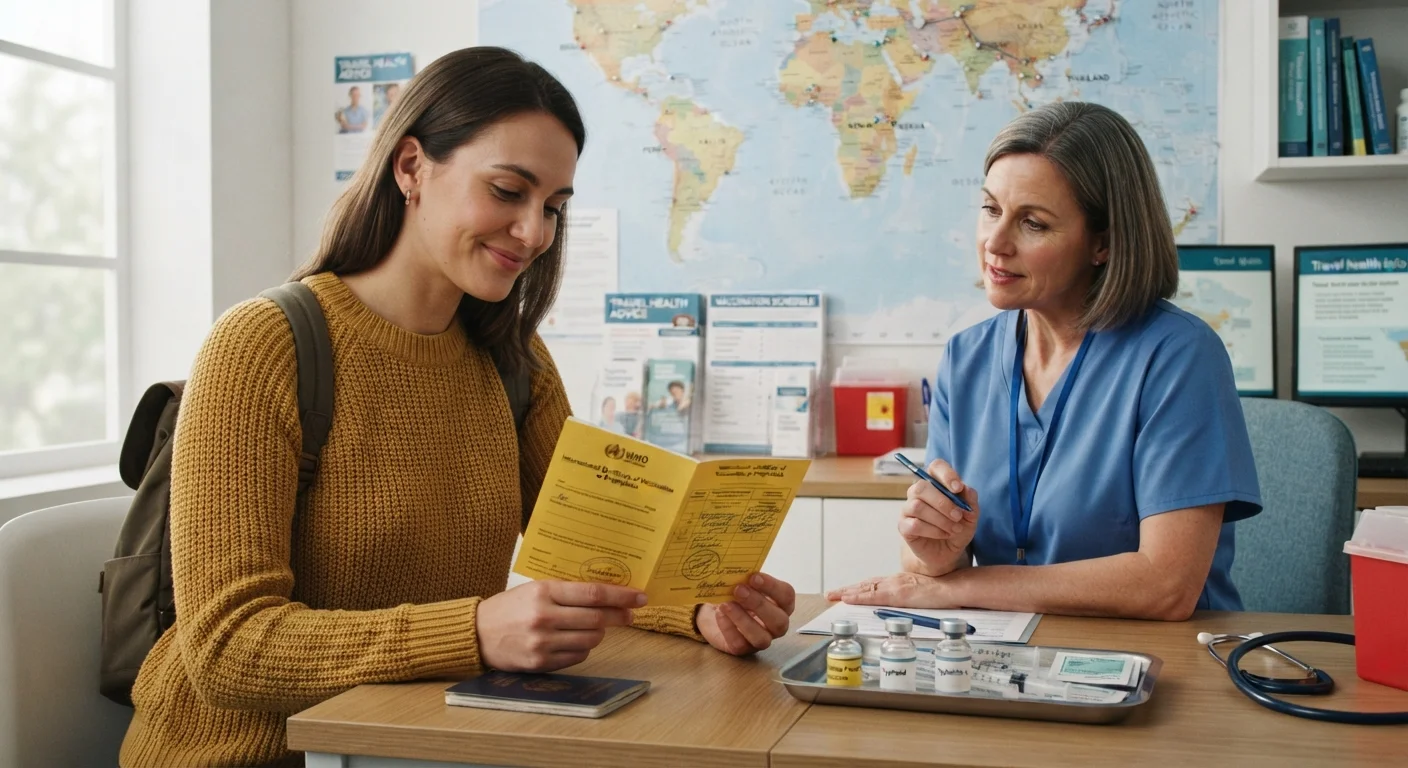
A well-organized immunization record doesn't just sit in a drawer — it actively supports your health decisions at key moments. Before international travel, your record tells you and your provider exactly which destination-specific vaccines you may still need; see our guide on travel vaccinations planning for destination-specific guidance and lead times.
Your record is also the foundation of your broader immunization timeline. Vaccine needs shift from infancy through older adulthood, and the immunization timeline across a lifetime maps what's recommended at every major life stage. For parents, the childhood vaccines reference breaks down which diseases each routine vaccine protects against.
Review and update your records at least once a year — a natural prompt is your annual wellness visit. Share a copy with any new healthcare provider and keep your digital backup current after each immunization.
This article is for general informational and educational purposes only and does not constitute medical advice. Always consult a qualified healthcare professional regarding your personal immunization needs, health history, or any medical concerns.