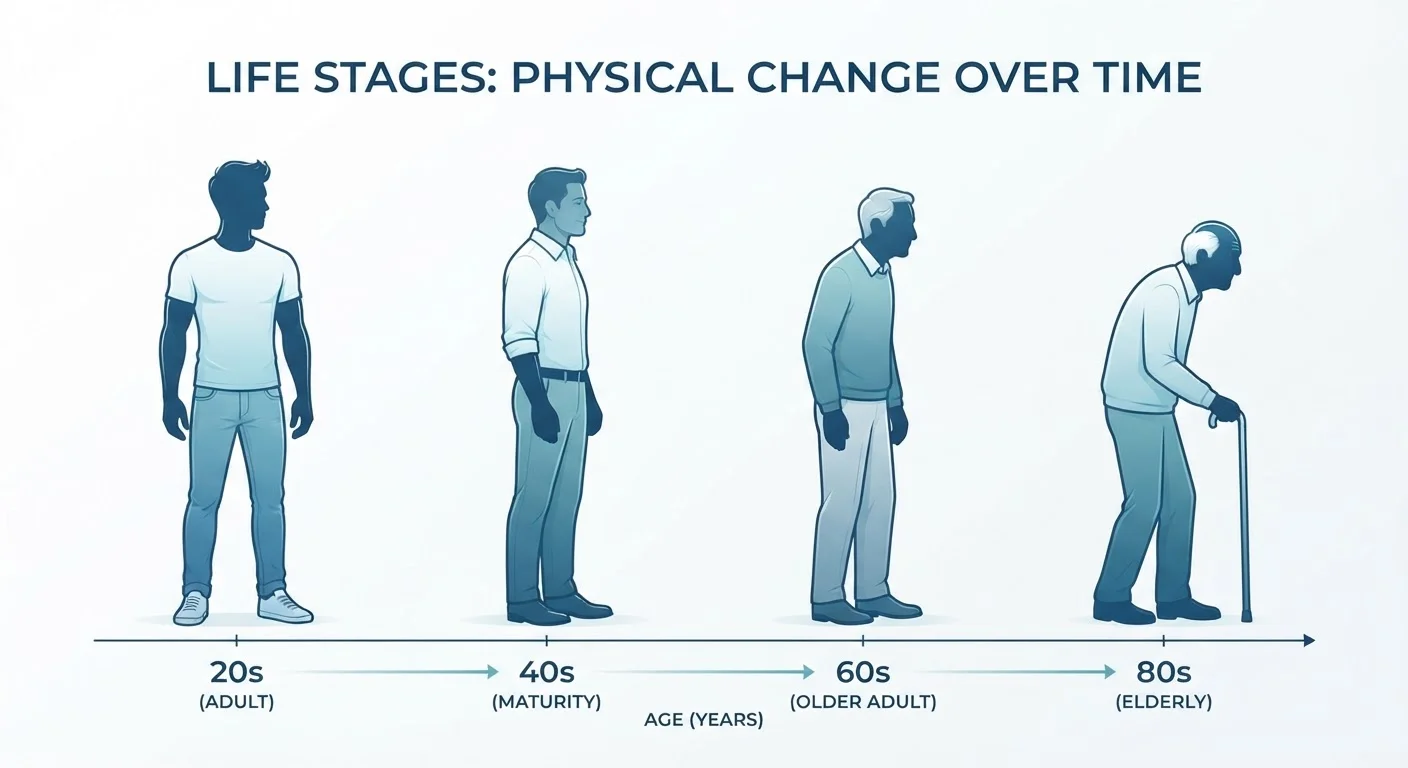

What Is Sarcopenia and Why Does It Matter?
The scale often gets the most attention when people think about their health as they age — but weight alone tells an incomplete story. Sarcopenia represents a shift in body composition that has profound consequences for how a person moves, recovers from illness, and maintains independence. As the body composition shifts across decades, the proportion of muscle to fat changes in ways that standard weight measurements cannot capture.
Muscle is metabolically active tissue. It supports posture, powers movement, stabilizes joints, and contributes to the body's overall energy regulation. When sarcopenia reduces this tissue significantly, the effects extend far beyond aesthetics — they touch nearly every dimension of everyday function.
~3–8%
Muscle mass lost per decade after age 30
This widely cited range reflects estimates from multiple longitudinal studies examining skeletal muscle loss across adulthood.
~50%
Muscle mass lost by age 80 vs. peak
Research published in journals of gerontology estimates that skeletal muscle mass may decline by roughly half between a person's peak and their ninth decade of life.
10–16%
Prevalence in adults over 60
Estimates of sarcopenia prevalence in community-dwelling older adults vary by diagnostic criteria, but commonly fall in this range across peer-reviewed epidemiological studies.
How Sarcopenia Develops: The Biology Behind Muscle Decline
Skeletal muscle is constantly being broken down and rebuilt through a process called muscle protein turnover. In younger adults, synthesis and breakdown remain roughly balanced. With age, the anabolic signals that stimulate muscle building — including growth hormone, testosterone, and insulin-like growth factor 1 — weaken, while inflammatory processes that promote muscle breakdown can increase. The result is a gradual net loss of muscle protein over time.
Alongside hormonal shifts, aging muscles undergo changes at the cellular level. Motor neurons — the nerve cells that control muscle fibers — are lost with age, causing entire clusters of muscle fibers to go unstimulated and atrophy. The remaining motor neurons must compensate, but eventually this compensation is insufficient to maintain full muscle function. Physical inactivity accelerates this timeline considerably, as does chronic illness, certain medications, and inadequate nutrition.
This intersects with broader changes in weight management across a lifetime, where metabolic rate declines and body composition shifts even without changes in caloric intake.
Recognizing the Functional Signs
Sarcopenia is not always obvious on a visual level — particularly when fat mass increases at the same time muscle is lost, a condition sometimes called sarcopenic obesity. However, its functional signs are meaningful and worth recognizing early. Common indicators include difficulty rising from a chair without using arm support, a noticeably slower walking pace, reduced grip strength, challenges carrying groceries or climbing stairs, and a greater tendency to fatigue with light physical effort.
These are not simply signs of "getting older." They are measurable, clinically meaningful changes in physical capacity that respond to targeted intervention. Understanding the functional importance of body composition helps explain why preserving muscle matters far beyond appearance or the number on a scale.
Evidence-Based Strategies for Slowing Muscle Loss
The research literature is consistent: resistance exercise — activities that work muscles against load, such as weightlifting, resistance bands, or bodyweight exercises — is the most effective intervention for counteracting sarcopenic muscle loss. Studies demonstrate that older adults who engage in progressive resistance training experience measurable gains in muscle mass, strength, and physical function, even when beginning in their 70s or 80s. The "use it or lose it" principle applies directly here.
Protein intake is the other major evidence-supported lever. Current research suggests older adults may need more dietary protein per unit of body weight than younger adults to achieve the same rate of muscle protein synthesis — a phenomenon called anabolic resistance. Distributing protein intake across meals, rather than concentrating it in a single sitting, appears to further support muscle maintenance. Before making significant dietary changes, individuals should consult with a registered dietitian or healthcare provider, particularly those managing kidney disease or other conditions that affect protein metabolism.
Vitamin D adequacy, overall caloric sufficiency, and management of underlying chronic conditions also play supporting roles. Physical activity beyond resistance training — including balance exercises and aerobic movement — contributes to overall functional health and fall prevention.
This article is for general informational purposes only and does not constitute medical advice. If you have concerns about changes in your strength, mobility, or physical function, please consult a qualified healthcare professional for personalized evaluation and guidance.