
Why Body Composition Vocabulary Matters
When clinicians, researchers, and fitness professionals discuss body composition, they rely on a precise shared vocabulary. For everyday consumers, that language can feel opaque — turning important health information into an intimidating wall of jargon. This quick-reference glossary cuts through the confusion.
As explored in Body Composition, Explained, understanding what your body is made of — not just how much it weighs — offers a far richer picture of functional health. The terms below are the building blocks of that understanding.
Body Composition
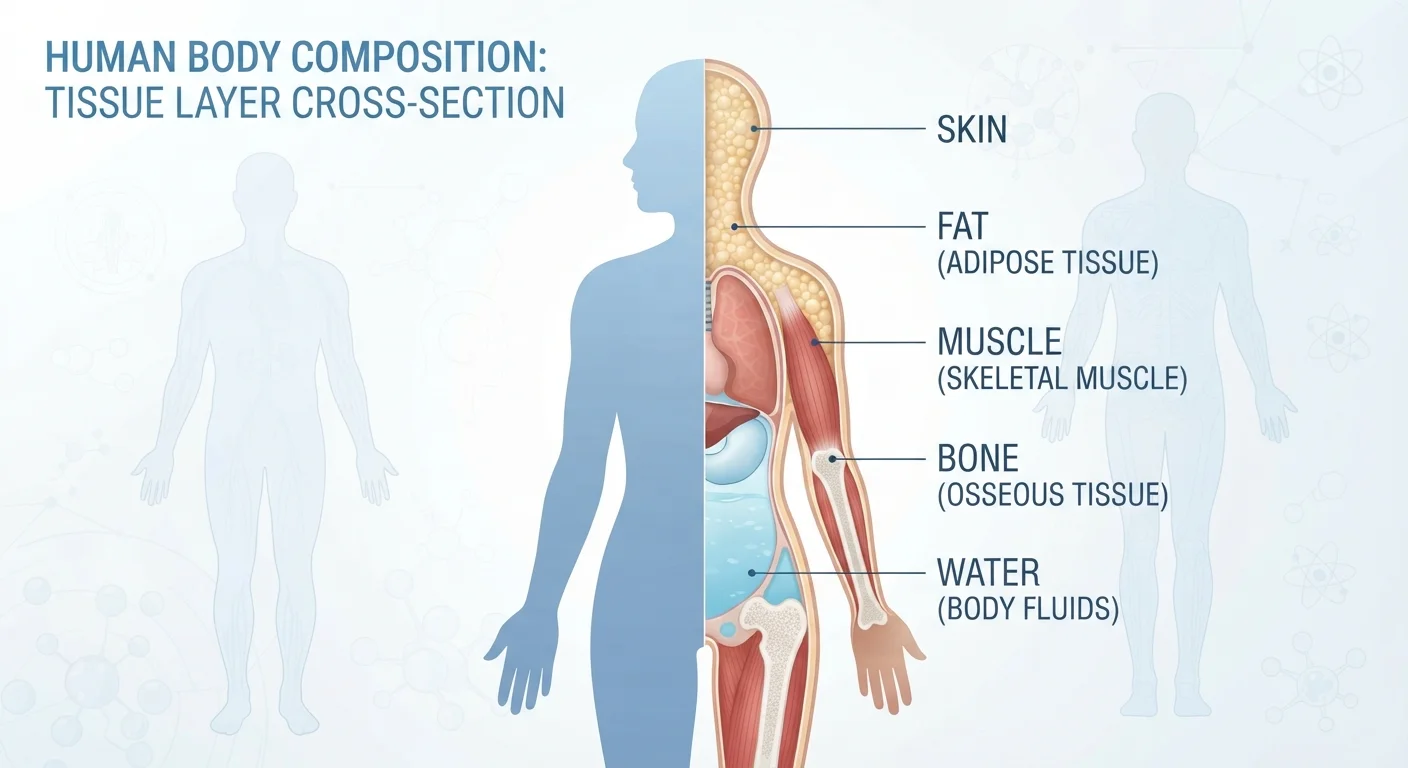
The proportion of fat mass versus fat-free (lean) mass in the body, typically expressed as percentages. Unlike body weight alone, body composition reflects what tissues the body is actually made of — including muscle, fat, bone, and water.
Fat Mass
The total weight of all adipose (fat) tissue in the body. Fat mass includes both essential fat — necessary for normal physiological function — and storage fat, which accumulates when energy intake exceeds expenditure over time.
Lean Body Mass (LBM)
Everything in the body that is not fat, including muscle, bone, organs, connective tissue, and water. Lean body mass is a key indicator of metabolic health and physical function, and tends to decline with age without targeted resistance training.
Skeletal Muscle Mass
The portion of lean mass made up of voluntary muscles attached to bones. Skeletal muscle is metabolically active tissue that supports movement, strength, balance, and resting energy expenditure — making it a critical factor in long-term health.
Visceral Fat
Fat stored deep within the abdominal cavity, surrounding internal organs. Research consistently associates elevated visceral fat with increased risk of metabolic conditions, including insulin resistance and cardiovascular disease, independent of total body weight.
Subcutaneous Fat
Fat stored just beneath the skin, distributed across the body. While excess subcutaneous fat contributes to body weight, it is generally considered less metabolically harmful than visceral fat.
Body Fat Percentage
The proportion of total body mass attributable to fat, expressed as a percentage. Healthy ranges vary by sex, age, and assessment method; body fat percentage provides more nuanced health information than weight or BMI alone.
Fat-Free Mass (FFM)
All body mass excluding fat. Fat-free mass is similar to lean body mass but technically excludes even essential fat. The two terms are often used interchangeably in general health contexts, though they differ slightly in precise scientific usage.
BMI (Body Mass Index)
A ratio of body weight to height squared (kg/m²), used as a population-level screening tool. BMI does not distinguish between fat and muscle mass, limiting its utility as an individual body composition measure.
Sarcopenia
The age-related loss of skeletal muscle mass and strength. Sarcopenia is associated with reduced physical function, increased fall risk, and poorer metabolic health in older adults; it can be slowed with adequate protein intake and resistance exercise.
Bone Mineral Density (BMD)
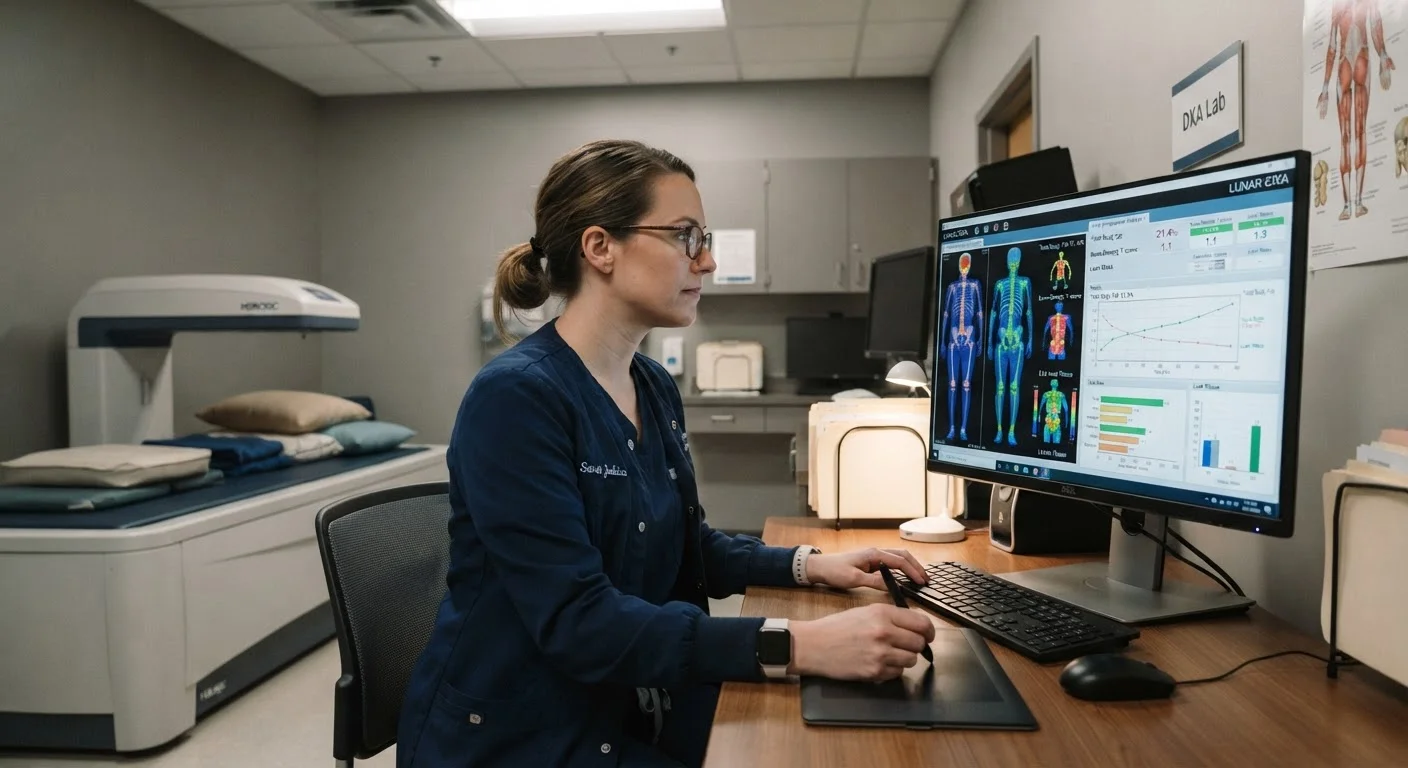
A measure of bone mass per unit area, used to assess bone strength and fracture risk. BMD is a component of body composition often evaluated alongside lean and fat mass, particularly in clinical assessments using DEXA imaging.
Total Body Water (TBW)
The total amount of water in the body, distributed across intracellular and extracellular compartments. TBW constitutes a significant portion of lean body mass and fluctuates with hydration status, activity, and health conditions.
Using These Terms in Context
Knowing these definitions becomes most useful when you connect them to real measurements and health decisions. For example, two people with identical body weight can have dramatically different lean mass and visceral fat levels — differences that matter clinically even when the scale looks the same.
Measurements like DEXA scanning, bioelectrical impedance, and anthropometric assessments each capture different aspects of these compartments. See How Body Composition Is Measured for a detailed breakdown of those methods.
Body composition also has direct implications beyond appearance. Muscle-to-fat ratios influence balance, mobility, and daily function — topics covered in depth in Beyond Aesthetics: Why Functional Fitness Depends on Body Composition. For a plain-language look at the three most commonly used clinical measures — BMI, body fat percentage, and waist circumference — visit BMI, Body Fat Percentage, and Waist Circumference.
| Body composition compartments | Fat mass, lean mass, bone, and water |
| Primary tool for measuring composition | DEXA (dual-energy X-ray absorptiometry) (Considered a clinical reference standard) |
| Muscle as metabolic tissue | Skeletal muscle accounts for ~20–30% of resting energy expenditure (General physiological estimate; individual variation applies) |
| Visceral fat detection | Not visible externally; requires imaging or waist measurement proxies |
| Sarcopenia onset | Muscle loss can begin as early as the mid-30s without resistance training (General clinical consensus) |
If you are working with a fitness professional or physician on body composition goals, understanding these terms helps you ask better questions and interpret results more accurately. This article provides general health education, not personalized medical guidance — always consult a qualified healthcare provider for decisions specific to your health.