Why Measuring Body Composition Matters
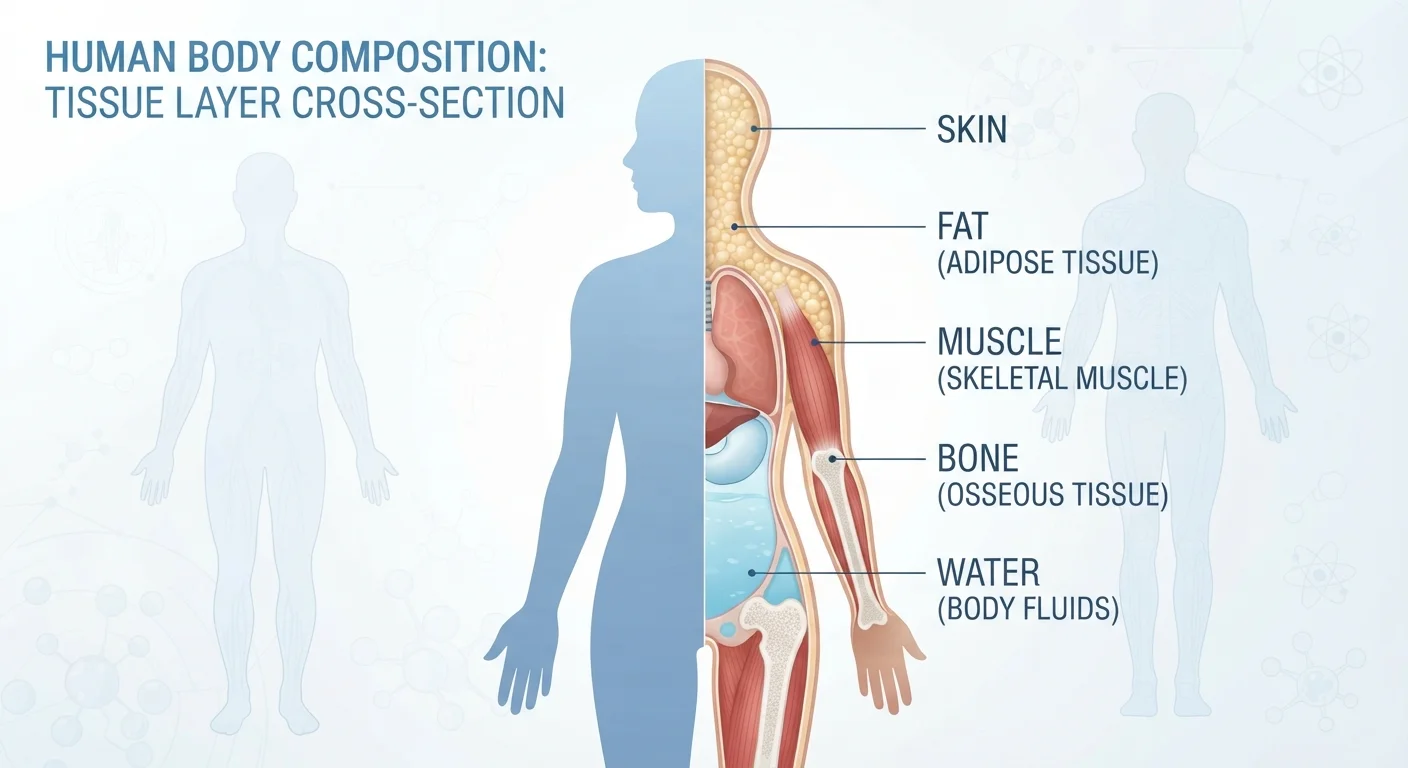
Body weight alone tells an incomplete story. Two people can weigh exactly the same while having dramatically different proportions of muscle, fat, bone, and water — each carrying distinct health implications. As explored in our foundational overview of body composition, what your body is made of matters more than what it weighs.
Body composition assessments help distinguish fat mass from lean mass (muscles, organs, and bone), and in some cases identify where fat is distributed — a factor strongly linked to metabolic and cardiovascular health. Before comparing methods, it helps to be familiar with the key terms involved; our body composition glossary defines essential concepts like lean mass, visceral fat, and fat-free mass.
This article is for general informational purposes and is not a substitute for medical advice. Consult a qualified healthcare provider before making health decisions based on body composition data.
Comparing the Most Common Measurement Methods
Each assessment method operates on different principles and offers different levels of precision. Here's how the most widely used approaches stack up across key criteria.
| DEXA Scan | Hydrostatic Weighing | BIA | Skinfold Calipers | Waist Circumference | |
|---|---|---|---|---|---|
| Accuracy | Very high | High | Moderate | Moderate (skill-dependent) | Limited (proxy only) |
| What it measures | Fat, lean mass, bone density | Fat vs. lean mass | Fat vs. lean mass estimate | Subcutaneous fat estimate | Abdominal fat proxy |
| Cost | High ($50–$150+) | Moderate–High | Low–Moderate | Low | Very low |
| Accessibility | Clinical/research facility | Specialized lab only | Wide (gyms, home) | Gym or clinic | Self-administered |
| Radiation or invasiveness | Minimal X-ray dose | None | None | None | None |
| Key limitation | Cost, requires facility | Impractical for routine use | Hydration-sensitive | Assessor skill required | No fat % estimate |
Understanding these trade-offs is essential when deciding which method fits your situation. For guidance on applying these measurements practically, see our article on which body composition metrics to gather before setting a fitness goal.
How Each Method Works
DEXA (Dual-Energy X-Ray Absorptiometry)
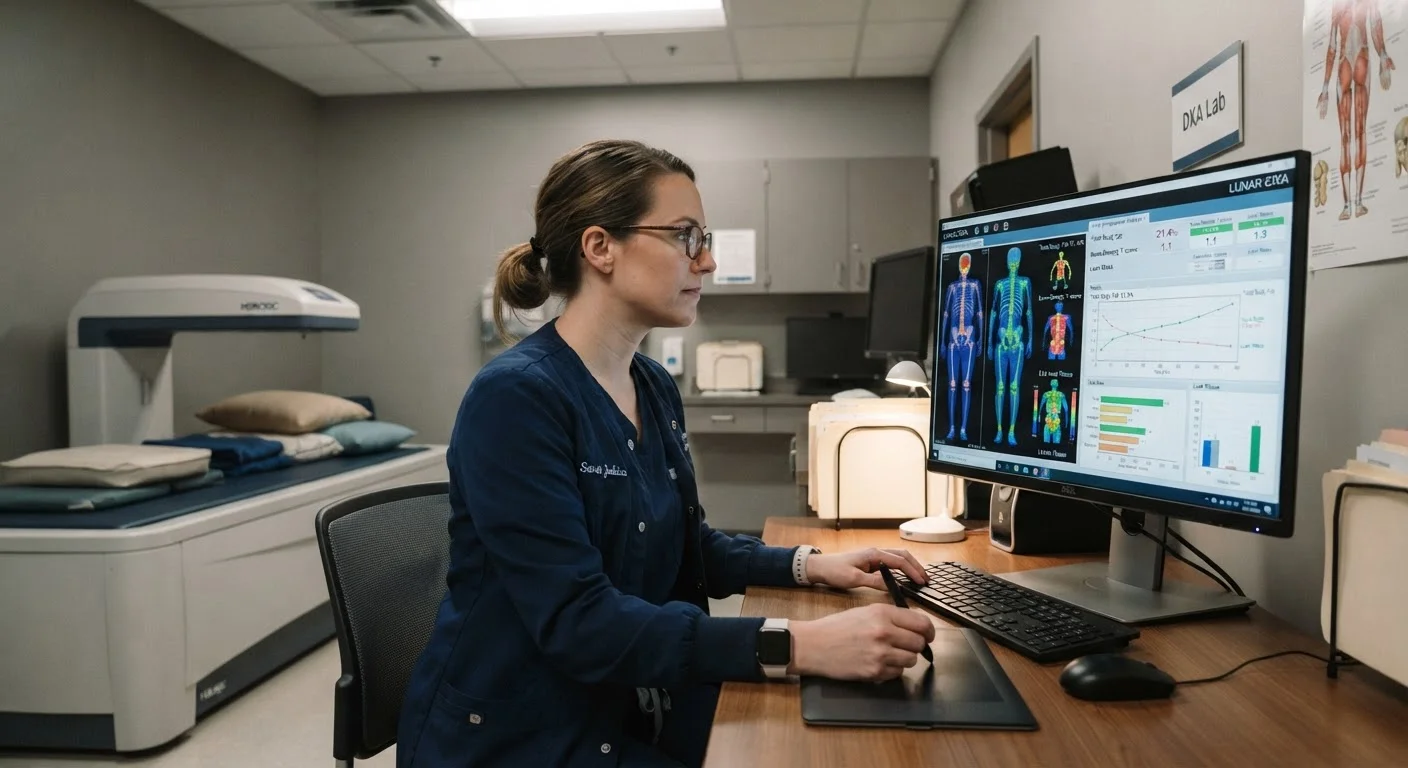
DEXA uses two low-dose X-ray beams at different energy levels to distinguish bone mineral density, fat mass, and lean soft tissue. It produces regional estimates — breaking down composition by limb, trunk, and total body. It is widely regarded as a reference standard in research and clinical settings, though radiation exposure (minimal) and cost limit routine use.
Hydrostatic (Underwater) Weighing
Based on Archimedes' principle, this method compares a person's weight on land to their weight when fully submerged. Fat tissue is less dense than water; lean tissue is denser. Residual lung volume must be estimated or measured, which introduces some error. Though accurate, the logistics make it impractical outside dedicated research facilities.
Bioelectrical Impedance Analysis (BIA)
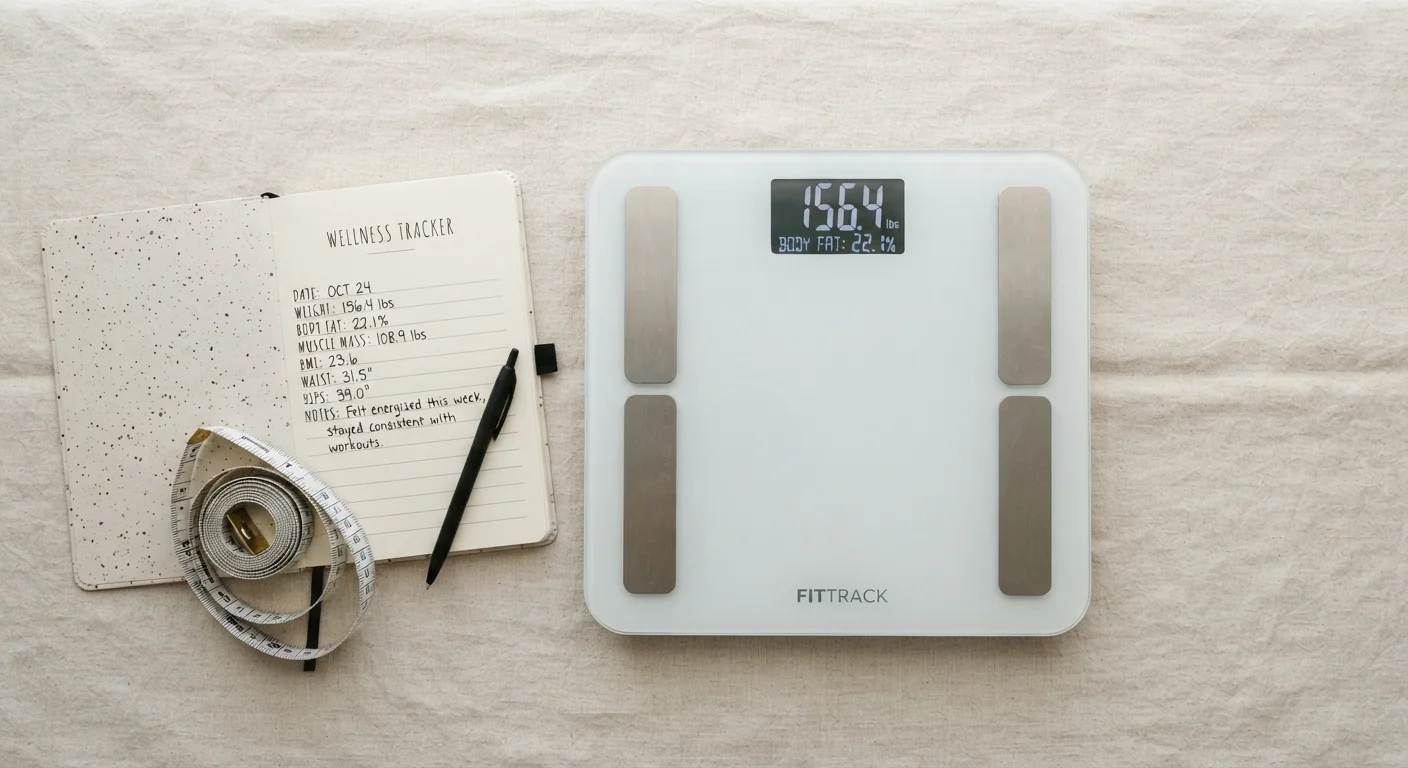
BIA sends a low-level electrical current through the body. Because fat and muscle conduct electricity differently, the device estimates body composition from the resistance encountered. Consumer-grade BIA devices (including smart scales) offer convenience but are sensitive to hydration, meal timing, and electrode placement. Clinical-grade multi-frequency BIA devices provide greater reliability.
Skinfold Calipers
A trained assessor uses calipers to measure the thickness of subcutaneous fat at specific body sites. Established equations then estimate total body fat percentage. Accuracy depends heavily on assessor skill and consistent site selection, making it a reliable tracking tool when the same person performs repeated measurements.
Waist Circumference and Waist-to-Hip Ratio
These simple tape-measure assessments don't directly quantify fat percentage but are well-supported as proxies for visceral (abdominal) fat — a metabolically active fat depot associated with elevated cardiometabolic risk. They're widely used in clinical screenings and complement other assessments. For more context, see our reference on BMI, body fat percentage, and waist circumference.
Choosing a Method and Tracking Progress
The "best" method depends on your goals, access, and budget. For most people not in clinical settings, consistent use of a single, appropriate method over time is more meaningful than a one-time highly precise reading. Method-switching mid-tracking is a common source of confusion, since different tools use different algorithms and reference populations.
If your goal is general health awareness, BIA or waist circumference measurements offer a practical starting point. If you're working with a coach or clinician on body recomposition, skinfold or DEXA assessments provide more granular data. Body composition tracking is most valuable when it informs — not drives — decisions about movement and nutrition, as discussed in our guide to getting started with body composition tracking.
It's also worth remembering that body composition is one input among many. Functional outcomes — strength, endurance, mobility — matter alongside any number on a scan. Our article on why functional fitness depends on body composition explores this connection in depth. Always discuss significant changes in your results with a healthcare provider, particularly if you have an existing health condition.